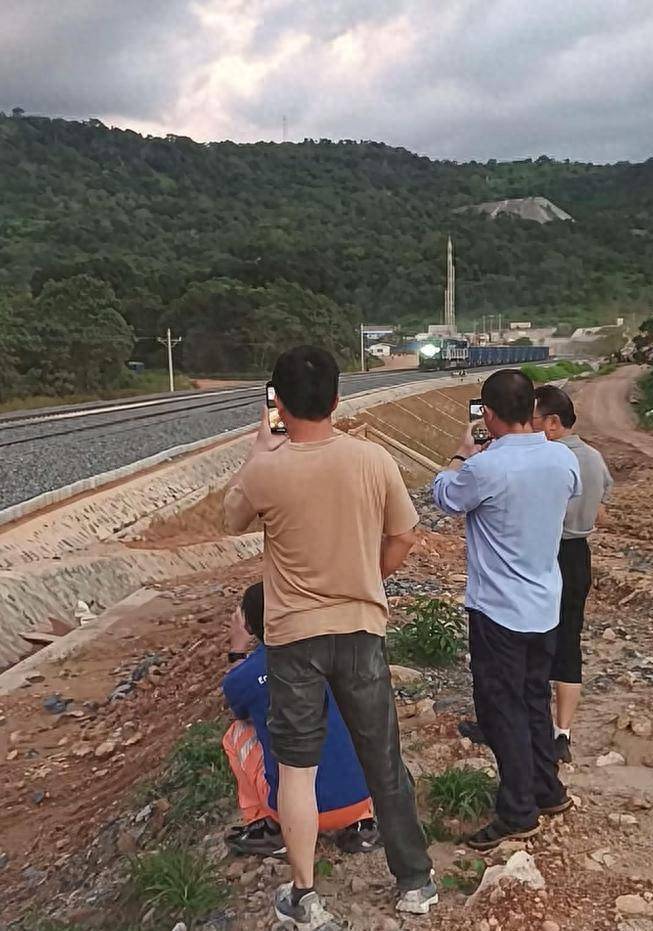
资源换基建

Search documents
中国中铁20260302
2026-03-03 02:52
Summary of China Railway Group's Conference Call Company Overview - **Company**: China Railway Group (中国中铁) - **Industry**: Mining and Infrastructure Key Points Mining Resource Expansion - China Railway Group is actively expanding its mineral resources, achieving a breakthrough in the Inner Mongolia Xinfeng City silver-lead-zinc polymetallic mining area, with a 30% stake in the project. Estimated resources include approximately 5,105 tons of silver, 230,000 tons of zinc, 130,000 tons of lead, and nearly 500 tons of gallium [2][3][4] - The State-owned Assets Supervision and Administration Commission (SASAC) has identified mineral resources as a "cultivated main business" for China Railway Group, allowing for investment under main business criteria for the next three years, which will reduce investment constraints [2][4] Investment Strategies - The company has accumulated rich experience in the "resource-for-infrastructure" model, particularly recognized in overseas markets like the Democratic Republic of Congo's copper-cobalt project. Domestically, it can negotiate with local governments using debt instruments to diversify resource acquisition paths [2][5] - The company acknowledges a gap in backup resource volume compared to leading mining companies but plans to invest more funds during the "15th Five-Year Plan" to enhance backup resource reserves and narrow the gap with competitors like Zijin Mining [2][7] Financial Projections - The mining resource business is expected to generate a profit of approximately 5 billion yuan in 2025, with further growth anticipated in 2026. The company has a solid financial foundation and can supplement funding through bank loans and other financing methods [3][8] Synergies with Other Business Segments - The mining resource business has significant synergistic effects on China Railway Group's infrastructure, mining construction, equipment manufacturing, and logistics sectors. For example, the Huagang project, with a mining construction scale of approximately $2.6 billion, is expected to drive $7 billion in infrastructure construction [7][8] Market Position and Challenges - China Railway Group's copper production is nearly 290,000 tons annually, ranking it among the top five in China, while its molybdenum production of 14,900 tons places it in the top three domestically. However, the company faces challenges in aligning its mining business with the SASAC's main business criteria, which require a 20% revenue or profit contribution [8][9] Future Outlook - The company plans to enhance its mining resource business as a key support for transformation and upgrading, with a focus on precious metals, non-ferrous metals, and ferrous metals. It is tracking several key metal mining projects both domestically and internationally [4][5] - The company is also considering increasing its dividend rate while balancing corporate development and cash flow needs, with a mid-term dividend rate already raised to over 17% in 2025 [10][11] Infrastructure Development Trends - The macro environment indicates a shift from rapid urbanization to stable development, with traditional infrastructure expected to decline. Future growth is anticipated in resource utilization, energy facilities, urban renewal, and ecological protection [11][12] Conclusion - China Railway Group is positioning itself to leverage its mining resources for infrastructure development while addressing challenges in resource acquisition and market positioning. The company's strategic focus on mining as a core business is expected to drive future growth and profitability.
西芒杜时刻!首批200万吨高品位矿石已经发出,全面过剩将到来
Sou Hu Cai Jing· 2025-10-26 05:52
Core Viewpoint - The Simfer mine in the Simandou project has confirmed a reserve of 1.5 million tons of iron ore, with the first batch of ore set to be loaded for rail transport starting in October 2025 [1][3]. Group 1: Project Overview - The total stockpile on-site is approximately 2 million tons, with plans to complete the first shipment by mid-November [3]. - The Simandou iron ore project is located in southeastern Guinea, covering an area of 738 square kilometers, divided into northern and southern sections [3]. - The proven resource amount is about 2.4 billion tons, with an estimated total resource of 5 billion tons and an average iron grade of 66-67%, making it a rare high-quality open-pit hematite mine globally [3]. Group 2: Historical Context - The project has faced nearly 30 years of development challenges, with initial discovery in 1997 and subsequent delays due to infrastructure investment needs and political instability in Guinea [5]. - In 2008, the Guinean government revoked some mining rights, which were transferred to BSG Resources, but the partnership was dissolved in 2014 due to bribery allegations [5]. - The project gained momentum in 2019 when the Winning Consortium acquired the northern section mining rights for $14 billion [5]. Group 3: Infrastructure Development - Infrastructure is a critical breakthrough for the project, with a joint venture established in July 2022 to build a 600-kilometer heavy-haul railway and the Maribaya deep-water port [7]. - The railway, designed with a capacity of 120 million tons per year, includes 205 bridges and 4 tunnels, with construction utilizing Chinese technical standards [7]. - Significant progress was made in 2025, including the completion of T-beam installation and the first heavy-haul train transporting ore from the mine to the port [7]. Group 4: Ownership Structure - The ownership structure is complex, with the Guinean government holding a 15% stake in all blocks [9]. - The Winning Consortium holds 85% of the northern block, while Simfer, which is responsible for the southern block, has Rio Tinto holding 53% and Chalco holding 47% [9]. Group 5: Market Impact - The project is expected to have a direct impact on the global market, with an anticipated annual production of 120 million tons by 2028, potentially increasing seaborne iron ore supply by 8% [9]. - The CFO of Rio Tinto indicated that this increase in supply could force high-cost suppliers out of the market [11]. Group 6: Economic Context - The Chinese steel industry is facing profit pressures and a downturn in the real estate market, with crude steel production expected to decline by 4% from its peak in 2020 [12]. - The expected landed price of Simandou ore is $70-80 per ton, which is 15-20% lower than Australian ore prices, making it attractive for Chinese steel mills [12]. - The project is also facilitating the use of RMB for transactions, with significant agreements being made for RMB settlements in mineral resource trading [12]. Group 7: Investment and Employment - The total investment required for the Simfer project is approximately $11.6 billion, with Rio Tinto responsible for $6.2 billion [14]. - The project has created jobs locally, benefiting 12 provinces along the railway with new economic opportunities [13]. - The development model of "resource for infrastructure" allows for mutual benefits, with China gaining resources and Guinea receiving fiscal revenue and employment opportunities [16].