
超市美妆

Search documents
开店超80家的穷鬼超市鼻祖,在革“贵妇美妆”的命
3 6 Ke· 2026-01-08 10:12
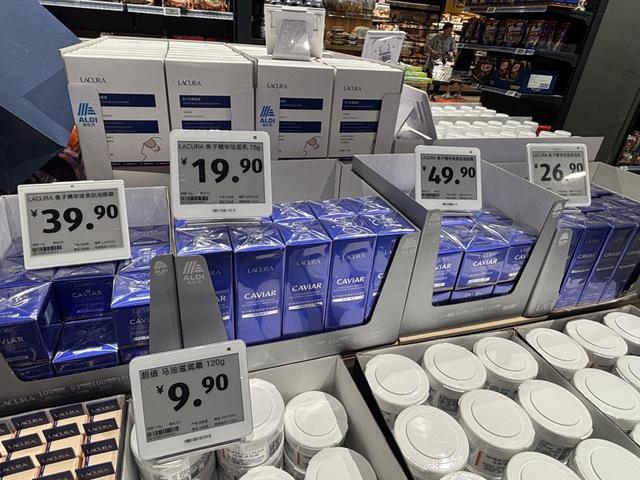
Core Insights - Aldi's Lacura brand has successfully launched a caviar essence series that has gained significant traction on social media, indicating a shift in consumer behavior towards purchasing beauty products in supermarkets rather than traditional beauty counters [1][4] - The pricing strategy of Lacura is a key factor in its appeal, with products priced significantly lower than luxury brands, making them accessible to a broader consumer base [2][12] - The growth of Lacura reflects a broader trend in the retail industry where supermarkets are increasingly competing in the beauty sector, leveraging their established trust and lower cost structures [5][14] Pricing Strategy - The Lacura caviar essence series includes products priced at 19.9 yuan for cleansing milk, 49.9 yuan for essence and cream, and 14.9 yuan for a pack of five masks, totaling just over 200 yuan for all seven core items [2] - In contrast, a similar luxury brand's cream is priced close to 5000 yuan, highlighting the significant price gap [2] Market Positioning - Lacura aims to attract new consumer demographics by positioning itself against high-end beauty brands while ensuring quality standards are met or exceeded [4] - The brand's development has been synchronized with Aldi's global expansion, indicating a strategic approach to market entry and brand establishment [5] Consumer Behavior - A shift in consumer perception is noted, with 74% of beauty consumers believing that affordable products perform similarly to high-end ones, particularly among younger demographics [8] - Social media plays a crucial role in shaping consumer choices, with user-generated content influencing perceptions of price and effectiveness [9][10] Retail Dynamics - Supermarket beauty products operate under a different consumer psychology, where trust is placed in the retailer rather than the brand, and purchasing decisions are simplified [10][12] - The low marketing costs associated with supermarket brands allow for competitive pricing without compromising product quality [12][14] Competitive Landscape - The competition in the beauty sector is evolving, with supermarkets like Aldi taking the lead in offering affordable alternatives, shifting the narrative from brand-driven to retailer-driven [14] - The success of Lacura signifies a transformation in the beauty market, where traditional brand narratives are being replaced by straightforward pricing and accessibility [14]

开店超80家的穷鬼超市鼻祖,在革“贵妇美妆”的命
36氪未来消费· 2026-01-08 08:43
Core Viewpoint - The article discusses the emergence of supermarket beauty brands, particularly ALDI's Lacura, which offers high-quality skincare products at significantly lower prices compared to luxury brands, thus reshaping consumer purchasing behavior in the beauty industry [4][20]. Group 1: Product Launch and Market Response - Lacura's caviar essence series was launched in October 2025 and quickly gained popularity on social media, with related topics reaching over 10 million views [4]. - The pricing strategy of Lacura is a key factor in its success, with products priced between 14.9 yuan and 49.9 yuan, making them accessible compared to luxury brands like La Prairie, which charges nearly 5000 yuan for a single cream [5][6]. Group 2: Consumer Behavior and Market Dynamics - The shift in consumer perception is evident, as 74% of beauty consumers believe that there is no significant difference in effectiveness between affordable and high-end products, especially among younger demographics [12]. - Social media plays a crucial role in shaping consumer behavior, with users sharing reviews and experiences of affordable skincare products, leading to a perception that choosing high-cost alternatives is less rational [13]. Group 3: Retail Strategy and Competitive Advantage - Supermarket beauty brands like Lacura benefit from a different consumer psychology, where trust is placed in the retailer rather than the brand itself, leveraging the retailer's reputation for quality [14]. - The operational model of supermarket beauty brands allows for lower marketing and channel costs, enabling them to offer products at prices that traditional brands cannot match [18][19]. Group 4: Industry Transformation - The success of Lacura signifies a shift in the beauty market narrative, where the focus has moved from brand-driven stories to retailer-driven strategies, allowing products to be presented at prices that require minimal consumer deliberation [20][21].
