跨国能源合作

Search documents
中燃瑞典储能电站登上央视 为全球绿色能源合作提供“中燃方案”
Zheng Quan Ri Bao Zhi Sheng· 2025-12-24 11:49
Core Insights - China Gas Holdings Limited is showcasing its Rosersberg energy storage project in Sweden as a case study for Chinese enterprises going global, highlighting the project's progress and the role of cross-border financial services in supporting Chinese companies' international expansion [1][2] Group 1: Project Overview - The Rosersberg energy storage project utilizes an industry-leading 4MWh standard DC cabin design, providing 2 hours of continuous service capability, and achieves market-leading levels in energy density, charge and discharge efficiency, and safety stability in Sweden [1] - Upon operation, the project will integrate deeply into the Nordic unified grid, offering flexible and reliable auxiliary services to stabilize renewable energy fluctuations and optimize energy allocation, contributing to the region's goal of achieving a "fossil fuel-free society" [1] Group 2: Strategic Approach - China Gas adheres to the principle of "compliance first, value co-creation" while navigating the complex European market, establishing a unique cooperation path [2] - The company has developed a value chain system that integrates "Chinese industrial chain partners + local market and construction teams," ensuring project quality through domestic expertise while effectively utilizing local resources [2] - The Chairman and President of China Gas, Liu Minghui, emphasizes the company's role as a "linking agent in the industrial chain" and a "value co-creator," aiming to deepen collaboration with global partners and contribute to global energy low-carbon transformation and sustainable development [2]

俄对华输气创新高,西方制裁反成催化剂,中国能源安全迎关键转机
Sou Hu Cai Jing· 2025-11-08 12:22
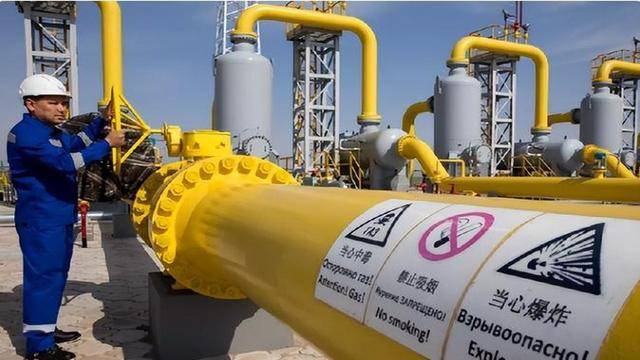
Group 1 - The core point of the article highlights the increasing natural gas supply from Russia to China through the "Power of Siberia" pipeline, which has reached a new high for the sixth time in a short period, indicating a significant geopolitical maneuvering [1][3]. - Western sanctions have severely limited Russia's access to European markets, leading to a substantial economic pressure on Russia, while China emerges as the only viable market for Russian gas [3]. - China's domestic natural gas production is insufficient to meet its growing demand due to industrial upgrades and increased consumption, making the stable supply from Russia crucial for both industrial and residential needs [3][5]. Group 2 - The cooperation between China and Russia is deepening, as evidenced by new agreements during Putin's visit to China, indicating a long-term partnership rather than a temporary arrangement [5]. - The annual supply capacity of the "Power of Siberia" pipeline is set to increase from 38 billion cubic meters to 44 billion cubic meters, with the new "Power of Siberia-2" pipeline expected to transport 50 billion cubic meters annually, further solidifying the energy partnership [5]. - The inclusion of Mongolia in this energy cooperation creates a tripartite benefit system, where Mongolia gains transit revenue, Russia compensates for lost European market share, and China secures a diversified energy supply [5][8]. Group 3 - The energy cooperation has tangible benefits for ordinary citizens in both countries, with Russian citizens seeing job security and fiscal stability, while Chinese households enjoy reliable gas supply for heating and cooking [7][8]. - The stable gas prices from this pipeline arrangement help prevent inflation in various goods, contributing to economic stability in both nations [8]. - This energy partnership serves as a security bond between China and Russia, enabling both countries to better navigate global uncertainties and challenges [8][10].