轻量化AI

Search documents
2026年中小企业的破局之策:借势而上,向精而生
Sou Hu Cai Jing· 2026-01-02 07:13
Core Insights - The article emphasizes the challenges faced by small and medium-sized enterprises (SMEs) in 2026, including financing difficulties, compliance pressures, and competition from larger companies, while highlighting the importance of focusing on core competencies for sustainable development [1][19]. Group 1: Leveraging Policy Benefits - The issuance of long-term special government bonds is expected to reach 1.3 trillion yuan by the end of 2025, providing crucial funding for the real economy [4]. - SMEs must adopt a methodical approach to benefit from policy incentives, focusing on "precise alignment, early preparation, and compliance implementation" to convert policy benefits into tangible assets [5][6]. - Key changes include reduced application thresholds for funding, expanded support areas, and optimized approval processes, allowing more SMEs to participate in significant national projects [5][6]. Group 2: Product Focus - The market has shifted from "growth driven by trends" to "competition based on core capabilities," necessitating SMEs to concentrate on niche markets and build differentiated advantages [7]. - SMEs should avoid blindly chasing trends and instead focus on their strengths, ensuring that product development aligns with market needs [8]. - Successful product strategies involve identifying specific customer needs and establishing rapid iteration mechanisms to respond to market feedback [8][9]. Group 3: Digital Efficiency - Digital transformation is essential for SMEs, focusing on low-cost, high-impact solutions that address core business pain points [9][10]. - Implementing lightweight digital tools can significantly enhance operational efficiency, such as using sensors for equipment management and no-code platforms for production tracking [10][11]. - Marketing strategies should leverage low-cost digital channels and customer relationship management tools to improve customer acquisition and retention [11][12]. Group 4: Embracing AI - SMEs can utilize lightweight AI solutions to enhance efficiency and reduce costs, with applications in customer service, production data integration, and sales analysis [13][14]. - The article advises SMEs to adopt AI incrementally, focusing on specific business areas to validate effectiveness before broader implementation [14]. Group 5: Financing and Risk Management - Financing remains a significant challenge for SMEs, particularly in the tech sector, necessitating the development of diversified financing strategies [14][15]. - Innovative financing options include intellectual property pledges and collaborative financing models that combine equity investment with bank credit [15][16]. - Effective risk management strategies should address labor shortages and supply chain disruptions, emphasizing flexible workforce solutions and diversified supplier relationships [16][17]. Group 6: Building Resilience - SMEs should focus on strengthening their internal capabilities, including cash flow management and talent acquisition, to ensure long-term sustainability [18]. - Establishing a robust cash flow management system and leveraging government support for financing can help mitigate financial risks [18]. - Building resilience in supply chains through collaboration with larger enterprises and optimizing internal processes is crucial for maintaining operational efficiency [18].


速递|OpenAI首投机构再出手!Khosla1750万美元押注“轻量化AI”Fastino,AI训练平民化
Z Potentials· 2025-05-08 05:33
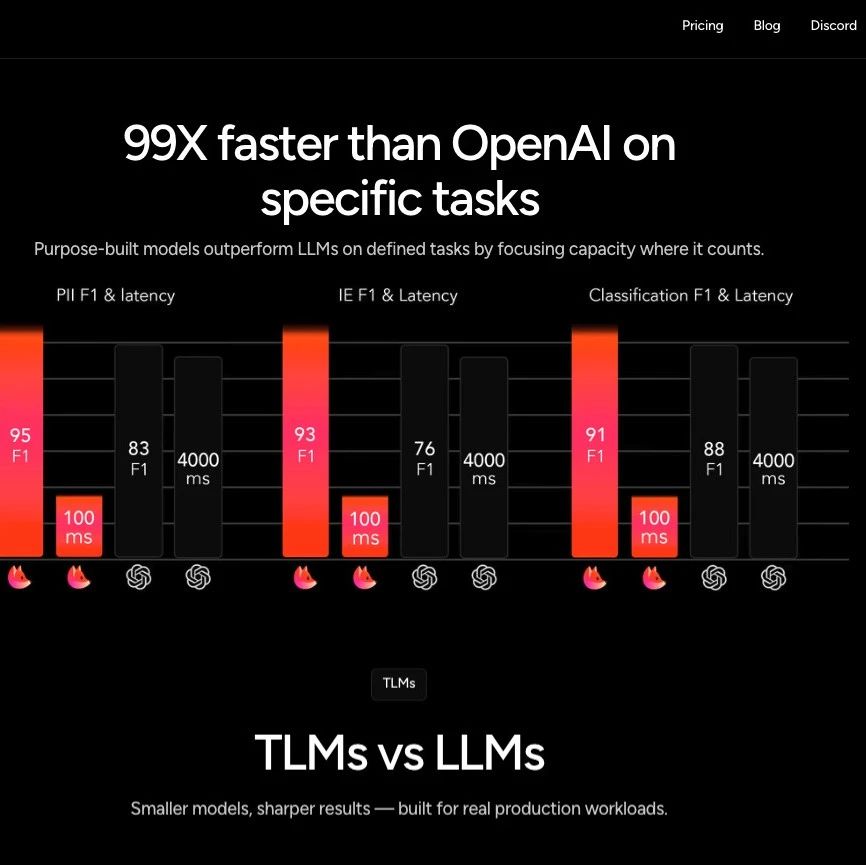
Core Insights - Fastino is developing a new AI model architecture designed for miniaturization and specific tasks, contrasting with the trend of large, expensive GPU clusters used by tech giants [1] - The company has raised $17.5 million in seed funding led by Khosla Ventures, bringing its total funding to nearly $25 million [1] - Fastino's models are claimed to be faster, more accurate, and significantly cheaper to train compared to flagship models, while outperforming them in specific tasks [1] Funding and Financials - Fastino's recent funding round was led by Khosla Ventures, known for being the first investor in OpenAI [1] - The company previously raised $7 million in a pre-seed round led by Microsoft's venture arm M12 and Insight Partners [1] Product and Performance - Fastino's models are small enough to be trained on low-end gaming GPUs costing less than $100,000 [1] - Early users have been impressed with the model's performance, which can provide detailed answers in milliseconds [2] - The focus is on creating small models tailored to specific enterprise tasks, such as sensitive data anonymization and document summarization [1][2] Market Position and Competition - The future of enterprise-level generative AI may lie in smaller, more focused language models, a trend that is gaining recognition [3] - Fastino is competing in a crowded enterprise AI market, with other companies like Cohere and Databricks also promoting specialized AI models [2] - The company aims to attract top AI researchers who are not solely focused on building the largest models or beating benchmark tests [3]