
中小企业发展

Search documents
波黑联邦政府拨款2800万马克支持中小企业发展
Shang Wu Bu Wang Zhan· 2026-02-14 15:59
Core Viewpoint - The Bosnian Federal Government has approved a funding plan of 28 million marks to promote the development of small and medium-sized enterprises (SMEs) as part of the 2026 federal budget [1] Group 1: Funding Allocation - 22 million marks are allocated to subsidize private enterprises and entrepreneurs under the "Enhancing Competitiveness of SMEs" project, aimed at improving the competitiveness of innovative, export-oriented SMEs through technological modernization, capacity expansion, quality standards introduction, circular economy practices, and energy efficiency improvements [1] - 5 million marks are designated for the construction of entrepreneurial parks, intended to build or improve energy, municipal, transportation, and communication infrastructure within federal business parks, as well as to establish or enhance business development services in these parks to stimulate local economic growth [1] - 1 million marks are allocated for institutional infrastructure and support for business associations [1]
踊跃建言
Hai Nan Ri Bao· 2026-01-29 02:42
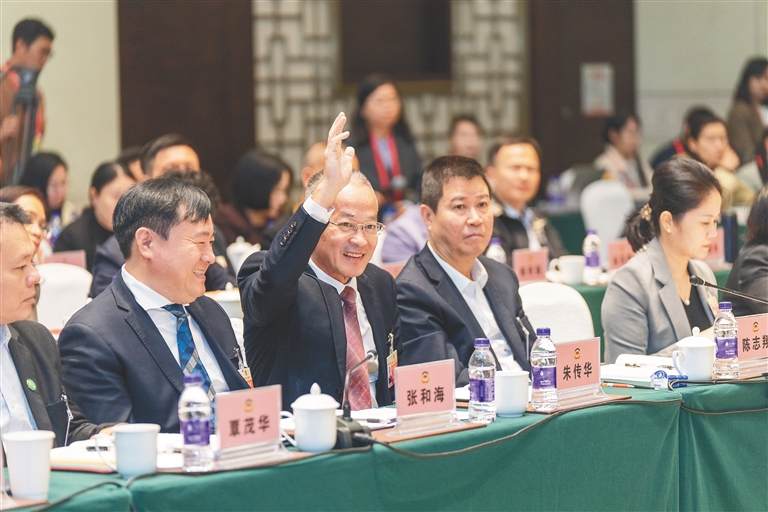
Core Viewpoint - The meeting of the Provincial Political Consultative Conference focused on various sectors including tourism consumption, modern logistics, low-altitude economy, and the development of small and medium-sized enterprises, with members actively providing targeted suggestions [2] Group 1: Tourism Consumption - Members discussed the importance of enhancing tourism consumption as a key driver for economic growth [2] Group 2: Modern Logistics - The dialogue included suggestions for improving modern logistics to boost efficiency and support other industries [2] Group 3: Low-altitude Economy - The low-altitude economy was highlighted as a potential area for development, with members proposing strategies to leverage this sector [2] Group 4: Small and Medium-sized Enterprises - There were numerous recommendations aimed at fostering the growth and sustainability of small and medium-sized enterprises [2]

经济修复平稳 政策加力支持中小企业发展
Jing Ji Guan Cha Wang· 2026-01-23 14:43
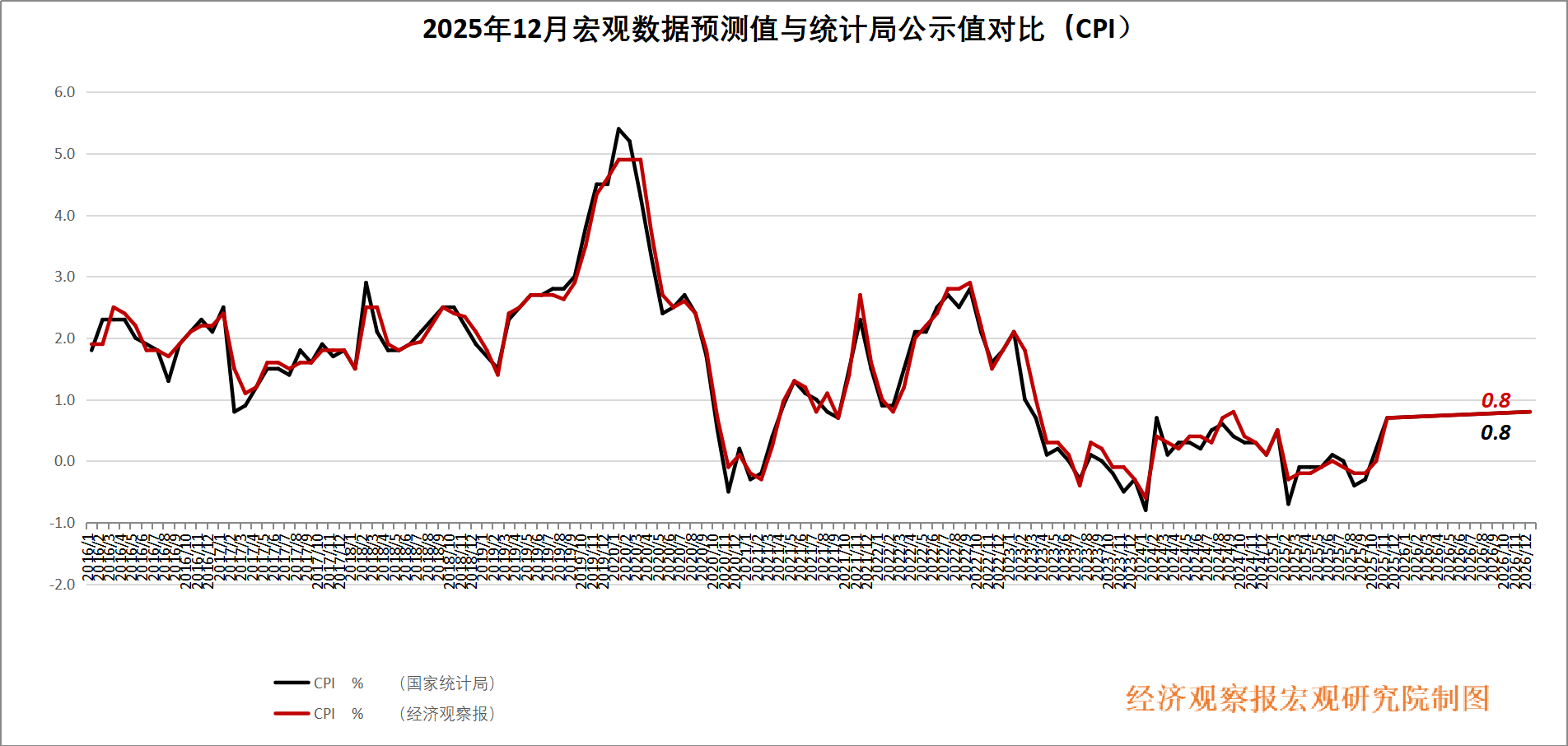
Core Viewpoint - The macroeconomic data for December 2025 indicates a stable recovery in the economy, with rising prices in non-ferrous metals, a return of the manufacturing PMI to the expansion zone, and growth in medium to long-term corporate loans. However, the economic environment for small and medium-sized enterprises remains challenging, and the real estate market continues to exert significant downward pressure on prices and investments [1]. Group 1: Inflation and Price Indices - The Consumer Price Index (CPI) increased from 0.7% to 0.8% year-on-year, with food CPI rising 1.1% year-on-year, marking a continuous five-month growth [4][2]. - The Producer Price Index (PPI) improved from -2.2% to -1.9% year-on-year, reflecting a narrowing decline in industrial product prices due to rising raw material costs and the impact of policies aimed at reducing excess capacity [7][5]. Group 2: Manufacturing and Investment - The Manufacturing Purchasing Managers' Index (PMI) rose from 49.2% to 50.1%, indicating a return to expansion for large enterprises, while small enterprises remain in a contraction zone [10][8]. - Fixed asset investment decreased by 3.8% year-on-year, with real estate investment down 17.2%, while equipment renewal investment grew by 11.8%, supported by policy initiatives [14][11]. Group 3: Credit and Money Supply - New RMB loans totaled 910 billion yuan in December, with medium to long-term corporate loans increasing by 330 billion yuan, driven by recent policy financial tools [17][15]. - The M2 money supply growth rate rose to 8.5% year-on-year, indicating a significant rebound, primarily due to a reduction in non-bank deposits [20][18].
工信部:将制定“十五五”促进中小企业发展规划
Zheng Quan Shi Bao Wang· 2026-01-21 02:49
Core Viewpoint - The press conference held by the State Council Information Office on January 21 highlighted the achievements in industrial and information technology development, projecting a 6.9% year-on-year increase in the added value of large-scale industrial SMEs by 2025 [1] Group 1: Industrial Development - By 2025, the number of national-level specialized and innovative "little giant" enterprises is expected to reach 17,600, with a research and development investment intensity of 7% [1] - The Ministry of Industry and Information Technology (MIIT) plans to enhance the policy and regulatory framework to promote high-quality development of SMEs [1] Group 2: Policy Initiatives - Continuous optimization of the business environment will be pursued, including the formulation of the "14th Five-Year" plan to support SME development and the full implementation of regulations to ensure timely payments to SMEs [1] - The MIIT aims to cultivate more specialized and innovative enterprises through a three-year action plan for nurturing quality enterprises [1] - Comprehensive service support will be provided, focusing on enterprise needs, including the establishment and utilization of the China SME Service Network and the creation of national public service demonstration platforms for SMEs [1]
平台、算法、短剧、二次元,上海营商环境9.0破解新业态新问题
第一财经· 2026-01-08 08:31
Core Viewpoint - The article discusses Shanghai's newly released "Action Plan for Accelerating the Creation of a World-Class Business Environment (2026)", which emphasizes the city's commitment to optimizing its business environment for high-quality development, marking the ninth consecutive year of such initiatives [3][5]. Group 1: Action Plan Overview - The 2026 action plan includes 26 specific tasks aimed at optimizing four key environments: government service, market competition, industrial ecology, and social governance [5][6]. - The plan addresses new challenges posed by emerging industries, such as the regulation of online platforms and the management of new economic models [6][9]. Group 2: Focus on Business Pain Points - In 2025, Shanghai launched ten key initiatives to tackle significant business pain points, achieving notable results, and plans to continue this approach in 2026 with more specific tasks [7]. - The action plan aims to enhance the entire process of policy services for businesses, including application, acceptance, review, and implementation [7][9]. Group 3: Industry Ecosystem and Support - The plan introduces the concept of creating a "friendly and adaptable industrial ecosystem," focusing on resource allocation and key industries to foster innovation and entrepreneurship [8]. - It emphasizes the establishment of one-stop service platforms in industrial parks to integrate various support services for businesses [8]. Group 4: Financing Support for SMEs - The action plan outlines measures to strengthen financing services for small and medium-sized enterprises (SMEs), including credit rewards and risk compensation policies [9]. - It aims to expand the coverage of government financing guarantee institutions and enhance support for businesses seeking to grow through capital markets [9]. Group 5: Regulatory Optimization - The plan includes detailed requirements for optimizing enterprise inspections, promoting cross-departmental cooperation, and reducing the frequency of on-site inspections for low-risk businesses [10][11]. - It also addresses the regulation of profit-driven reporting practices, aiming to protect legitimate consumer rights while curbing abuse of complaint mechanisms [11]. Group 6: Construction and Bidding Environment - The action plan emphasizes creating a fair and just market competition environment in construction bidding, including strengthening competitive review mechanisms and preventing "involution" in bidding processes [12]. - It aims to reserve over 40% of government investment contracts for SMEs through various methods, promoting their development [12].

2026年中小企业的破局之策:借势而上,向精而生
Sou Hu Cai Jing· 2026-01-02 07:13
Core Insights - The article emphasizes the challenges faced by small and medium-sized enterprises (SMEs) in 2026, including financing difficulties, compliance pressures, and competition from larger companies, while highlighting the importance of focusing on core competencies for sustainable development [1][19]. Group 1: Leveraging Policy Benefits - The issuance of long-term special government bonds is expected to reach 1.3 trillion yuan by the end of 2025, providing crucial funding for the real economy [4]. - SMEs must adopt a methodical approach to benefit from policy incentives, focusing on "precise alignment, early preparation, and compliance implementation" to convert policy benefits into tangible assets [5][6]. - Key changes include reduced application thresholds for funding, expanded support areas, and optimized approval processes, allowing more SMEs to participate in significant national projects [5][6]. Group 2: Product Focus - The market has shifted from "growth driven by trends" to "competition based on core capabilities," necessitating SMEs to concentrate on niche markets and build differentiated advantages [7]. - SMEs should avoid blindly chasing trends and instead focus on their strengths, ensuring that product development aligns with market needs [8]. - Successful product strategies involve identifying specific customer needs and establishing rapid iteration mechanisms to respond to market feedback [8][9]. Group 3: Digital Efficiency - Digital transformation is essential for SMEs, focusing on low-cost, high-impact solutions that address core business pain points [9][10]. - Implementing lightweight digital tools can significantly enhance operational efficiency, such as using sensors for equipment management and no-code platforms for production tracking [10][11]. - Marketing strategies should leverage low-cost digital channels and customer relationship management tools to improve customer acquisition and retention [11][12]. Group 4: Embracing AI - SMEs can utilize lightweight AI solutions to enhance efficiency and reduce costs, with applications in customer service, production data integration, and sales analysis [13][14]. - The article advises SMEs to adopt AI incrementally, focusing on specific business areas to validate effectiveness before broader implementation [14]. Group 5: Financing and Risk Management - Financing remains a significant challenge for SMEs, particularly in the tech sector, necessitating the development of diversified financing strategies [14][15]. - Innovative financing options include intellectual property pledges and collaborative financing models that combine equity investment with bank credit [15][16]. - Effective risk management strategies should address labor shortages and supply chain disruptions, emphasizing flexible workforce solutions and diversified supplier relationships [16][17]. Group 6: Building Resilience - SMEs should focus on strengthening their internal capabilities, including cash flow management and talent acquisition, to ensure long-term sustainability [18]. - Establishing a robust cash flow management system and leveraging government support for financing can help mitigate financial risks [18]. - Building resilience in supply chains through collaboration with larger enterprises and optimizing internal processes is crucial for maintaining operational efficiency [18].

陕西“十五五”规划建议:聚焦主责主业做强做优做大国有企业和国有资本 优化国有资本投资、运营公司管理架构
Sou Hu Cai Jing· 2025-12-08 00:56
Core Viewpoint - The proposal emphasizes the need to invigorate various business entities and enhance the core functions and competitiveness of state-owned enterprises (SOEs) through reforms [1] Group 1: State-Owned Enterprises - The focus is on deepening the reform of state-owned assets and enterprises, aiming to strengthen and optimize the performance of SOEs and state capital [1] - There is a push for strategic restructuring and professional integration of SOEs in cultural and financial sectors [1] - The management structure of state capital investment and operation companies will be optimized to enhance quality and efficiency [1] Group 2: Private Sector and SMEs - The implementation of the Private Economy Promotion Law aims to ensure equal access to production factors and fair market competition for private enterprises [1] - Support for the development of small and medium-sized enterprises (SMEs) and individual businesses is highlighted, promoting collaborative development among businesses of all sizes [1] - A long-term mechanism to prevent and resolve payment arrears to SMEs will be established [1] Group 3: Entrepreneurial Environment - Strengthening the protection of property rights through law enforcement and judicial measures is emphasized [1] - The proposal aims to improve the modern enterprise system with Chinese characteristics and promote entrepreneurial spirit [1] - The goal is to accelerate the establishment of world-class enterprises [1]
从互联网大数据看中小企业发展报告(2025)
Sou Hu Cai Jing· 2025-11-21 23:58
Overall Overview - The number and quality of small and medium-sized enterprises (SMEs) in China have significantly improved, with 63.487 million registered SMEs as of September 2025, contributing over 60% of GDP, 70% of technological innovation, and 80% of urban employment [13][14][16] - The average annual growth rates for the value added, operating income, and total profit of large-scale SMEs during the 14th Five-Year Plan period are 6.4%, 7.4%, and 5.4%, respectively, all exceeding those of large enterprises [13][14] Structural Distribution Regional Distribution - SMEs in eastern China account for 54.2% of the total, with Guangdong, Jiangsu, Shandong, Zhejiang, and Henan provinces collectively representing 40.9% [24][26] Industry Distribution - The wholesale and retail industry has the highest concentration of SMEs, accounting for over 30%, followed by leasing and business services, and scientific research and technical services, each exceeding 10% [27] Development Status Sustained Growth - In the first eight months of 2025, the value added of large-scale industrial SMEs increased by 7.6% year-on-year, with a continuous expansion of export indices for 17 months [2][36] Innovation Capacity - Over 178,000 SMEs hold patents, with a 55.1% industrialization rate for invention patents in 2024, and 35,000 new enterprises in artificial intelligence-related fields [2][17] Market Competitiveness - SMEs accounted for 99.3% of project-winning enterprises in 2024, with over 5,780 financing events totaling approximately 750.8 billion yuan, marking a 7.3% and 13.1% increase from 2023 [19][20] Employment Contribution - 71.8% of surveyed university students consider employment in SMEs, highlighting their role as a significant employment channel [20] Future Outlook - Continuous optimization of the business environment, enhanced cultivation systems, and deep integration of digital technologies will provide more opportunities for SMEs, contributing to economic and social development [2][36]

优化中小企业发展环境 我国将适时推动出台各类惠企政策
Xin Hua Wang· 2025-11-14 02:41
Core Insights - The National Small and Medium Enterprises (SMEs) Work Symposium recently held in Chongqing summarized the progress of SMEs during the 14th Five-Year Plan and outlined key tasks for the next phase, emphasizing the need for high-quality planning for the 15th Five-Year Plan and the introduction of various supportive policies [1][2] Group 1: Current Development and Achievements - Since the beginning of the 14th Five-Year Plan, the national SME system has actively promoted a favorable environment for enterprises, policy support, innovation, services, talent development, and legal protection, enhancing the reputation of specialized and innovative SMEs [1] - The Ministry of Industry and Information Technology reported that over 600,000 technology and innovation-oriented SMEs have been cultivated, with more than 140,000 specialized and innovative SMEs and over 17,600 national-level "Little Giant" enterprises, which account for 3.5% of the total number of industrial SMEs but contribute 9.6% of revenue and 13.7% of profits [1] Group 2: Future Development Plans - The meeting proposed optimizing the development environment for SMEs, high-quality planning for the 15th Five-Year Plan, and timely introduction of various supportive policies [1] - There is a focus on improving the tiered cultivation system for quality SMEs, deepening actions to enhance specialized and innovative capabilities, and accelerating the formulation of mechanisms and policies to support the growth of specialized and innovative SMEs [1] - The meeting also emphasized the need to establish a public service system for SMEs, create demonstration platforms, enhance the capabilities of the China SME Service Network, and strengthen services in innovation, talent, and financing while protecting the legal rights of SMEs [2] - Additionally, promoting international cooperation and facilitating SMEs' integration into global supply chains is highlighted as a key area for enhancing international competitiveness [2]
2024年全国政府采购规模33750.43亿元
Jing Ji Ri Bao· 2025-11-13 22:18
Group 1 - The total government procurement scale for 2024 is projected to be 33,750.43 billion yuan, with goods, engineering, and services accounting for 7,944.68 billion yuan, 13,839.64 billion yuan, and 11,966.12 billion yuan respectively, representing 23.54%, 41.01%, and 35.45% of the total procurement [1] - The procurement organization forms include centralized procurement by the government at 7,664.14 billion yuan (22.71%), departmental centralized procurement at 1,648.46 billion yuan (4.88%), and decentralized procurement at 24,437.84 billion yuan (72.41%) [1] - The procurement methods show that public bidding accounts for 76.63% of the total procurement, while other methods like competitive negotiation and single-source procurement account for 11.52% and 3.26% respectively [1] Group 2 - In 2024, mandatory and prioritized procurement for energy-saving and water-saving products is set at 337.23 billion yuan, which constitutes 92.48% of the procurement scale for similar products [2] - The total contract amount awarded to small and medium-sized enterprises (SMEs) through government procurement is 24,230.91 billion yuan, with 15,310.35 billion yuan awarded to micro-enterprises, making up 63.19% of the total SME contract amount [2] - Over 100 billion yuan has been spent on purchasing agricultural products from poverty-stricken areas through online sales platforms, effectively increasing the income of farmers and promoting rural industry development [2]