过程偷工减料

Search documents
别再怪技术不行了,企业数字化做不好,问题出在 “过程偷工减料” 上
3 6 Ke· 2025-10-10 00:27
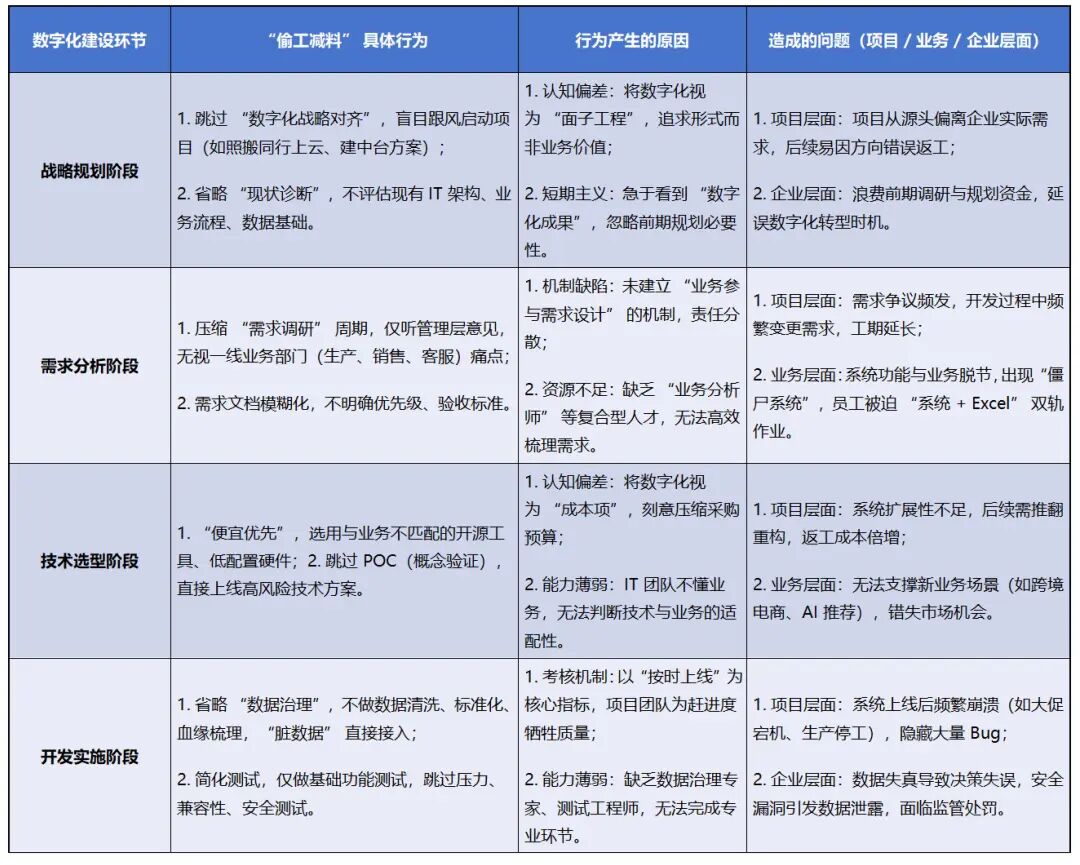
Core Viewpoint - The failure of digital transformation in enterprises is primarily attributed to a lack of respect for technology among leaders, leading to various "cutting corners" behaviors during the construction process [1] Group 1: Common "Cutting Corners" Behaviors - Strategic Level: Digital planning is often superficial or non-existent, with companies copying others without analyzing their own needs, resulting in systems that do not align with actual business operations [2] - Awareness Level: Some management perceives digitalization as merely a cost rather than a strategic investment, leading to a focus on short-term visible results rather than addressing core business pain points [3] - Business Level: Ignoring the professional opinions of IT departments to save costs, leading to incomplete software functionalities that fail to meet comprehensive business needs [4] Group 2: Implementation Challenges - Implementation Level: Companies often compress implementation timelines, resulting in inadequate requirement analysis and poor process design, which leads to systems being launched with unresolved issues [4] - Operational Level: Post-launch, there is often a lack of clear responsibility and oversight, resulting in digital projects becoming poorly managed and ineffective [5] Group 3: Software Companies' "Cutting Corners" - Business Interests: Software companies may prioritize short-term profits over long-term quality, leading to reduced functionality and service quality in projects [6] - Capability Shortcomings: Many software companies face limitations in architecture design and project delivery, forcing them to cut corners to meet deadlines [7] - Client Misunderstanding: Clients often push for lower prices and faster timelines, which pressures software companies to reduce project scope and quality [8] Group 4: Systemic Issues - The "cutting corners" behaviors are not isolated incidents but rather a result of intertwined factors, including cognitive biases, management flaws, resource shortages, and weak capabilities [9] - Companies often misattribute digital transformation failures to technology issues, overlooking the critical role of process management and planning [9]