
企业数字化转型

Search documents
你的办公“小龙虾”已上线!从“养虾”到“数治”,企业数据价值迎来大爆发
证券时报· 2026-03-25 00:18
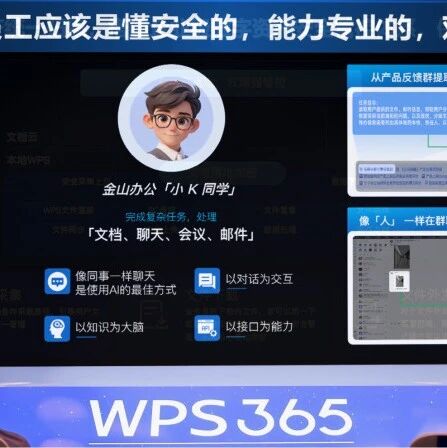
Core Viewpoint - The article emphasizes the acceleration of digital transformation in the office industry, highlighting the importance of data governance as a core competitive advantage for enterprises in the context of AI-driven digitalization [3][5][20]. Group 1: Digital Transformation and Data Governance - The launch of WPS 365 AI collaborative office tool "Xiao K" aims to enhance enterprise efficiency by automating complex office tasks, marking a shift from tool assistance to intelligent collaboration [3][10]. - Data governance is identified as a critical element in digital transformation, with industry data indicating that by 2025, 80% of OpenAI's projected $20 billion revenue will come from enterprise clients [5][6]. - The recognition of data value is evolving, with 80% of enterprise data existing in unstructured formats, which poses challenges in extraction and utilization due to issues like storage dispersion and format inconsistency [5][6]. Group 2: Implementation and Industry Practices - Leading enterprises in South China, such as Huawei and Wens Foodstuff Group, are pioneering the integration of data governance with intelligent office tools, demonstrating effective data value extraction across various sectors [3][7][20]. - Statistics reveal that 60% of the "Top 100 Private Enterprises in China" from Guangdong have adopted WPS 365 for unstructured data governance, with a projected 90% increase in organizational clients by 2025 [7][8]. - The transformation of data from a "sleeping resource" to a "development asset" is crucial for enhancing enterprise efficiency and effectiveness [8]. Group 3: Intelligent Office Tools and Security - Intelligent office tools are emerging as essential for activating data value, with WPS 365 focusing on security and compliance as primary considerations for enterprises [10][14]. - WPS 365 has established a comprehensive security framework, including permission management and risk mitigation strategies, to address enterprise concerns regarding data safety [14][15]. - The platform's intelligent knowledge base supports precise data extraction and application, enhancing the professional capabilities of intelligent office tools [15][16]. Group 4: Future Outlook and Ecosystem Development - The development of intelligent office tools is not intended to replace traditional systems but to integrate deeply with existing frameworks, fostering a collaborative ecosystem of tools, data, and business processes [16][17]. - The future of enterprise office work is shifting towards demand-driven operations, where users can focus on needs rather than complex processes, facilitated by intelligent office tools [17][19]. - Successful case studies from various industries, including manufacturing and agriculture, illustrate the practical benefits of data governance and intelligent tools in enhancing operational efficiency [19][20].


佛山农民首富,破产
创业家· 2026-03-21 10:11
Core Viewpoint - The article discusses the rise and fall of Zhigao Air Conditioning, highlighting its bankruptcy and the subsequent restructuring into a new entity, Zhigao Gewu, which aims to focus on overseas markets and technological innovation [4][5][29]. Group 1: Company Background and Rise - Zhigao Air Conditioning was founded by Li Xinghao, who started from humble beginnings and built a successful business by leveraging aggressive pricing strategies and targeting lower-tier cities [10][11]. - The company initially thrived by adopting a "low-price, high-volume" strategy, which allowed it to capture significant market share, becoming the fourth largest air conditioning manufacturer in China by 2009 [15][16]. - In 2009, Zhigao went public on the Hong Kong Stock Exchange, raising 1 billion HKD, and set ambitious revenue targets, aiming to surpass major competitors like Gree and Haier [16][18]. Group 2: Challenges and Decline - Starting in 2011, Li Xinghao diversified into various sectors, including construction and finance, which led to significant financial losses and a decline in the core air conditioning business [18][20]. - The company faced its first loss in 2011, and subsequent years saw continued financial struggles, with losses reported in 2014, 2015, 2018, and 2019 [21][22]. - By 2019, Zhigao's revenue had plummeted to less than 3.4 billion, and the company began selling off assets in a desperate attempt to cover debts [22][24]. Group 3: Bankruptcy and Restructuring - On February 12, 2026, Zhigao Air Conditioning was officially declared bankrupt, with liabilities amounting to 3.2 billion, marking the end of the original company [5][27]. - The restructuring involved separating the core assets and brand from the historical debts, leading to the formation of Zhigao Gewu, which is now focused on innovation and international markets [28][29]. - The new entity reported a significant increase in overseas sales, with a more than 50% year-on-year growth in the first three quarters of 2025, indicating a successful turnaround strategy [29]. Group 4: Lessons and Future Outlook - The story of Zhigao serves as a cautionary tale about the pitfalls of neglecting research and development and the dangers of over-diversification [31]. - The new Zhigao Gewu aims to redefine its brand image by focusing on smart air conditioning products and leveraging technology to regain market competitiveness [29][31]. - Despite the restructuring, lingering issues from the past, such as quality concerns associated with the Zhigao brand, may continue to affect consumer perception [31].

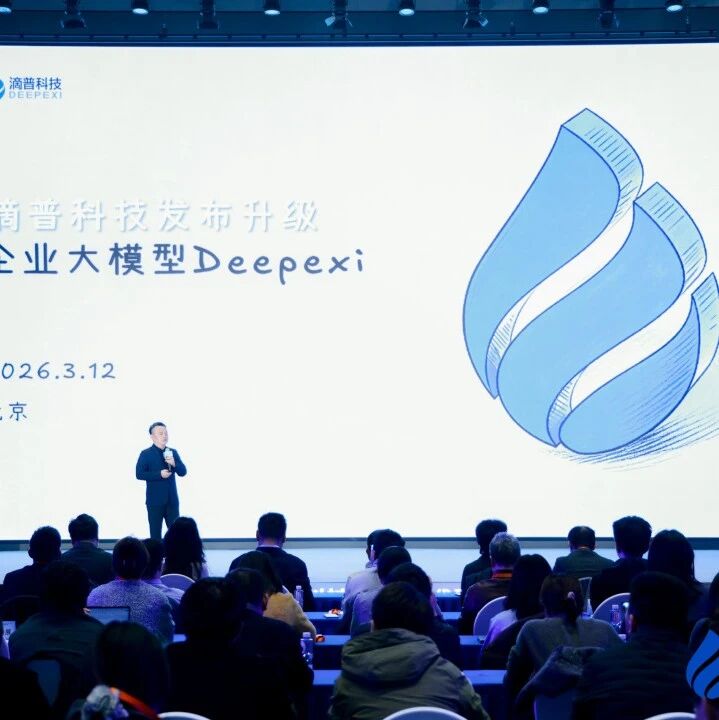
滴普科技产品全新升级:以282个企业级skills+108个本体为企业“养”AI员工
IPO早知道· 2026-03-13 01:30
Core Viewpoint - The article discusses the launch of Deepexi's upgraded enterprise large model, which aims to transform AI from a passive tool into an active collaborator for businesses, enhancing their digital transformation efforts [2][7]. Group 1: Product Features - Deepexi's enterprise large model is designed to build a dedicated business logic chain based on actual business processes and knowledge systems, allowing for deep training and a better understanding of specific business needs [2][5]. - The model integrates various coding capabilities, enabling it to autonomously write code and perform tasks such as database queries, data processing, and ERP integration, evolving AI from a "reference dictionary" to a "collaborative colleague" [3][5]. - The product supports a complete capability loop, from real business-triggered reasoning to executing operations in real environments and reinforcing learning through feedback [5]. Group 2: Collaborative Initiatives - Deepexi has established a joint laboratory with Tianjin University, focusing on embodied intelligence, data simulation, model lightweighting, and inference optimization to drive the implementation of AI employees in enterprises [3][9]. - The upgraded FastData Foil data integration platform and FastAGI intelligent agent platform support the enterprise large model by ensuring high-quality data access and management, enabling AI to independently execute tasks [9][12]. Group 3: Market Impact and Future Prospects - The launch of the Deepexi enterprise large model is seen as a significant advancement for digital transformation in enterprises, addressing the fatigue experienced with previous AI applications that required human intervention for execution [7][12]. - The company anticipates a revenue growth of 65%-75% by 2025, with AI business expected to grow by over 175%, highlighting its role as a key growth driver [13]. - Deepexi's focus on developing enterprise large models with ontology modeling capabilities is expected to solidify its market position and support sustainable long-term growth [12][13].
2026年可靠的智能决策引擎公司选型指南:深度解析三家代表厂商
Jin Tou Wang· 2026-02-27 02:30
Core Insights - The article emphasizes the importance of reliable intelligent decision engines as the "decision brain" connecting enterprise data with business actions during the digital transformation wave [1] Company Summaries Shanghai Ruidao Information Technology Co., Ltd. - Shanghai Ruidao is one of the early entrants in the decision engine field in China, focusing deeply on Business Rule Management (BRM) and independent R&D [2] - Its core products include the Ruidao URule Pro rule engine and UDM intelligent decision engine, featuring a unique rule pattern matching algorithm optimized for Chinese business scenarios, ensuring millisecond-level response times [3] - The product offers a fully browser-based visual rule designer, allowing business personnel to define complex logic without programming knowledge, and supports hot loading of rules for continuous business operations [3] Changliang Technology - Changliang Technology specializes in decision systems for financial risk control, with products designed to meet the specific needs of the financial industry [6] - Its decision engine is an enterprise-level online risk decision system that supports integration with various mainstream rule or model engines, enhancing convenience for financial institutions with complex legacy systems [7][9] - The company has a strong customer base in the financial sector, providing a complete lifecycle management for rules, which is crucial for compliance in financial enterprises [10] Shanshu Technology - Shanshu Technology focuses on mathematical optimization as the core of its decision intelligence platform, represented by the COPT (Cardinal Optimizer) mathematical solver [11] - The COPT platform can solve complex optimization problems, providing AI-driven modeling tools and visual drag-and-drop modeling to lower the barrier for operations research applications [12] - It is particularly suitable for industries like manufacturing, retail, supply chain, and logistics, offering pre-set templates for various optimization scenarios [13][14] Application Scenarios - Shanghai Ruidao's solutions are extensively applied in the financial credit sector, enabling automated risk management across the entire loan process [4] - Changliang Technology's decision engine is tailored for banking credit approval, transaction monitoring, and automated credit assessments, integrating seamlessly with existing financial IT systems [9] - Shanshu Technology's COPT platform is valuable for enterprises needing to solve complex optimization issues, such as supply chain network design and production scheduling [13] Key Data and Endorsements - Ruidao URule Pro is compatible with major operating systems and domestic systems, showcasing its adaptability for various organizational needs [5] - Changliang Technology, as a publicly listed company, benefits from a large customer base in the financial sector, enhancing the practical application of its decision engine [10] - Shanshu Technology's COPT solver has achieved significant recognition in global benchmarks, demonstrating its competitive performance in the mathematical optimization field [14] Selection Recommendations - Companies with complex and frequently changing business rules should consider Shanghai Ruidao's URule Pro for its ease of use and visual capabilities [16] - Financial institutions requiring stable systems and compliance should look towards Changliang Technology for its industry-specific solutions [17] - Organizations with data sovereignty concerns should evaluate the self-controllable capabilities of Shanghai Ruidao and Shanshu Technology's offerings [17]
2026中外合办双证硕士|南昌大学-法国普瓦提埃大学:国际企业管理
Sou Hu Cai Jing· 2026-02-25 02:34
Group 1 - The "data element ×" effect is driving the digital transformation of enterprises from a partial digitalization stage to a global networking stage, and then to an ecological intelligence stage [1] - In the partial digitalization stage, enterprises upgrade some business areas but face data fragmentation and information silos. Establishing a data-sharing platform helps integrate multi-source data, promoting the transition to the global networking stage [1] - In the global networking stage, enterprises share data with external partners but have not yet achieved intelligent decision-making. Utilizing big data analytics and AI technologies allows for deeper data mining and intelligent management, facilitating the transition to the ecological intelligence stage [1] Group 2 - The "data element ×" effect promotes iterative upgrades in management across all stages of digital transformation [2] - In the partial digitalization stage, the effect encourages enterprises to strengthen data integration and sharing mechanisms, addressing issues of data dispersion and low utilization efficiency [2] - In the global networking stage, the effect enhances data sharing and collaborative applications, improving information flow and resource utilization through a more comprehensive data-sharing platform [2] Group 3 - The fusion of multi-source, multi-dimensional, and dynamic data will further enhance the accuracy of AI technologies and improve the precision of model training, leading to accurate decision-making and forecasting [3]

广东推动超5万家规模以上工业企业数字化转型
Zhong Guo Xin Wen Wang· 2026-02-24 13:41
Group 1 - Guangdong aims to promote digital transformation for over 50,000 large-scale industrial enterprises by the end of 2025, exceeding the "14th Five-Year Plan" targets [1] - Key metrics include a digital R&D design tool penetration rate of 93%, a CNC rate of 74% for critical processes, and an 88% digital management penetration rate, all ranking among the best in the country [1] - The province supports leading enterprises in key industries such as electronics, advanced equipment, and food and pharmaceuticals to implement digital transformation through typical application scenarios and integrated hardware and software deployments [1] Group 2 - Guangdong has initiated 14 provincial pilot cities for small and medium-sized enterprises (SMEs) digital transformation, focusing on 38 key sub-sectors including smart terminals and textiles, with over 4,000 SMEs undergoing digital upgrades [1] - The province is leveraging new opportunities in artificial intelligence to upgrade its manufacturing sector, targeting a core AI industry scale of over 300 billion yuan by 2025, accounting for about one-quarter of the national total [1] - In the "AI + manufacturing" integration, Guangdong is developing industrial models and creating innovative platforms to enhance smart manufacturing capabilities [2] Group 3 - Guangdong is advancing intelligent manufacturing by constructing 22 national-level excellent smart factories and 132 provincial-level advanced smart factories, with plans for a national leading smart factory [2] - The province's industrial robot production is projected to reach 336,000 units by 2025, representing a year-on-year growth of 31.2% and accounting for over 40% of the national total [2] - A "chain-based transformation" approach is being explored to enhance the industrial and supply chain, promoting digital supply chains and collaborative manufacturing among upstream and downstream enterprises [2]
企业数字化选型指南:先上ERP,还是MES,企业该怎么选?
Sou Hu Cai Jing· 2026-02-24 07:56
Core Conclusion - In the context of the industry from 2025 to 2026, there is no absolute answer regarding whether to implement ERP (Enterprise Resource Planning) or MES (Manufacturing Execution System) first. The key to decision-making lies in assessing the company's "digital physique" and core pain points. The correct path is typically a strategic plan tailored to the company's current situation rather than a simple either-or choice [1]. Differences in Core Positioning of ERP and MES - **ERP (Enterprise Resource Planning)** - Positioning: An enterprise-level management platform primarily serving management [3]. - Core Functions: Includes financial accounting, procurement management, inventory control, sales order processing, and human resource management [3]. - Data Granularity: Typically analyzes data on a "daily" or "weekly" basis [4]. - Focus: Overall resource optimization, financial business closure, and supply chain collaboration [5]. - **MES (Manufacturing Execution System)** - Positioning: A shop-floor level production execution system primarily serving the execution layer [6]. - Core Functions: Responsible for real-time monitoring of production processes, detailed control of operations, and quality data collection and traceability [7]. - Data Granularity: Provides real-time data with precision down to "minutes" or even "seconds" [8]. - Focus: Transparency of on-site execution, improvement of Overall Equipment Effectiveness (OEE), and real-time data collection [9]. Selection Recommendations Based on Company Pain Points - **Scenario A: Prioritize ERP Implementation** - Recommended if the company faces issues such as chaotic order management, procurement processes, inventory data, and cost accounting [10]. - Information silos between sales, planning, procurement, and warehousing departments [11]. - Urgent need to integrate company resources and enhance financial transparency and management standardization [12]. - Core demand is to improve supply chain collaboration and market response speed [13]. - Suitable for small to medium-sized enterprises with relatively weak management foundations and unstandardized business processes [14]. - **Scenario B: Prioritize MES Implementation** - Recommended if the company faces challenges such as extremely complex production processes that are difficult to manage manually [15]. - Frequent quality issues and significant product quality fluctuations due to lack of effective process control [15]. - Low OEE and unclear reasons for equipment downtime [15]. - Strict batch traceability requirements (e.g., in pharmaceuticals, food, automotive parts) [16]. - Lack of transparency in production progress and "black box" status of on-site management [17]. - Suitable for discrete manufacturing and process manufacturing enterprises with high production complexity and strict on-site control requirements [18]. Main Implementation Path for 2025 - According to the "2024 White Paper on Digital Transformation of China's Manufacturing Industry" and various professional institutions, the recommended standardized path is: "ERP first -> MES follow-up -> System integration" [19]. - **ERP Foundation**: First, achieve integration of master data, planning systems, and financial business through ERP, establishing unified data standards and business norms [19]. - **MES Deepening**: After establishing basic management norms, introduce MES for refined control of complex production processes [20]. - **Final Collaboration**: Achieve seamless integration of ERP and MES, forming an end-to-end data loop from the management layer to the execution layer [21]. Decision Diagnosis Framework (Five-Step Method) - Companies are advised to conduct self-diagnosis before making decisions by following these steps: - Diagnose management bottlenecks: Identify whether the most severe issues are at the management level (e.g., discrepancies in accounts) or execution level (e.g., low yield) [22]. - Assess production complexity: Determine if the processes are complex and if there are strict traceability requirements [23]. - Review data foundation: Check if master data is standardized and if the accuracy of the Bill of Materials (BOM) meets standards [24]. - Inventory budget and resources: Evaluate whether funds, manpower, and time are sufficient to support large system implementation [25]. - Plan integration path: Pre-plan whether ERP and MES collaboration is needed in the future to avoid creating new silos [26]. Common Misconceptions and Pitfalls Guide - **Misconception 1**: Believing ERP can solve all production site issues. - **Correction**: ERP focuses on resource planning and cannot replace MES for real-time on-site control; both need to be used in coordination [27]. - **Misconception 2**: Only implementing MES while neglecting upstream financial and procurement processes. - **Correction**: If upstream business processes are not streamlined, the data collected by MES will lack accurate planning basis, leading to system failure [28]. - **Misconception 3**: Ignoring the role of PLM (Product Lifecycle Management). - **Correction**: R&D data is the source; for R&D-driven companies, the ideal sequence should be PLM -> ERP -> MES [29]. - **Misconception 4**: Blindly pursuing a large and comprehensive system. - **Correction**: Solutions should be chosen based on the actual scale and development stage of the company [31]. Recommendations for Different Types of Enterprises - **Small Manufacturing Enterprises**: Recommend prioritizing ERP for high cost-effectiveness and quick standardization of management processes [33]. - **Medium to Large Discrete Manufacturing Enterprises**: Recommend ERP first, followed by MES implementation. Phased implementation can reduce risks and ensure data continuity [34]. - **Process Industries (e.g., Chemicals, Pharmaceuticals)**: Recommend prioritizing MES due to high compliance and traceability requirements; on-site control is a survival baseline [35]. - **R&D-Driven Enterprises**: Recommend the sequence of PLM -> ERP -> MES to ensure accurate transmission of design data to production and management [36]. - The correct decision is not a simple choice but requires strategic planning based on company size, industry characteristics, and current pressing management pain points. It is advisable to conduct a professional digital diagnosis before initiating projects [37].

福建SEM代运营,精准获客不烧冤枉钱
Sou Hu Cai Jing· 2026-02-15 03:30
Core Insights - The article emphasizes the importance of specialized SEM (Search Engine Marketing) services for businesses in Fujian, highlighting the shift from traditional, aggressive marketing strategies to more refined and professional approaches [1][8]. Group 1: Market Context - Fujian is a province with a strong private economy and numerous SMEs facing intense market competition, particularly in industries like footwear, food, and machinery [1]. - Recent regulatory actions by the State Administration for Market Regulation have urged major platforms like Alibaba and Douyin to avoid "involutionary" competition, signaling a need for fair market practices [1]. Group 2: SEM Service Value - Hiring a specialized SEM agency, such as Shanghai Suyin Network Technology Co., can provide a comprehensive team for the cost of a single employee, offering services that include planning, optimization, creativity, and data analysis [2]. - Effective SEM services require a deep understanding of the client's business, including customer behavior and relevant keywords, to create a complete marketing strategy [4]. Group 3: Performance Metrics - SEM can yield quick results, with data effects visible within 1-2 weeks, while sales effects may take longer due to the B2B nature of many Fujian businesses [4]. - A robust tracking system from clicks to sales is essential for evaluating the effectiveness of SEM services [4]. Group 4: Choosing an SEM Partner - Selecting an SEM agency is akin to choosing a business partner; it is crucial to assess their integrity and capabilities [6]. - Reliable agencies will set clear KPIs and provide transparent access to account data, allowing for regular performance reviews and adjustments based on user behavior [6]. Group 5: Pricing Models - Common SEM service pricing models include fixed service fees, a combination of service fees and consumption points, and performance-based payments, each catering to different budget and risk preferences [7]. - Evaluating an agency's past performance should involve direct access to their operational accounts rather than relying solely on presented case studies [7]. Group 6: Strategic Importance - SEM outsourcing is not merely a support function but a strategic choice for digital transformation, aimed at efficiently reaching customers and promoting quality products and services from Fujian [8].
AI除幻第一股海致科技登陆港交所,开盘狂飙260%
Huan Qiu Lao Hu Cai Jing· 2026-02-13 07:59
Core Viewpoint - Haizhi Technology (02706.HK), known as the "first stock to eliminate AI hallucinations," made a strong debut on the Hong Kong stock market, with its share price surging over 260% on the first day, setting a record for the highest opening increase of a new stock in Hong Kong this year [1] Group 1: IPO Details - The company issued a total of 28.03 million H-shares, with 2.803 million shares available for public offering, accounting for 10% of the total, and 25.227 million shares for international placement, accounting for 90% [1] - The IPO price was set at HKD 27.06 per share, raising approximately HKD 760 million [1] - Four cornerstone investors participated in the IPO, with a total subscription amount of about USD 15 million (approximately HKD 117 million) [1] Group 2: Company Overview - Founded in 2013, Haizhi Technology focuses on digital transformation needs across multiple sectors, specializing in developing industrial-grade intelligent agents and providing AI solutions [1] - The company's core business centers around the Atlas graph solution and the research and promotion of industrial-grade intelligent agents [1] Group 3: Market Position and Technology - According to Frost & Sullivan, Haizhi Technology ranks fifth among industrial AI intelligent agents providers in China by revenue for 2024 and holds the first position among graph-centric AI intelligent agents providers, with a market share of approximately 50% [2] - The company's competitive edge lies in its "AI hallucination elimination" technology, which addresses the issue of AI-generated content producing seemingly coherent but factually incorrect information [2] Group 4: Financial Performance - Despite continuous revenue growth, the company has not yet achieved profitability due to high initial investments in technology research and development [2] - Revenue figures for 2022 to 2024 are projected at CNY 313 million, CNY 376 million, and CNY 503 million, respectively, with a compound annual growth rate of 26.8% [2] - Net losses for the same period are expected to be CNY -178 million, CNY -266 million, and CNY -93.73 million, totaling approximately CNY -537 million [2] - The company is gradually reducing its R&D expenses, which were CNY 86.94 million in 2022 (27.8% of total revenue), CNY 72.71 million in 2023 (19.4% of total revenue), and are projected to be CNY 60.68 million in 2024 (12.1% of total revenue) [2]
戴尔科技2026年上线统一企业级平台,启动重大转型
Jing Ji Guan Cha Wang· 2026-02-11 16:51
Core Viewpoint - Dell Technologies announced a major transformation plan to launch a unified enterprise-level platform on May 3, 2026, aimed at integrating data systems, simplifying processes, and enhancing operational efficiency and customer experience in the AI era [1] Group 1: Transformation Plan - The transformation plan is part of a long-term project codenamed "Maverick" [1] - The initial launch date was set for February 2026 but has been postponed to May 2026 [1] - Employees are required to participate in training starting February 3, 2026, to ensure a smooth transition [1]
