返乡经济

Search documents
9天超长假期点燃“茶饮春节档”,双引擎驱动市场开门红
Guang Zhou Ri Bao· 2026-02-27 13:03
Core Viewpoint - The 2026 Spring Festival, known for its "longest" 9-day holiday, significantly boosted the ready-to-drink tea industry, driven by the "holiday economy" and "return home economy" [1] Group 1: Sales Performance - Tea beverage sales surged in tourist areas, with cities like Chongqing, Chengdu, Shanghai, Beijing, and Hangzhou leading the national sales [3] - Some lesser-known destinations experienced explosive growth, with sales in certain scenic spots increasing by up to 4500% [3] - A specific store in Guangxi's Jingxi city saw daily sales rise from over 1,000 cups to more than 3,200 cups during the holiday, attracting many Vietnamese tourists [3] Group 2: Market Trends - The "return home economy" is emerging as a new driver for Spring Festival consumption, with urban consumption habits being brought back to hometowns [5] - In Guangdong, a store's sales on the first day of the new year increased by 565.30% compared to regular days, with overall sales in the region up nearly 15% year-on-year [5] - The peak sales day on the sixth day of the new year reached over 2 million yuan, indicating a strong demand for tea beverages during the holiday [5] Group 3: Consumer Behavior - The trend of "00s" becoming the main consumers during the Spring Festival has led to tea beverages being included in family reunion meals, with group orders of five or more cups increasing to 1.5 times the usual [6] - Classic tea flavors remain popular, while refreshing fruit tea products performed well due to warmer weather in Guangdong during the holiday [6] - New product launches, such as the "Qilan Pink Guava," have also contributed to the differentiation strategy of brands like Heytea, becoming popular among consumers [6]
网商银行新春助微报告:消费热促活小微经济,冰雪游、宠物寄养等成新热点
Yang Zi Wan Bao Wang· 2026-02-25 02:48
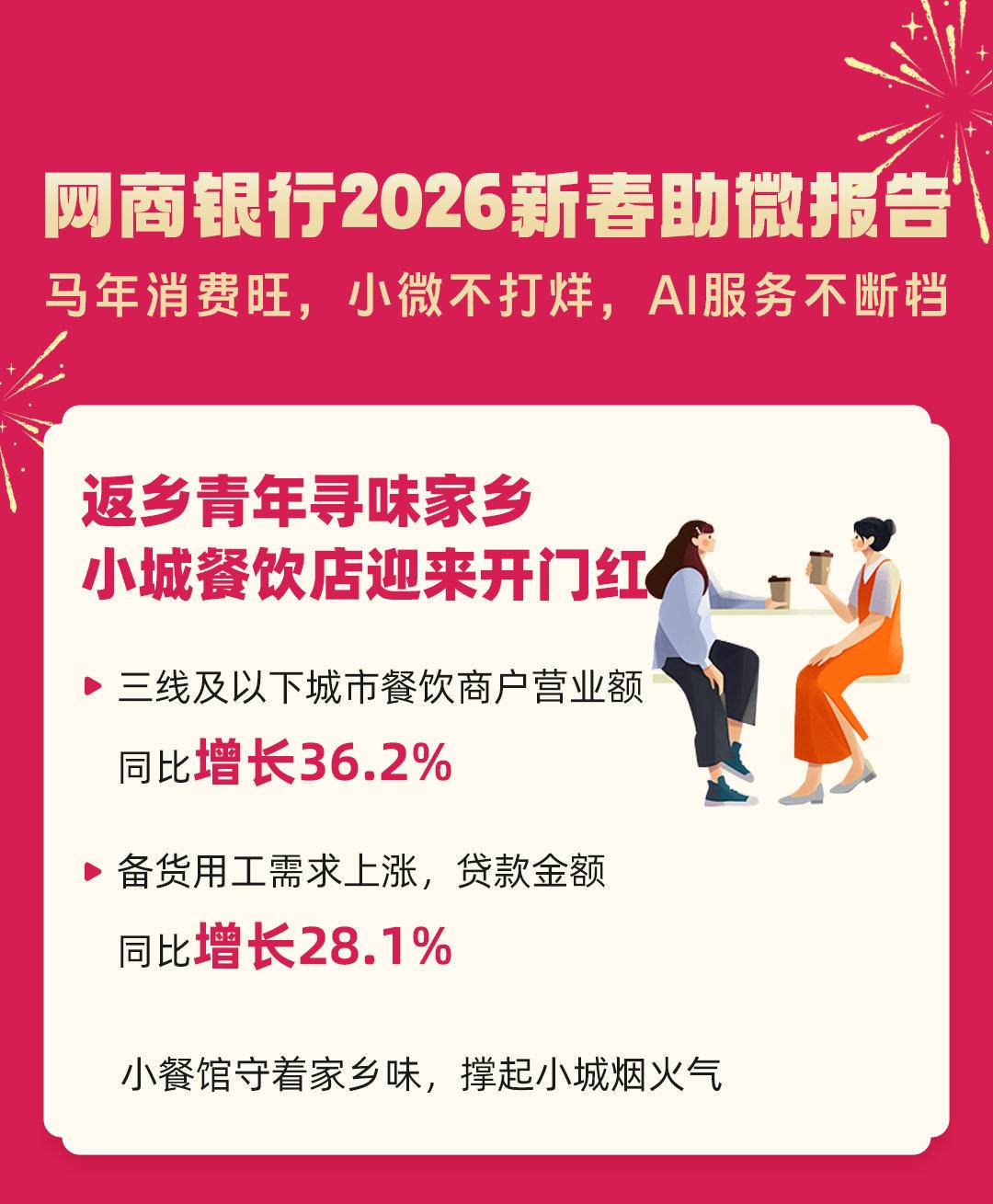
Group 1 - The core viewpoint of the articles highlights a significant increase in consumer spending during the Spring Festival, particularly in lower-tier cities, driven by various new consumption trends such as the return home economy, ice and snow tourism, and the pet economy [1][2][4] Group 2 - During the Spring Festival, restaurant businesses in third-tier and below cities experienced a remarkable year-on-year revenue growth of 36.2%, with merchant operating loans increasing by 28.1% [2] - The ice and snow tourism sector saw a 55.9% increase in revenue for ski resorts, with loan amounts rising by 50.6%, indicating a growing interest in winter sports destinations [4] - The pet service industry reported a 61.6% increase in revenue during the holiday period, reflecting a surge in demand for pet care services as families returned home [4] - The entertainment and leisure sector, including KTVs and cinemas, experienced a 52.8% increase in revenue, as consumers shifted from online to offline activities [9] - Agricultural supply stores saw an 80.7% increase in revenue, with loan amounts rising by 47.1%, as farmers prepared for the spring planting season [9] Group 3 - Financial support for small and micro businesses was enhanced through initiatives like the "Spring Festival Assistance Action," providing interest-free loans up to 188,000 yuan, with over 70% of beneficiaries from lower-tier cities [13][15] - AI technology facilitated rapid loan approvals for small businesses, allowing for quick access to funds based on uploaded operational videos and business data [13][15] - The majority of small businesses receiving financial support were in essential sectors such as wholesale, retail, and accommodation, emphasizing the importance of these industries in maintaining economic activity during the holiday [15]