违约

Search documents
小米汽车“未交车催收尾款”案一审宣判:相关公司返还消费者双倍定金
第一财经· 2025-11-22 12:52
Core Viewpoint - The article discusses a recent court ruling regarding Xiaomi Auto, where the company was ordered to refund double the deposit to a consumer who had not received their vehicle but was pressured to pay the remaining balance [3][4]. Group 1: Court Ruling Details - The Haikou City Meilan District People's Court ruled that Xiaomi's practice of demanding payment for a vehicle that had not yet been delivered was unfair and violated consumer rights [4][5]. - The court found that Xiaomi's requirement for the consumer to pay the remaining balance within seven days of notification, without the opportunity to inspect the vehicle, constituted an unreasonable burden on the consumer [4][5]. - The court determined that the relevant clauses in the Xiaomi Auto purchase agreement were invalid due to being deemed "unfair and unreasonable" [5]. Group 2: Case Background - The case involved a consumer, referred to as Ms. Li, who paid a deposit of 5,000 yuan for a vehicle priced at 318,900 yuan [4]. - The court noted that after Ms. Li requested a delay in production due to financial constraints, Xiaomi agreed to extend the order's validity for 360 days, allowing her to request production at any time within that period [5]. - Xiaomi's subsequent actions to initiate production without Ms. Li's request and demand full payment were found to be in breach of their agreement [5]. Group 3: Financial Implications - The court ordered Xiaomi to refund a total of 10,000 yuan to Ms. Li, which includes double the deposit she initially paid [5]. - Xiaomi Jingming Technology Co., Ltd. was held jointly liable for the debt owed to Ms. Li [5].



郑州“续面”风波,律师:或涉违约、侵权甚至违法
Qi Lu Wan Bao· 2025-08-19 11:41
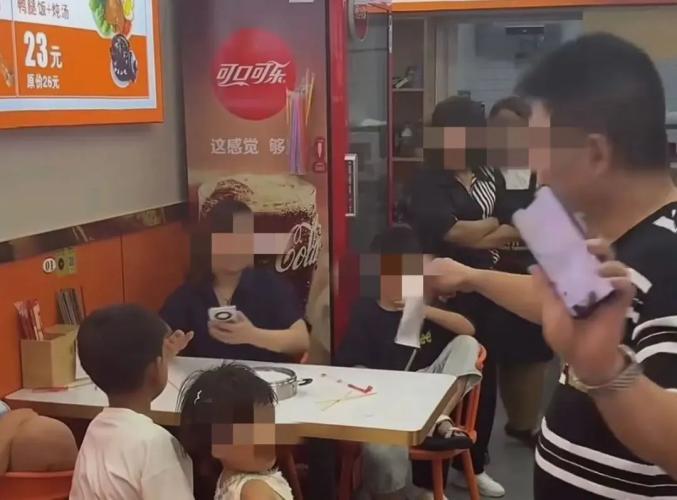
Core Viewpoint - The incident involving three women and four children at a noodle restaurant in Zhengzhou has sparked significant public debate, highlighting issues of consumer rights, business practices, and social media influence [1][2]. Group 1: Incident Details - On August 13, three adult women and four children visited a noodle restaurant, where they spent a total of 140.58 yuan, utilizing the restaurant's "unlimited noodle refill" policy [2]. - The restaurant owner, Mr. Huo, explained that the policy was intended for individual consumption and not for sharing among multiple people, leading to a dispute when the women insisted on additional refills [2][5]. - Following the disagreement, the women left a negative review on a group-buying platform, prompting the restaurant to seek the removal of the review, which was refused [2][4]. Group 2: Legal and Social Media Implications - After the incident, Mr. Huo expressed his refusal to settle the matter amicably, indicating a willingness to pursue legal action if necessary [5]. - A subsequent agreement was reached on August 15, where both parties agreed to delete the negative review and video content related to the incident [5][6]. - However, Mr. Huo's continued online commentary about the incident led to further disputes, with the women considering legal action for invasion of privacy and defamation [6][12]. Group 3: Brand Impact and Public Reaction - The incident drew attention to the clothing brand "Seven Wolves," as social media users began to associate the brand with the restaurant's dispute, leading to a surge of comments in their live streams [7][9]. - "Seven Wolves" issued a statement emphasizing their commitment to lawful business practices and urged the public to focus on their products rather than the incident [10]. - The restaurant's owner later apologized for his behavior but faced backlash, resulting in the closure of his social media account and a shift in public perception [9][10].