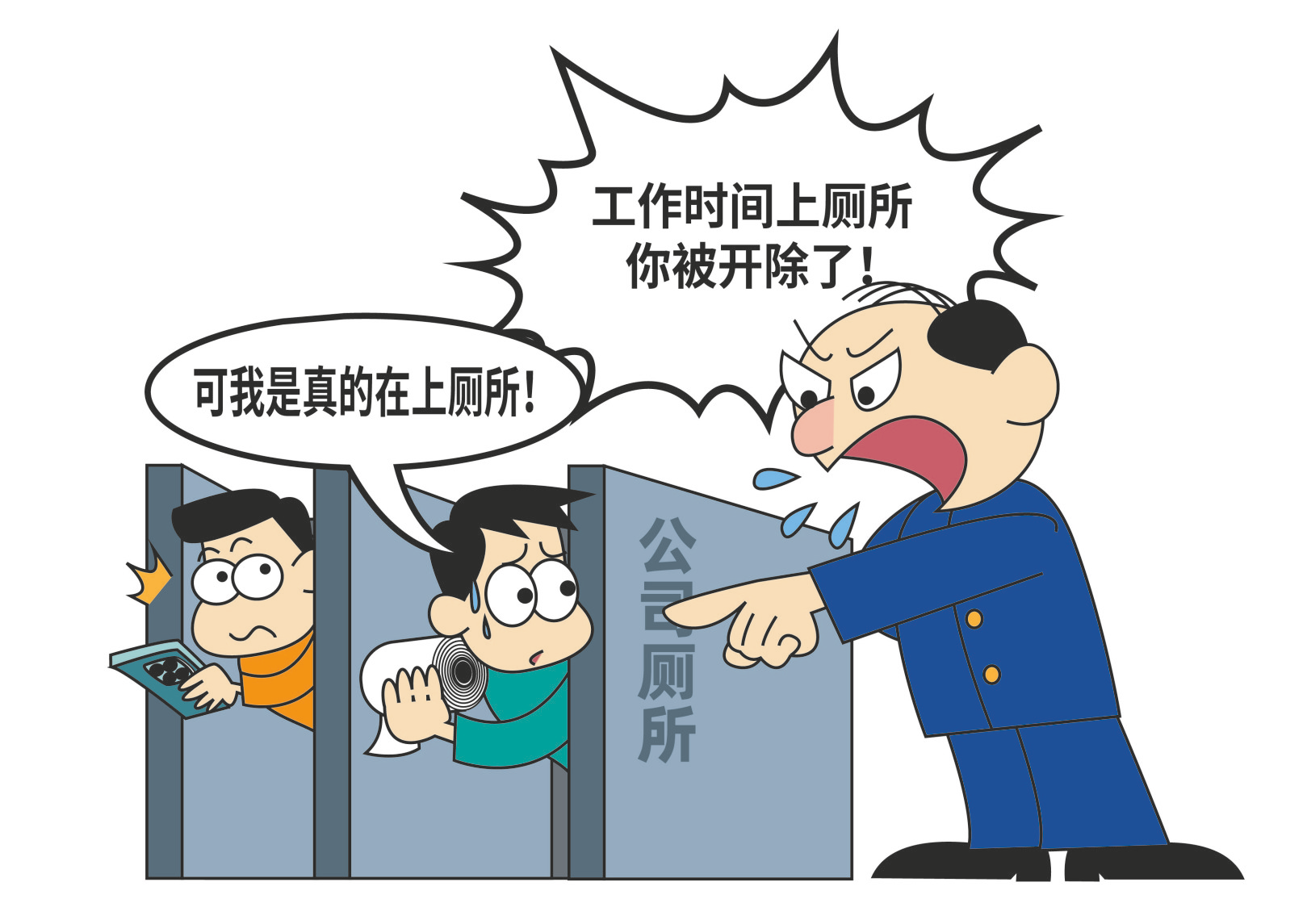
违纪脱岗

Search documents
“我只是上个厕所为什么需要向老板解释?是怀疑我‘摸鱼’吗?”
Xin Lang Cai Jing· 2026-02-01 02:48
Core Viewpoint - The article discusses the legal implications and workplace disputes arising from employees leaving their posts for restroom breaks, highlighting the distinction between reasonable biological needs and disciplinary absences. Group 1: Case Summaries - Case 1: An employee in Jiangsu was dismissed for excessive restroom breaks, with the court ruling that his behavior exceeded reasonable biological needs, constituting unauthorized absence [2][3]. - Case 2: A food company employee in Beijing was fired for a brief restroom break due to abdominal pain, but the court found his actions justified and ruled in his favor, awarding compensation [5]. - The contrasting outcomes of these cases emphasize the importance of the reasonableness of the absence rather than the mere act of leaving the post [6]. Group 2: Legal Definitions and Guidelines - The distinction between normal biological needs and "slacking off" is based on subjective intent and the reasonableness of the behavior [7]. - Normal biological breaks are characterized by their short duration and immediate return to work, while "slacking off" involves prolonged absences with the intent to avoid work [7][8]. - Factors such as the nature of the job and the impact of the absence on operations are critical in determining whether an absence is justified [8]. Group 3: Employer Regulations and Employee Rights - Companies have the right to establish rules regarding restroom breaks, but these must be reasonable and legally compliant [9]. - Regulations that impose strict limits on restroom use without scientific justification may be deemed unreasonable and infringe on employee rights [9]. - Employers are encouraged to create fair policies that accommodate employees' biological needs while maintaining operational efficiency [9].
“带薪如厕”被解雇
Xin Lang Cai Jing· 2026-01-29 21:59
Core Viewpoint - The article discusses the legal implications of employees being dismissed for leaving their posts to use the restroom, highlighting the need for a balance between "reasonable physiological needs" and workplace discipline [2] Group 1: Legal Context - Recent court cases have addressed disputes where employees were terminated for leaving their posts to use the restroom or take short breaks [2] - The article raises questions about the boundaries between legitimate breaks and misconduct, emphasizing the need for a nuanced understanding of employee rights and employer authority [2] Group 2: Employer and Employee Responsibilities - Employers must exercise their rights within reasonable and legal boundaries when it comes to employee conduct [2] - Employees are expected to fulfill their duties diligently while also having their basic physiological needs respected [2]