用工自主权

Search documents
“我只是上个厕所为什么需要向老板解释?是怀疑我‘摸鱼’吗?”
Xin Lang Cai Jing· 2026-02-01 02:48
Core Viewpoint - The article discusses the legal implications and workplace disputes arising from employees leaving their posts for restroom breaks, highlighting the distinction between reasonable biological needs and disciplinary absences. Group 1: Case Summaries - Case 1: An employee in Jiangsu was dismissed for excessive restroom breaks, with the court ruling that his behavior exceeded reasonable biological needs, constituting unauthorized absence [2][3]. - Case 2: A food company employee in Beijing was fired for a brief restroom break due to abdominal pain, but the court found his actions justified and ruled in his favor, awarding compensation [5]. - The contrasting outcomes of these cases emphasize the importance of the reasonableness of the absence rather than the mere act of leaving the post [6]. Group 2: Legal Definitions and Guidelines - The distinction between normal biological needs and "slacking off" is based on subjective intent and the reasonableness of the behavior [7]. - Normal biological breaks are characterized by their short duration and immediate return to work, while "slacking off" involves prolonged absences with the intent to avoid work [7][8]. - Factors such as the nature of the job and the impact of the absence on operations are critical in determining whether an absence is justified [8]. Group 3: Employer Regulations and Employee Rights - Companies have the right to establish rules regarding restroom breaks, but these must be reasonable and legally compliant [9]. - Regulations that impose strict limits on restroom use without scientific justification may be deemed unreasonable and infringe on employee rights [9]. - Employers are encouraged to create fair policies that accommodate employees' biological needs while maintaining operational efficiency [9].
从工程师调去流水线,员工拒绝算旷工吗
Xin Lang Cai Jing· 2026-01-31 07:08
Core Viewpoint - The Shanghai Baoshan District Court ruled that the company's decision to reassign an engineer to a significantly different role as a production line operator was unreasonable, leading to an unlawful termination of the employment contract [1][2]. Group 1: Case Background - The engineer, Mr. Shen, was notified in August 2024 that his position was canceled due to changes in the company's operational situation, and he was "borrowed" to work as a production line operator for a period of six months, with the possibility of extension to twelve months if he did not secure a new position internally [1]. - Mr. Shen objected to the reassignment and continued to clock in at his original position, leading the company to claim he was absent without leave and subsequently terminate his contract [1]. Group 2: Court's Ruling - The court determined that while employers have the right to adjust positions, such adjustments must be reasonable. The new role as a production line operator differed significantly from the original engineer position in terms of job content, nature, and working conditions [2]. - The court found that Mr. Shen's refusal to report to the new position was justified due to concerns about changes in job responsibilities, evaluation, and potential risks of frequent reassignment, thus his actions could not be classified as absenteeism [2]. - The company was ordered to pay Mr. Shen over 250,000 yuan in compensation for the unlawful termination of his employment contract, a decision that was upheld in the second instance and has now taken effect [2]. Group 3: Legal Commentary - The judge emphasized that while employers have the autonomy to adjust roles, such changes must be necessary, reasonable, and justifiable, ensuring that they do not infringe on workers' rights [2]. - Adjustments should align with the employee's skills and maintain their professional value, and the content of the new role should be clear to avoid leaving employees in a state of uncertainty [2]. - Clear communication is essential to prevent the misuse of role adjustments as a means of risk transfer, and employees should legally contest unreasonable changes while preserving evidence [2].
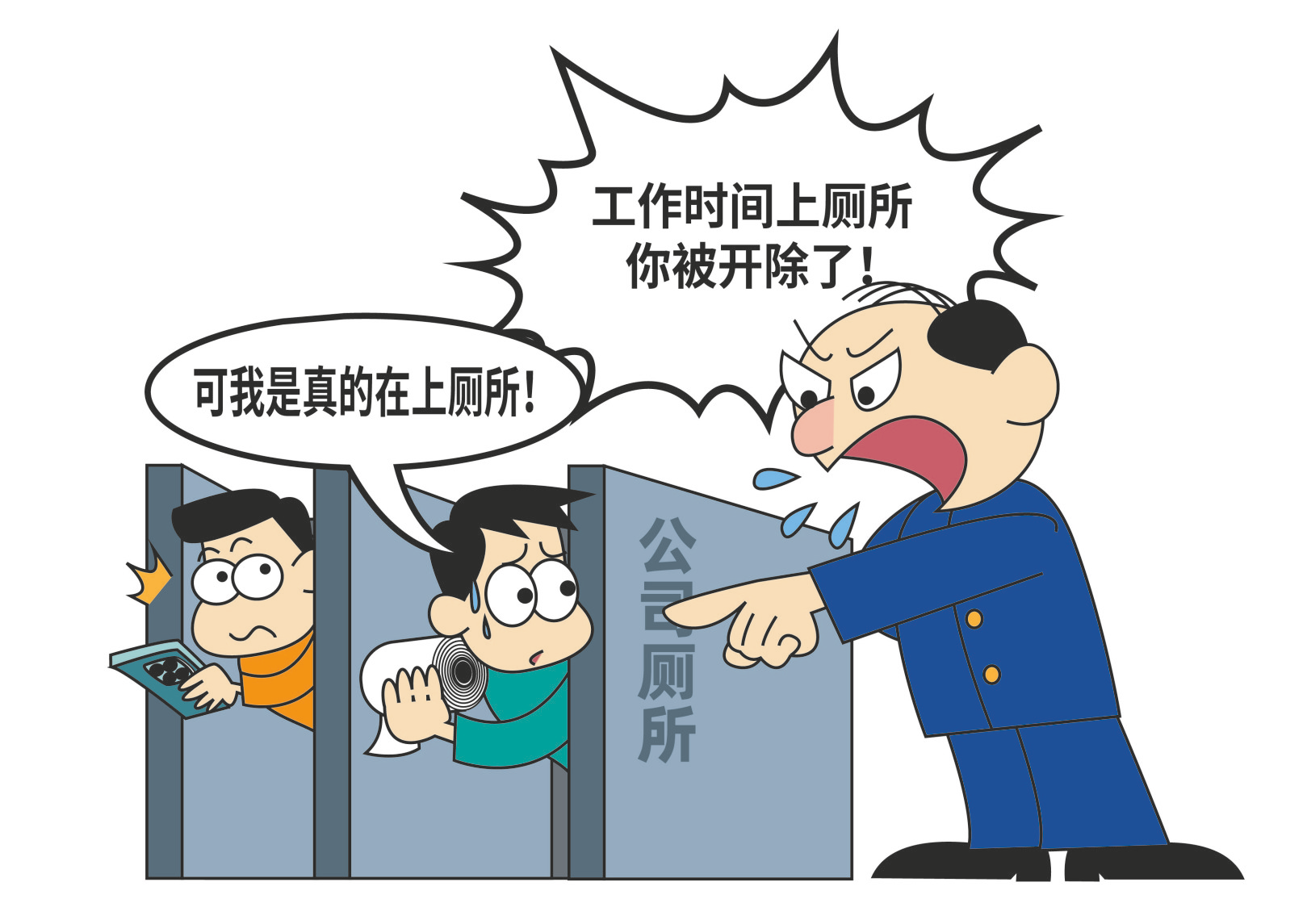
“带薪如厕”被解雇
Xin Lang Cai Jing· 2026-01-29 21:59
Core Viewpoint - The article discusses the legal implications of employees being dismissed for leaving their posts to use the restroom, highlighting the need for a balance between "reasonable physiological needs" and workplace discipline [2] Group 1: Legal Context - Recent court cases have addressed disputes where employees were terminated for leaving their posts to use the restroom or take short breaks [2] - The article raises questions about the boundaries between legitimate breaks and misconduct, emphasizing the need for a nuanced understanding of employee rights and employer authority [2] Group 2: Employer and Employee Responsibilities - Employers must exercise their rights within reasonable and legal boundaries when it comes to employee conduct [2] - Employees are expected to fulfill their duties diligently while also having their basic physiological needs respected [2]

用人单位花式劝退 员工如何依法说不
Bei Jing Qing Nian Bao· 2025-04-27 23:54
Core Viewpoint - The article highlights the issue of "invisible dismissal" where employers use tactics to force employees to resign, particularly during peak hiring and contract termination periods. It emphasizes the importance of lawful termination of labor relations to maintain social stability and harmony in the workplace [2]. Group 1: Case Summaries - Case 1: An employee, Cao, was wrongfully dismissed while undergoing knee surgery. The court ruled that the company lacked reasonable grounds for termination and ordered compensation of over 350,000 yuan [3][4][5]. - Case 2: Zhang, a live-streaming operator, was dismissed for tardiness. The court found the company's policy of equating tardiness with absenteeism unreasonable and awarded Zhang 8,000 yuan in compensation [7][8][9]. - Case 3: Zhao, an engineer, claimed wrongful termination after the company revoked his access to attendance systems. The court ruled in favor of Zhao, ordering the company to pay over 230,000 yuan for unlawful dismissal [11][12][13]. - Case 4: Wang's work location was changed due to company relocation. The court determined that the change did not constitute a breach of contract, and the company was not required to pay compensation [14][15][16]. Group 2: Legal Insights - Employers must adhere to the principles of good faith and respect for employees when terminating contracts. The law requires that any dismissal must be justified and proportionate to the employee's actions [6][10]. - The court emphasized that disciplinary actions should be commensurate with the severity of the employee's misconduct, and employers should not impose the harshest penalties without prior warnings [10][17].