
选举舞弊

Search documents
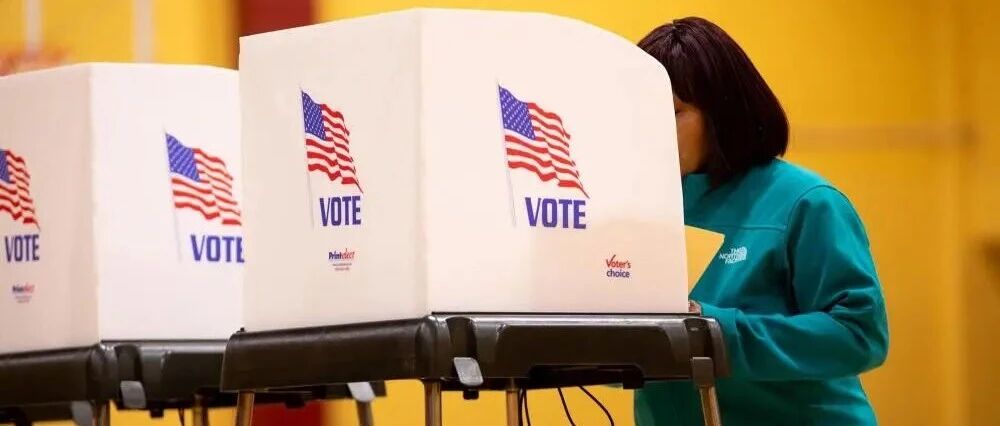
美国最高法院或限制中期选举邮寄投票
第一财经· 2026-03-24 09:29
Core Viewpoint - The U.S. Supreme Court is considering whether to allow late-arriving mail-in ballots to be counted, which could significantly impact the upcoming midterm elections in November [1][2]. Group 1: Legal Context - The hearing on March 23 focused on a Mississippi law that permits mail-in ballots to be delivered up to five business days after Election Day, a law challenged by the Republican National Committee and supported by the Fifth Circuit Court [1]. - Approximately 14 states and Washington D.C. have varying grace periods for mail-in voting, while about 15 states allow late voting for military and overseas voters, provided the ballot is postmarked by Election Day [1]. Group 2: Supreme Court Dynamics - The core debate revolves around whether federal law mandates that both voting and ballot receipt must occur on a single Election Day [2]. - At least five of the six conservative justices expressed skepticism about the Mississippi law, suggesting that setting Election Day as the final deadline for ballot receipt would be clearer [2]. Group 3: Political Implications - Democrats generally favor mail-in voting, and there has been a shift among some non-Democratic voters towards this method post-pandemic [3]. - Despite potential advantages for Republicans if the court rules in their favor, some conservative rural voters and military personnel also prefer mail-in voting, complicating the political landscape [3].

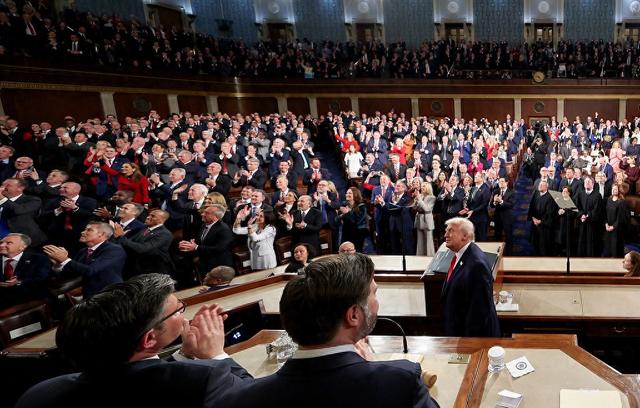
特朗普超长国情咨文:一场关于经济、关税、打压移民的“政绩”自宣
Xin Lang Cai Jing· 2026-02-25 10:46
Economic Policy Focus - President Trump emphasized economic achievements in his State of the Union address, claiming that the country is stronger and more prosperous than ever [1][3] - He asserted that prices for essential goods like eggs, beef, and fuel are decreasing, despite media fact-checks indicating otherwise [3] - Trump plans to push Congress to legislate on his healthcare affordability framework, which aims to shift federal subsidies from insurance companies to consumers [3] Tariff Policy Defense - Trump defended his tariff policies as a mechanism for achieving significant deals, stating that tariffs generate revenue for the country [4] - He expressed dissatisfaction with the Supreme Court's ruling that limited his ability to impose tariffs under the International Emergency Economic Powers Act, indicating he would continue to levy tariffs without Congressional approval [4][5] - Research indicates that nearly 90% of the economic burden of tariffs falls on U.S. businesses and consumers, contradicting Trump's claim that tariffs are paid by foreign countries [5] Immigration Policy Claims - Trump claimed to have achieved the "strongest border in U.S. history," citing a significant reduction in illegal immigration [6] - He highlighted the number of deportations, reporting approximately 540,000 in the past year, which falls short of his target of 1 million [6] - The speech included a focus on crimes committed by illegal immigrants, with some victims' families present in the audience [6] Election Integrity Allegations - Trump reiterated claims of widespread voter fraud in U.S. elections, particularly regarding his 2020 loss, despite lack of evidence from judicial rulings [8][9] - He called for legislation requiring voters to present photo identification before voting, promising to issue an executive order on the matter [9] Foreign Policy Statements - Trump claimed to have ended multiple wars and suggested that conflicts like the Russia-Ukraine war would not have occurred under his presidency [10] - He mentioned NATO countries' military spending commitments and highlighted a plan for European nations to purchase U.S.-made weapons for Ukraine [10]
自夸经济、鼓吹关税、打压移民:特朗普超长国情咨文说了啥?
Xin Lang Cai Jing· 2026-02-25 10:46
Economic Policy Focus - President Trump emphasized economic achievements in his State of the Union address, claiming that the country is stronger and more prosperous than ever [1] - He asserted that prices for key goods like eggs, beef, and fuel have decreased, despite media fact-checks indicating otherwise [3] - Trump plans to push Congress to legislate on his healthcare affordability framework, which aims to shift federal subsidies from insurance companies to consumers [3] Trade and Tariff Policies - Trump defended his tariff policies as a mechanism for achieving significant trade deals, stating that tariffs generate revenue for the country [4] - Following a Supreme Court ruling that overturned his tariff policy, Trump expressed dissatisfaction and indicated he would continue to impose tariffs without Congressional approval [4][5] - Research shows that nearly 90% of the economic burden from tariffs falls on U.S. businesses and consumers, contradicting Trump's claim that tariffs are paid by foreign countries [5] Immigration Policy - Trump claimed to have achieved the "strongest border in U.S. history," citing a significant reduction in illegal immigration [6] - He highlighted the crimes committed by illegal immigrants, while failing to mention recent incidents involving U.S. citizens killed by law enforcement [6] - Data indicates that approximately 540,000 immigrants were deported in the past year, falling short of Trump's target of 1 million [6] Election Integrity Claims - Trump reiterated claims of widespread election fraud, particularly regarding the 2020 election, despite lack of evidence from judicial rulings and investigations [8][9] - He called for legislation requiring voters to present photo identification before voting, promising to issue an executive order on the matter [9] Foreign Policy Achievements - Trump claimed to have ended eight wars and suggested that conflicts like the Russia-Ukraine war would not have occurred under his presidency [10] - He mentioned a NATO agreement that military spending by member countries will reach 5% of GDP by 2035, and promoted a plan for European countries to purchase U.S.-made weapons for Ukraine [10]
持续发酵!特朗普最新发声
Xin Lang Cai Jing· 2025-12-27 16:36
Group 1 - The core viewpoint of the articles revolves around President Trump's characterization of the Epstein case as "political persecution" and his criticism of the U.S. Department of Justice for focusing on this matter instead of alleged election fraud [1][2] - Trump claims that the release of over 1 million documents related to the Epstein case is a distraction orchestrated by the Democrats to divert attention from his achievements and insists that the Democrats, not Republicans, are implicated in the Epstein scandal [1][2] - The U.S. Department of Justice announced on the 24th that it had discovered over 1 million documents potentially related to the Epstein case, which were transferred from the Southern District of New York's U.S. Attorney's Office and the FBI, and stated that the release of these documents may take several weeks due to their volume [1] Group 2 - For months, Trump has expressed dissatisfaction with the lack of information regarding the Epstein case, labeling it a "hoax" created by the Democrats to shift focus from his performance [2] - Victims of the Epstein case publicly criticized Trump for his recent comments, indicating a backlash against his attempts to distance himself from the scandal [2] - Initially, Trump did not support the public release of Epstein-related documents but changed his stance after Congress strongly backed the transparency legislation, ultimately signing the "Epstein Archives Transparency Act" on November 19 [2]
选委会公布当选名单,落选者指责“选举政变”,洪都拉斯大选结果遭到质疑
Huan Qiu Shi Bao· 2025-12-25 22:54
Group 1 - The core viewpoint of the article is the announcement of the election results in Honduras, where National Party candidate Asfura has been declared the winner, but the opposition candidate Nasrallah refuses to accept the results due to alleged irregularities and delays in the counting process [1][2][3] - Asfura received 40.27% of the votes, while Nasrallah garnered 39.53%, indicating a very close election outcome [1][3] - The election commission reported that over 98% of the counting work was completed, suggesting that Asfura's victory is mathematically unlikely to be overturned [1] Group 2 - There are significant doubts about the election results from members of the election commission, with claims that the announcement was made prematurely and without completing all legal procedures [2] - The counting process faced delays due to technical issues, with approximately 15% of ballots requiring manual counting to confirm the winner [3] - The election results, if confirmed, would represent a victory for former President Trump, who has actively supported certain Latin American leaders since his re-election [4]
洪都拉斯国家选举委员会:阿斯富拉当选新任总统
Xin Hua She· 2025-12-25 01:00
Core Viewpoint - The National Electoral Council of Honduras announced the election results, declaring Nasry Asfura of the National Party as the new president with a vote share of 40.27% [1] Group 1: Election Results - Nasry Asfura received 40.27% of the votes, while Salvador Nasralla of the Liberty Party received 39.53%, and Xiomara Castro of the Liberty and Refoundation Party received 19.19% [1] - The election took place on November 30, with results initially delayed due to a reported failure in the counting system [1] Group 2: Political Context - U.S. President Trump reportedly threatened Honduran voters against supporting Moncada, warning of consequences [1] - Current President Castro condemned Trump's interference in the elections, alleging that the Honduran people faced "extortion, coercion, and manipulation" during the voting process [1] - Allegations of electoral fraud were raised by Moncada, Nasralla, and some local media [1]