遏制中国战略

Search documents
美国史上对台单笔最大军售,藏着哪些野心|京酿馆
Xin Jing Bao· 2025-12-19 04:25
Core Viewpoint - The U.S. announced a military sales plan to Taiwan valued at approximately $11 billion, which is seen as a significant violation of the One China principle and detrimental to regional stability [2][3]. Group 1: Military Sales Details - The military sales package includes eight items, such as 82 High Mobility Artillery Rocket Systems (HIMARS) and 420 Army Tactical Missile Systems, totaling over $4 billion [3]. - Additional components include 60 M109A7 self-propelled howitzers, "Altius" suicide drones, military software, Javelin and TOW anti-tank missiles, helicopter parts, and Harpoon missile refurbishment kits, with the total value exceeding $11 billion [3]. - This military sale is the second of its kind during the Trump administration, with the U.S. State Department stating it aligns with U.S. national interests and supports Taiwan's military modernization [3][4]. Group 2: Legislative Context - The U.S. has a legal obligation to assist Taiwan in self-defense under the Taiwan Relations Act, which has been reinforced by recent legislation aimed at increasing military aid to Taiwan [4]. - The U.S. Congress is expected to approve this unprecedented military sale, reflecting a bipartisan consensus on countering China's influence in the region [5][6]. Group 3: Strategic Implications - The military sales are viewed as a strategic move to bolster Taiwan's defense capabilities against perceived threats from mainland China, particularly in the context of the upcoming U.S. midterm elections [6]. - The focus on asymmetric warfare capabilities, such as drones, indicates a shift in Taiwan's military strategy to counterbalance China's growing military strength [6][7]. Group 4: Reactions and Consequences - The announcement has drawn strong condemnation from China, which views it as a serious infringement on its sovereignty and a provocation that undermines peace in the Taiwan Strait [8][9]. - Chinese officials have urged the U.S. to cease its arms sales to Taiwan, emphasizing the detrimental impact on bilateral relations and regional stability [9].

英国与美达成关税协议,果断出卖中方利益?伦敦要阻止中国建使馆
Sou Hu Cai Jing· 2025-08-12 01:50
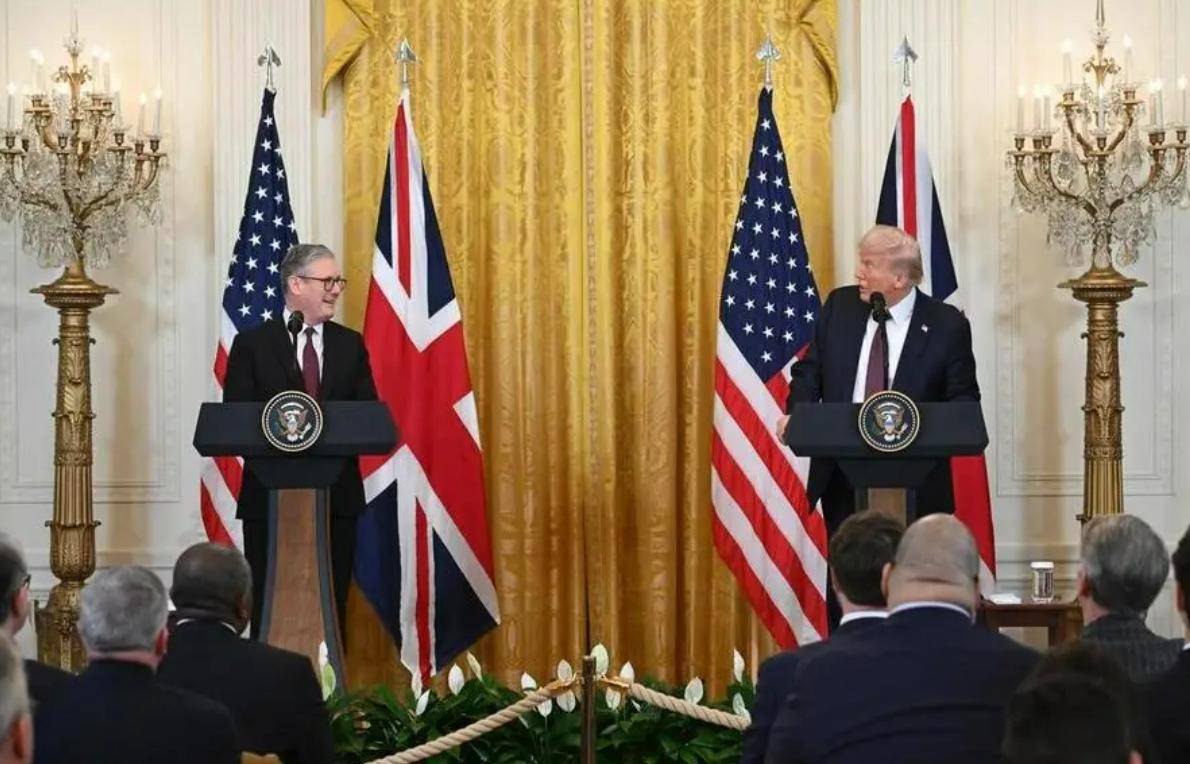
Core Viewpoint - The article discusses the obstacles faced by the new Chinese embassy project in London, attributing these challenges to the United States' strategic efforts to contain China, particularly through pressure on the UK government [3][4]. Group 1: Project Background - The new Chinese embassy project in London was expected to commence construction but has suddenly stalled due to external pressures [3]. - Reports indicate that the White House pressured the UK government two months prior, threatening to jeopardize a US-UK tariff agreement if the project was not denied [3][4]. - The US claimed that the embassy's location posed risks of sensitive financial data leaks, using this as leverage against the UK [3]. Group 2: US Influence and Strategy - The US is concerned about improving Sino-British relations, as it could diminish American influence over the UK and weaken its position in the geopolitical landscape [4]. - The US has employed various tactics, including public opinion manipulation and allegations of security risks, to undermine the project [4]. - There are indications that protests against the embassy site may have been funded by the US to create additional pressure on the UK government [4]. Group 3: Implications for China and the UK - The US's claims of security risks are described as baseless, with the new embassy intended to replace outdated facilities and enhance working conditions for Chinese diplomats [6]. - The article argues that US intervention represents a serious infringement on UK sovereignty and questions the UK's ability to manage risks effectively [6]. - The US's extensive network of diplomatic and military installations globally is highlighted, suggesting a double standard in its criticism of China's actions [6].