道德实在论

Search documents
会议|首届唯实哲学研讨会暨唯实哲学研究院揭牌仪式在辽宁大学举行
Xin Lang Cai Jing· 2025-12-23 06:41
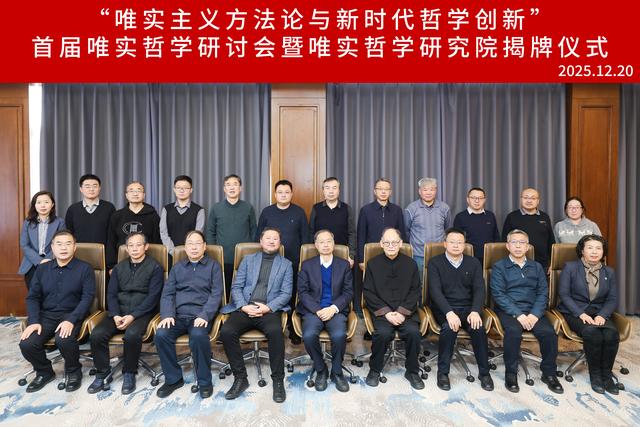
Core Viewpoint - The establishment of the Wei Shi Philosophy Research Institute at Liaoning University aims to promote theoretical innovation and deepen academic originality, responding to the profound changes in society and emphasizing the connection between academia and practice [3][5]. Group 1: Event Overview - The first Wei Shi Philosophy Seminar and the unveiling ceremony of the Wei Shi Philosophy Research Institute were successfully held at Liaoning University, attended by renowned experts and scholars from various institutions [1]. - The opening ceremony was hosted by the Dean of the Philosophy Department, who emphasized the importance of theoretical and methodological self-awareness in Chinese philosophy [3]. Group 2: Institutional Goals and Philosophy - The Wei Shi Philosophy Research Institute adheres to the "three realities" concept of reality, truth, and pragmatism, aiming to engage with societal needs and promote philosophical innovation [5]. - The institute plans to follow a three-step approach: moving out of the campus, engaging with society, and advancing to the forefront of philosophical research [5]. Group 3: Expert Contributions - Professor Zhang Ke, the chief expert of the institute, discussed the stagnation in methodological innovation within the philosophy community and proposed Wei Shi as a new philosophical methodology centered on facts and reality [14]. - Various scholars presented their insights on the significance of Wei Shi philosophy, emphasizing its potential to address real-world issues and contribute to the development of a Chinese philosophical discourse [41][43]. Group 4: Methodological Discussions - The conference featured discussions on the application of Wei Shi methodology in various fields, including ethics, history, and political philosophy, highlighting its relevance in contemporary philosophical discourse [31][39]. - Scholars emphasized the need for a return to facts and the integration of emotional realities within the framework of Wei Shi philosophy, advocating for a comprehensive understanding of facts [39].

倾听尼山2025|斯特里奥斯·维尔维达基斯:文明的差异并非障碍,而是“美的多样性”
经济观察报· 2025-07-08 11:54
Core Viewpoint - The article emphasizes the importance of cultural exchange and mutual understanding between different civilizations, particularly focusing on the philosophical traditions of China and Greece, and how these can contribute to a new global ethical framework and educational concepts [4][5][6]. Group 1: Event Overview - The 11th Nishan World Civilization Forum will be held in Qufu, Shandong from July 9 to 10, 2025, aiming to gather global experts to address common human issues and promote understanding of Chinese civilization [3]. - The theme of the forum is "Beauty in Diversity: Civilizational Relations and Global Modernization," with subtopics including the origins and future of civilization, the global significance of Confucian culture, and the role of artificial intelligence in human civilization [3]. Group 2: Philosophical Insights - Stelios Virvidakis highlights the philosophical similarities between Chinese and Greek traditions, suggesting that differences in civilization should be viewed as "beauty in diversity" rather than obstacles [4][5]. - He points out that concepts like "harmony" in Chinese philosophy provide valuable references for global ethics, aligning with similar ideas in Greek philosophy [5][6]. Group 3: Global Challenges and Responsibilities - Virvidakis argues that addressing global issues such as climate change and artificial intelligence ethics requires integrating moral resources from different civilizations [6][20]. - He stresses the importance of philosophical education in fostering a sense of global responsibility, advocating for philosophy to be a practical guide in daily life [6][26]. Group 4: Cultural and Ethical Dialogue - The article discusses the need for a shared ethical foundation that transcends cultural differences, with core values like justice and compassion being universally relevant [14][16]. - Virvidakis emphasizes that cultural dialogue can enrich understanding and correct blind spots in one's own tradition, promoting a more harmonious global society [25][26].