
遗产管理

Search documents
上海独居女子离世引关注,超百万元房产无人继承
Mei Ri Jing Ji Xin Wen· 2025-12-29 01:24
Core Viewpoint - The sudden death of a 46-year-old woman living alone in Shanghai's Hongkou District has raised significant attention regarding her inheritance issues, with the local civil affairs bureau appointed as the estate administrator [1][3]. Group 1: Inheritance and Estate Management - The estimated value of the deceased woman's estate is between 2 million to 3 million yuan, including a one-bedroom apartment and some savings, although this has not been officially confirmed [2]. - The civil affairs bureau has announced that if there are individuals with a bequest relationship or those who relied on the deceased for support, they should prepare written materials for submission within a three-month period [5][10]. - The deceased had no legal heirs as they had all passed away before her, and she left no will or bequest agreement [3][10]. Group 2: Property and Market Context - The residential area where the deceased lived, known as the Post and Telecommunications New Village, is one of Shanghai's earliest public housing projects, with a current market price of around 50,000 yuan per square meter for second-hand apartments [1][11]. - The property where the deceased resided is approximately 35 square meters, with current market values for similar units ranging from 1.67 million to 1.7 million yuan, and potential rental income of about 4,000 yuan per month [11]. Group 3: Legal and Social Implications - The case highlights the growing issue of inheritance management for the increasing number of single-person households, particularly as the population ages and the number of individuals without heirs rises [13][14]. - Legal experts suggest that clearer regulations are needed to address the complexities of estate management for individuals without direct heirs, emphasizing the importance of wills and bequest agreements [14].

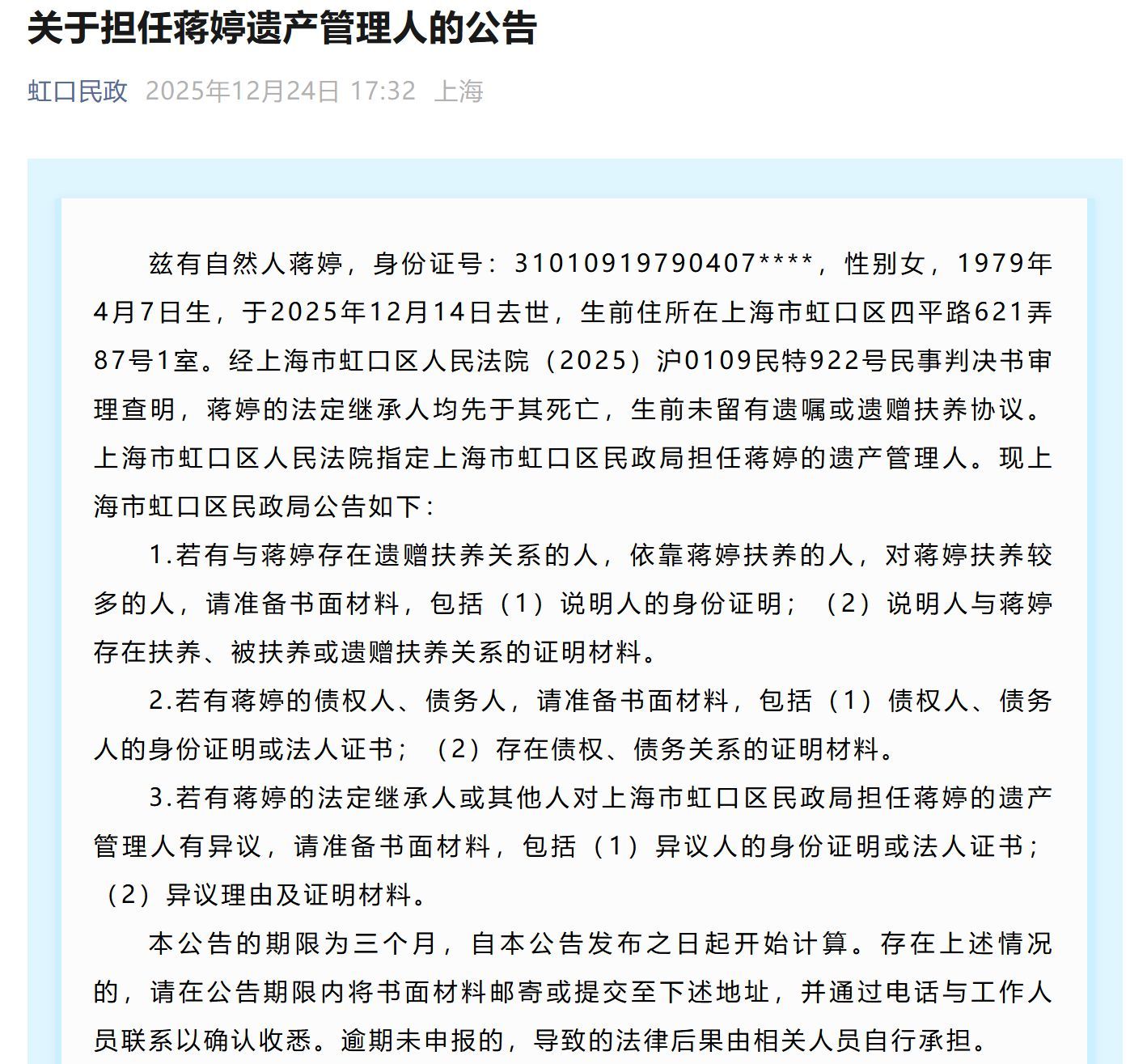
上海独居女子离世引关注,超百万房产无人继承背后有何隐情?
Mei Ri Jing Ji Xin Wen· 2025-12-28 22:47
Core Viewpoint - The inheritance issue of a deceased 46-year-old woman living alone in Shanghai's Hongkou District has garnered significant attention, with the local civil affairs bureau appointed as the estate administrator due to the absence of legal heirs and a will [2][3]. Group 1: Inheritance Management - The deceased, identified as Jiang Ting, had no surviving legal heirs as they had all passed away before her, and she did not leave a will or any testamentary documents [3]. - The local civil affairs bureau has been designated as the estate administrator, and individuals with potential claims to the estate are invited to submit written materials within a three-month notice period [3]. Group 2: Property and Financial Details - The estimated value of Jiang Ting's estate is between 2 million to 3 million yuan, which includes a one-bedroom apartment and some savings, although this estimate has not been officially confirmed [2][9]. - The apartment is located in the historic Post and Telecommunications New Village, with current market prices for similar units around 500,000 yuan per unit [5][11]. Group 3: Societal Implications - The case highlights the growing issue of inheritance management for the increasing number of single-person households, as the population of single individuals is projected to exceed 300 million by 2025, representing 25% of the total population [12]. - Legal experts suggest that current regulations regarding inheritance management are vague and need to be refined to better address the realities of society, particularly concerning the management of unclaimed estates [12][13].
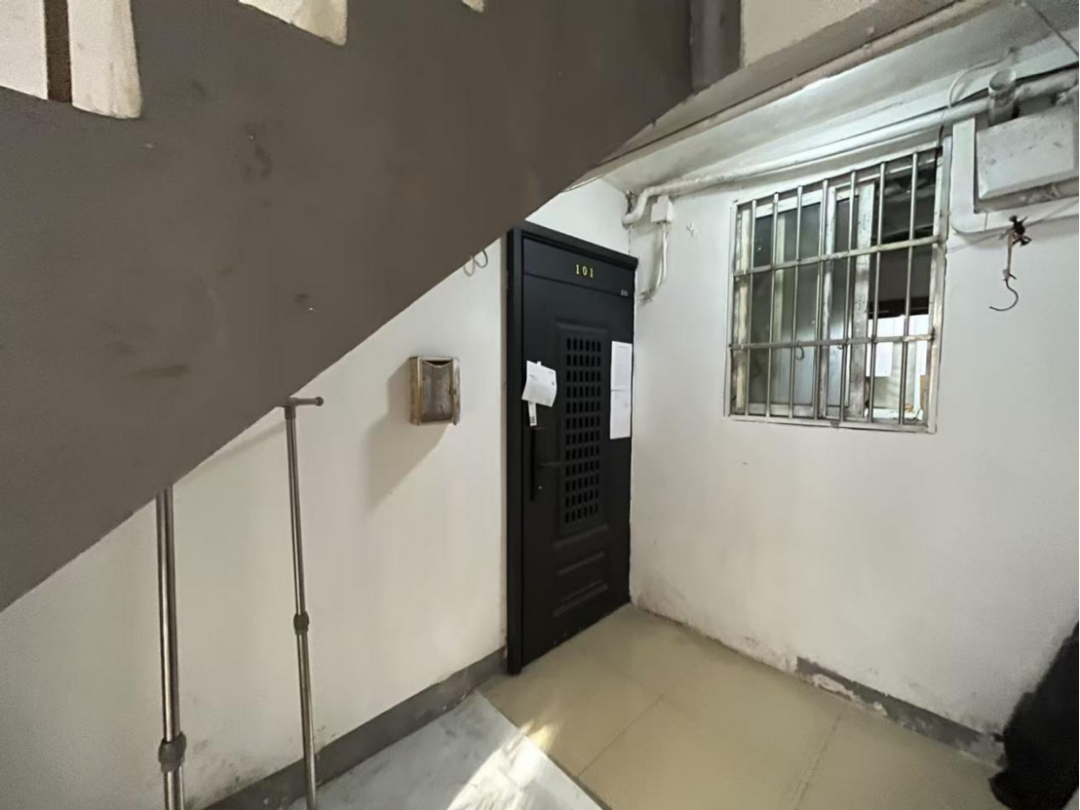
上海46岁独居女子过世 遗产不能买墓地?最新消息:法院指定虹口区民政局任遗产管理人
Mei Ri Jing Ji Xin Wen· 2025-12-25 00:46
Core Viewpoint - The case of a 46-year-old woman, Jiang, who passed away alone in Shanghai, raises significant concerns regarding the management of her estate, particularly in the absence of immediate family and a will [1][5]. Group 1: Estate Management Announcement - The Shanghai Hongkou District Civil Affairs Bureau announced its role as the estate manager for Jiang, as all her legal heirs had predeceased her, and she left no will or inheritance agreement [2]. - Individuals with a caregiving relationship to Jiang or those with claims against her estate are invited to submit written materials to the Civil Affairs Bureau within three months of the announcement [3][2]. - The announcement specifies that any objections to the Civil Affairs Bureau's role must also be submitted in writing, including identification and reasons for the objection [2][3]. Group 2: Medical and Financial Circumstances - Jiang was hospitalized due to a brain hemorrhage, and her distant relative, Mr. Wu, signed for her medical treatment and initially covered some medical expenses [10][9]. - The accumulated medical expenses reached over 210,000 yuan, with Mr. Wu unable to cover the costs, leading to complications regarding the repayment from Jiang's estate [10][12]. - Legal advice indicated that Mr. Wu, as a distant relative, had no legal claim to Jiang's estate to recover the medical expenses incurred during her treatment [10][15]. Group 3: Funeral Arrangements and Legal Implications - The local community committee has taken on the role of temporary guardian during Jiang's treatment, emphasizing the need for urgent medical care without the ability to access her funds [15][12]. - The Civil Affairs Bureau has indicated that Jiang's estate will be managed according to legal procedures, with any remaining assets potentially allocated for public welfare after settling debts [16][17]. - There is a discussion regarding the appropriateness of using Jiang's estate for funeral expenses, with the Civil Affairs Bureau clarifying that such costs could be covered if deemed reasonable [17][16].

上海46岁独居女子过世,遗产不能买墓地?最新消息:法院指定虹口区民政局任遗产管理人
Mei Ri Jing Ji Xin Wen· 2025-12-24 16:50
Core Viewpoint - The case of Ms. Jiang, a 46-year-old woman from Shanghai who passed away alone, raises significant concerns regarding the management of her estate, particularly in the absence of legal heirs and a will [2][6][18]. Group 1: Estate Management Announcement - The Shanghai Hongkou District Civil Affairs Bureau has been appointed as the estate manager for Ms. Jiang, as all her legal heirs predeceased her and she left no will [2][18]. - The Bureau has issued a public notice inviting individuals who had a caregiving relationship with Ms. Jiang or are her creditors to submit written materials to establish their claims [3][19]. Group 2: Medical and Financial Circumstances - Ms. Jiang was hospitalized due to a brain hemorrhage, with her medical expenses accumulating to over 210,000 yuan, which her distant relative, Mr. Wu, partially covered [11][12]. - Despite Mr. Wu's efforts to assist, he was informed that he could not claim reimbursement from Ms. Jiang's estate due to the lack of a legal inheritance relationship [13][17]. Group 3: Funeral Arrangements and Legal Implications - The local community committee has taken on the role of temporary guardian during Ms. Jiang's treatment, emphasizing the need for urgent medical care despite the financial burden [17]. - The Civil Affairs Bureau has indicated that if no legal heirs are found, Ms. Jiang's estate may be used for public welfare after settling debts [18][19]. - There is a discussion regarding the appropriateness of using Ms. Jiang's estate for her funeral expenses, with the Bureau clarifying that such costs could be covered if deemed reasonable [19].

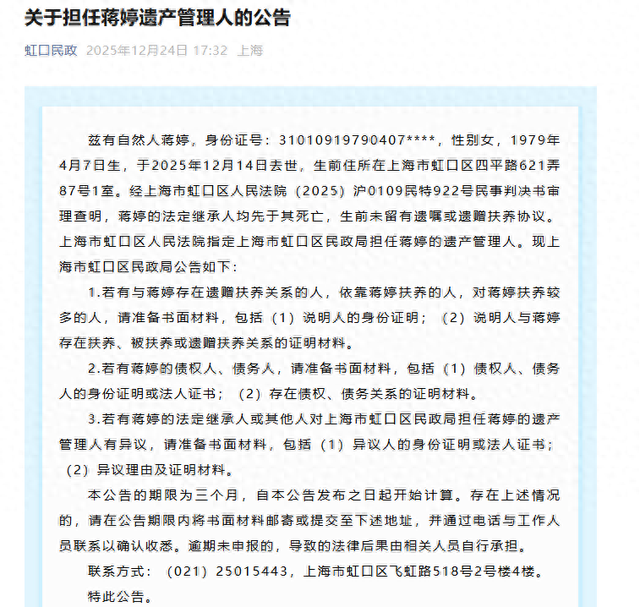
46岁独身女子离世,上海市虹口区民政局发布公告:担任蒋婷遗产管理人,若系其债权人、法定继承人等可在三个月内提交书面材料
Xin Lang Cai Jing· 2025-12-24 16:49
Group 1 - The announcement from the Shanghai Hongkou District Civil Affairs Bureau regarding the estate management of the deceased individual Jiang Ting, who passed away on December 14, 2025, without any legal heirs or will [1][5] - The Civil Affairs Bureau is designated as the estate manager due to the absence of legal heirs, and they are seeking claims from potential beneficiaries or creditors [1][7] - The announcement period for claims is set for three months from the date of publication, with specific instructions for submission of written materials [2] Group 2 - Jiang Ting's estate will be managed by the Civil Affairs Bureau, which will handle the clearing of debts and distribution of remaining assets for public welfare after legal procedures [7] - The local community committee is coordinating with Jiang Ting's former employer and distant relatives to arrange a farewell ceremony, expected to take place by the end of December [5] - The court has agreed to expedite the process for confirming the estate manager, ensuring timely handling of the estate [7]
反思独居蒋女士离世事件:补齐制度缺口,让每个人从容老去
Mei Ri Jing Ji Xin Wen· 2025-12-22 12:54
Core Viewpoint - The case of Ms. Jiang highlights systemic deficiencies faced by individuals in vulnerable situations, particularly those living alone, in the context of changing population structures [2][3]. Group 1: Emergency Medical Decision and Financial Mechanisms - There is a blind spot in emergency medical decision-making and financial payment mechanisms, as Ms. Jiang's bank accounts and insurance claims were frozen due to privacy protection and lack of authorization [2]. - Legal provisions prevented her distant relatives and community from accessing her funds for medical expenses, leading to a situation where she had money but could not use it [2]. Group 2: Inheritance Processing and Funeral Needs - The conflict between inheritance processing procedures and humane funeral needs is evident, as Ms. Jiang's estate will be managed by the civil affairs department without a guardian or heir [2]. - The community's requirement for a written application and reasonable cost limits for funeral arrangements posed challenges for her distant relative, who wished to hold a memorial service [2]. Group 3: Social Support Network Failures - The social support network for individuals living alone, like Ms. Jiang, is inherently weak, leading to delayed assistance during emergencies [2]. - There is a lack of legal authorization and clear pathways for community and workplace units to intervene in critical personal matters such as medical and financial issues [2]. Group 4: Legal Arrangements and Public Awareness - The high threshold and low prevalence of preemptive legal arrangements, such as designated guardianship or detailed wills, contribute to the challenges faced by individuals like Ms. Jiang [3]. - Public awareness of these legal tools is low, and the complexity of the setup process, along with psychological barriers, results in most individuals not making prior arrangements [3]. Group 5: Systemic Recommendations - The narrative serves as a warning that the social system may not be prepared to support individuals in similar situations as Ms. Jiang, emphasizing the need for systemic reconstruction beyond mere fixes [3]. - Recommendations include establishing emergency judicial measures for incapacitated adults, prioritizing reasonable funeral costs in inheritance management, and granting local communities clearer authority for urgent interventions [3].

【头条评论】 诺贝尔奖金:遗产界的理财产品天花板
Zheng Quan Shi Bao· 2025-10-13 21:36
Core Insights - The Nobel Prize fund, established from Alfred Nobel's estate, has evolved into a financial success story, managing to grow its assets significantly over time despite initial challenges [1][2][3] Fund Management Strategy - The Nobel Foundation initially adopted a conservative investment strategy focused on low-risk assets like government bonds and real estate, which led to a significant reduction in fund size due to inflation and market volatility [2] - A strategic shift occurred in 1953, where the fund management team recognized the need for higher returns and diversified investments into stocks, private equity, and international assets, resulting in over 50% of the fund's holdings being in equities today [2][3] Performance and Growth - The fund has demonstrated resilience during economic crises, effectively hedging against risks through early investments in gold and commodities, which protected its value during World War II and recent inflationary pressures [3] - The Nobel Prize amount has increased significantly, with the 2024 award reaching $1.15 million, a 72-fold increase since the first award in 1901, showcasing the fund's ability to grow its assets over time [3][4] Financial Discipline - The Nobel Foundation enforces a strict rule that annual expenditures cannot exceed 4.5% of the fund's growth, ensuring that the majority of profits are reinvested to sustain the fund's longevity [4] - This disciplined approach contrasts with many wealthy estates that deplete their resources quickly, highlighting the importance of prudent financial management in wealth preservation [4] Legacy and Impact - The Nobel Prize fund has not only rewarded significant contributions to humanity but has also become a testament to effective wealth management, demonstrating the power of compound interest and long-term investment strategies [5] - The fund's success raises awareness of the wealth gap, illustrating how effective estate management can lead to sustained financial growth, while many individuals struggle with financial stability [4][5]