意定监护

Search documents
两千万心智障碍者在变老,两会代表委员:意定监护可能是“唯一出路”
第一财经· 2026-03-08 13:36
Core Viewpoint - The article discusses the challenges and potential solutions related to the "intended guardianship" system in China, particularly for families with mentally disabled children, highlighting the need for better support and resources in this area [4][6][9]. Group 1: Current Challenges - Approximately 40% of families with mentally disabled individuals cannot find relatives to take on guardianship responsibilities, leading to a "double elderly" care dilemma for families [7]. - There is a significant shortage of professional social guardianship organizations, with only three such organizations operating in Shanghai, despite the city's relatively advanced legal framework [8]. - The reliance on notarization for intended guardianship is problematic, as nearly 45% of notary offices have not handled such cases, and the services are concentrated in major cities [9]. Group 2: Legal and Institutional Gaps - The intended guardianship system is complicated by a lack of a unified information platform for guardianship agreements, which leads to "information islands" among various institutions [14]. - The absence of clear legal recognition for guardianship agreements in critical areas such as medical decisions and financial transactions creates barriers for families [15]. - There is a call for the establishment of a multi-layered support system that includes government subsidies, long-term care insurance, and family contributions to reduce the financial burden on families with special needs [16]. Group 3: Proposed Solutions - Recommendations include creating a national or provincial information registration and sharing platform for intended guardianship to streamline processes and improve accountability [14]. - The article suggests leveraging the expertise of insurance companies to provide tailored services for individuals with complex needs, thereby filling gaps in public service offerings [15]. - Expanding the coverage of long-term care insurance and implementing differentiated subsidies based on disability levels and care needs are proposed to enhance support for families [16].


从“托底”到“赋能”,上海探索“大城养老”新范式
Xin Lang Cai Jing· 2026-02-08 02:01
Core Viewpoint - Shanghai is addressing its aging population by developing a comprehensive and sustainable elder care system that not only meets basic needs but also enhances the quality of life for the elderly [2][17]. Group 1: Elderly Welfare and Support Systems - One-third of Shanghai's registered population is elderly, raising concerns about how to support vulnerable groups, particularly those with disabilities and single elderly individuals [2]. - The need for a robust care system for elderly individuals with dementia and disabilities is urgent, as current rehabilitation resources are insufficient and unevenly distributed [4]. - Suggestions include establishing a unified qualification system for rehabilitation professionals and enhancing training for grassroots workers to improve service quality [4]. Group 2: Community-Based Services and Innovations - Shanghai has been expanding community rental services for rehabilitation aids since 2019, achieving full coverage by the end of 2021 [6]. - The implementation of the "Shanghai Municipal Government's Opinions on Promoting the Implementation of the Elderly Designated Guardianship System" aims to provide legal support for elderly individuals' end-of-life wishes [7]. - The city is also focusing on integrating property management with elder care services to offer various support options at residents' doorsteps [15]. Group 3: Meeting Diverse Needs of the Elderly - The demand for quality and tailored services for different age groups and health conditions among the elderly is increasing, shifting from mere availability to quality and precision [8][9]. - The "silver-haired middle youth" demographic (ages 60-70) is emerging as a significant consumer group, seeking quality life experiences, social engagement, and cultural activities [9][11]. - There is a call for the development of products and services that cater specifically to the elderly, including health foods, educational programs, and cultural tourism [11][14]. Group 4: Future-Oriented Institutional Innovations - Shanghai is focusing on long-term solutions for elder care, including optimizing service supply and enhancing the integration of medical and elder care services [15][16]. - The city is also addressing the shortage of professional caregivers by encouraging more young people to enter the elder care field through various initiatives [16]. - The ongoing exploration of innovative service models aims to create a replicable "big city elder care" model that can be shared with other regions [17].

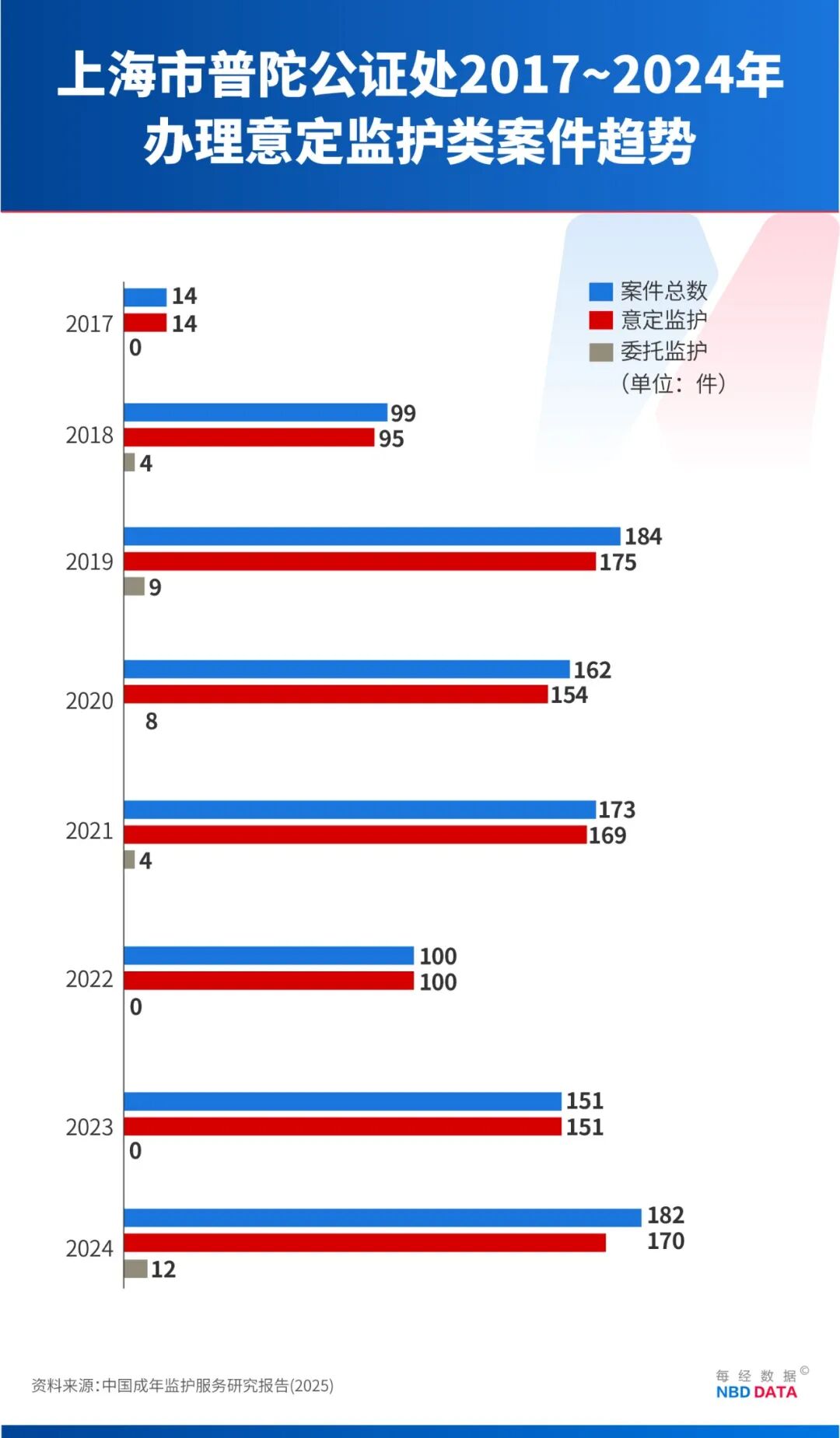
老年独居者数千万,谁能帮他们从容老去?
3 6 Ke· 2026-02-05 01:29
Core Viewpoint - The article discusses the rising interest in "intentional guardianship" in China, particularly among younger and middle-aged individuals, as a response to the challenges faced by the growing population of single-person households and the elderly living alone. The recent cases and new regulations highlight the need for better support systems for these demographics [1][25][31]. Group 1: Intentional Guardianship Overview - Intentional guardianship allows adults to designate trusted individuals or organizations as guardians in case they lose their civil capacity due to illness or disability [14][11]. - The concept has evolved since its introduction in 2012, gaining legal recognition in the Civil Code of 2021, which expanded its applicability beyond the elderly to all capable adults [11][14]. Group 2: Increasing Demand and Demographics - Following the case of a deceased individual, there has been a noticeable increase in inquiries about intentional guardianship, particularly from individuals aged 40 to 50, contrasting with the previous focus on older adults [8][4]. - As of the end of 2020, over 125 million single-person households existed in China, with a significant portion being elderly individuals living alone, highlighting the growing market for guardianship services [4][11]. Group 3: Challenges in Implementation - Despite the growing interest, challenges remain in the implementation of intentional guardianship, including the need for clear guidelines on how guardianship should be monitored and the responsibilities of guardians [1][19]. - Many potential clients express concerns about finding trustworthy guardians, fearing that designated individuals may not fulfill their duties or may exploit their positions [16][17]. Group 4: Regulatory Developments - New regulations in Beijing and Shanghai aim to facilitate the establishment of intentional guardianship by providing clearer guidelines and support from local authorities [25][27]. - The regulations encourage collaboration between civil affairs departments and legal service organizations to assist individuals in navigating the guardianship process [27][30]. Group 5: Future Trends - The article suggests a trend towards socialized guardianship, where professional organizations may emerge to provide guardianship services, addressing the needs of those without close family ties [28][29]. - Innovative models combining guardianship with financial products, such as real estate transactions, are being explored to meet the needs of elderly individuals while also addressing housing market challenges [29][30].
仅老年独居者就数千万,谁能帮他们从容老去?
Mei Ri Jing Ji Xin Wen· 2026-02-04 22:32
Core Viewpoint - The rise of "intended guardianship" in China reflects a growing concern among individuals, particularly those living alone, about ensuring their wishes are respected in medical and end-of-life decisions, as well as managing their assets effectively [1][10][20]. Group 1: Background and Context - The case of Ms. Jiang, who passed away alone in Shanghai, has sparked discussions about the risks faced by solitary individuals in modern society and the need for systems to address these concerns [1]. - The implementation of intended guardianship policies in Beijing and Shanghai aims to alleviate anxiety among the elderly and those living alone, but challenges remain in terms of supervision and rights recognition [1][20][21]. Group 2: Intended Guardianship System - Intended guardianship allows adults to designate trusted individuals or organizations as guardians in advance, ensuring their care and asset management if they lose the ability to make decisions [13][10]. - The concept has evolved since its introduction in 2012, gaining legal recognition in the Civil Code of 2021, which expanded its applicability beyond the elderly to all capable adults [10][13]. Group 3: Increasing Interest and Demographics - There has been a noticeable increase in younger individuals, particularly those in their 40s and 50s, seeking intended guardianship services, contrasting with the previous focus on older adults [7][4]. - As of the end of 2020, over 1.25 billion households in China were one-person households, with a significant portion of elderly individuals living alone, highlighting the growing market for intended guardianship [7][4]. Group 4: Challenges and Concerns - Many individuals face difficulties in finding suitable guardians, as the role of a guardian is not synonymous with that of a legal heir, leading to trust issues and concerns about the responsibilities involved [15][16]. - The lack of clear regulations and standards for guardian qualifications and oversight contributes to the hesitance among potential guardians and those seeking guardianship [16][19]. Group 5: Policy Developments and Future Trends - Recent regulations in Shanghai and Beijing aim to streamline the intended guardianship process, enhance information sharing among relevant departments, and provide support for individuals seeking guardianship [20][23]. - The potential for a socialized guardianship system is emerging, where professional organizations may take on the role of guardians, addressing the needs of those without family support [24][25].
仅老年独居者就数千万,谁能帮他们从容老去?意定监护在国内诞生已14年,距全面落地还差“最后一公里”
Mei Ri Jing Ji Xin Wen· 2026-02-04 13:30
Core Insights - The rise of "intended guardianship" in China reflects a growing concern among individuals, particularly those living alone, about end-of-life decisions and the management of their affairs when they become incapacitated [4][12][15] - Recent legislative changes in Beijing and Shanghai aim to formalize and promote the intended guardianship system, addressing the needs of an aging population and increasing number of single-person households [25][28] Group 1: Legislative Developments - The "Beijing Elderly Care Service Regulations" was passed on January 29, 2026, which includes provisions for intended guardianship [25] - Shanghai's trial implementation of intended guardianship began on January 1, 2026, aiming to provide legal support and facilitate the process for elderly individuals [25][28] - The new regulations encourage collaboration between civil affairs departments and social organizations to assist elderly individuals in obtaining legal and informational support [28] Group 2: Market Trends - There is a noticeable increase in younger individuals, particularly those in their 40s and 50s, seeking intended guardianship services, contrasting with the previous demographic of older adults [9][12] - The number of consultations and applications for intended guardianship at the Putuo Notary Office has surged, indicating a growing awareness and acceptance of this legal framework [9][5] - The demographic shift towards single-person households, with over 1.25 billion one-person households reported by the 2020 census, highlights the increasing relevance of intended guardianship [12][9] Group 3: Challenges and Concerns - Despite the growing interest, many individuals remain unfamiliar with the concept of intended guardianship, leading to confusion about its implications and responsibilities [16][19] - A significant barrier to the establishment of intended guardianship is the difficulty in finding a suitable guardian, as potential guardians may have concerns about their responsibilities and the potential for conflicts with the principal's family [17][18] - The lack of standardized agreements and regulatory oversight for guardianship arrangements can lead to disputes and complications in enforcement [24][31] Group 4: Future Directions - The trend towards socialized guardianship is anticipated, with the potential for new service models and organizations to emerge that specialize in providing guardianship services [29][30] - Innovative solutions, such as combining intended guardianship with financial products like trusts or real estate arrangements, are being explored to meet the needs of the aging population [30][31] - Ongoing legislative efforts are expected to refine the intended guardianship framework, addressing current gaps and enhancing the overall effectiveness of the system [31]

独身者遗产处置困局何解?专家称应扩大继承人范围
第一财经· 2026-01-14 15:06
Core Viewpoint - The article discusses the importance of legal frameworks such as designated guardianship and inheritance management in addressing the issues faced by single individuals, particularly in light of recent events highlighting the vulnerabilities of this demographic [3][4]. Group 1: Designated Guardianship - The Civil Code provides a solution for sudden incapacitation through designated guardianship agreements, but this system is not widely known and lacks practical details for implementation [4][10]. - The activation of designated guardianship agreements requires a legal determination of incapacity, which can be time-consuming and complex, suggesting a need for clearer activation criteria [11][12]. - There is a call for the establishment of a supervisory system for designated guardianship to ensure the protection of the rights of those who are incapacitated [12][13]. Group 2: Inheritance Management - The Civil Code stipulates that unclaimed estates revert to the state for public welfare, and it outlines the role of estate managers in the absence of heirs [6][7]. - Current legal definitions of heirs are considered too narrow, limiting the ability of individuals to control their private property and increasing the likelihood of unclaimed estates [7][8]. - Expanding the definition of legal heirs to include more distant relatives could reduce the incidence of unclaimed estates, which is becoming more common due to demographic changes [8][9].

无继承人遗产买墓地需垫付后追偿
Xin Lang Cai Jing· 2025-12-29 15:11
Core Viewpoint - The article discusses the challenges faced by individuals without legal heirs in managing their estates after death, particularly in the case of a 46-year-old woman in Shanghai who passed away without any immediate family, highlighting the legal complexities and potential solutions for estate management [1] Group 1: Case Study - A 46-year-old woman, Ms. Jiang, passed away due to a cerebral hemorrhage, leaving behind an estate valued between 2 million to 3 million yuan, but without any legal heirs [1] - The court appointed the local civil affairs bureau as the estate manager due to the absence of any statutory heirs [1] Group 2: Legal Framework - The legal inheritance order typically prioritizes spouses, children, and parents, followed by siblings and grandparents [1] - According to Article 1160 of the Civil Code, if there are no heirs or legatees, the estate will revert to the state for public welfare purposes [1] Group 3: Expert Opinions - Legal expert Zhang Yonghui noted that while emergency medical treatment can proceed without authorization, accessing the deceased's assets for funeral expenses can be problematic without proper authorization [1] - Recommendations for independent individuals include creating a will to clarify estate distribution and funeral arrangements, signing a designated guardianship agreement for medical and financial decisions, and establishing a legacy support agreement to ensure care and inheritance [1]
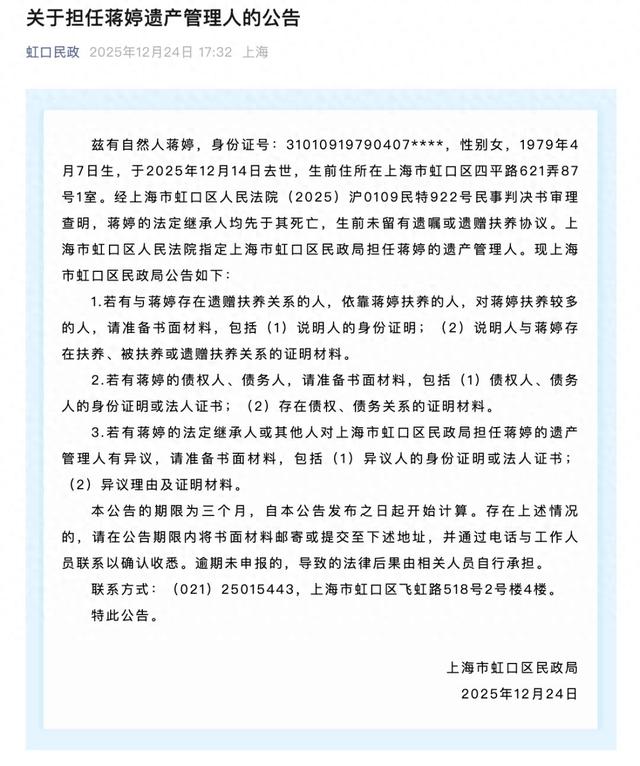
上海市虹口区法院指定区民政局担任蒋婷遗产管理人
Xin Lang Cai Jing· 2025-12-24 16:48
Core Viewpoint - The case of Ms. Jiang, who passed away without a will or legal heirs, highlights the importance of estate management and the need for clear regulations regarding guardianship and inheritance in society [1][7]. Group 1: Estate Management - The Shanghai Hongkou District Civil Affairs Bureau has been appointed as the estate manager for Ms. Jiang, as her legal heirs had predeceased her and she left no will or inheritance agreement [2][8]. - The announcement specifies that individuals who had a caregiving relationship with Ms. Jiang or are her creditors or debtors must submit written materials to the Civil Affairs Bureau within three months [3][4]. Group 2: Funeral Arrangements - Ms. Jiang's distant cousin and friends wish to use her estate for a memorial service and burial, but they have faced procedural obstacles [7]. - The local community committee is coordinating with Ms. Jiang's former employer and relatives to arrange a farewell ceremony, expected to take place by the end of December [8].
反思独居蒋女士离世事件:补齐制度缺口,让每个人从容老去
Mei Ri Jing Ji Xin Wen· 2025-12-22 12:54
Core Viewpoint - The case of Ms. Jiang highlights systemic deficiencies faced by individuals in vulnerable situations, particularly those living alone, in the context of changing population structures [2][3]. Group 1: Emergency Medical Decision and Financial Mechanisms - There is a blind spot in emergency medical decision-making and financial payment mechanisms, as Ms. Jiang's bank accounts and insurance claims were frozen due to privacy protection and lack of authorization [2]. - Legal provisions prevented her distant relatives and community from accessing her funds for medical expenses, leading to a situation where she had money but could not use it [2]. Group 2: Inheritance Processing and Funeral Needs - The conflict between inheritance processing procedures and humane funeral needs is evident, as Ms. Jiang's estate will be managed by the civil affairs department without a guardian or heir [2]. - The community's requirement for a written application and reasonable cost limits for funeral arrangements posed challenges for her distant relative, who wished to hold a memorial service [2]. Group 3: Social Support Network Failures - The social support network for individuals living alone, like Ms. Jiang, is inherently weak, leading to delayed assistance during emergencies [2]. - There is a lack of legal authorization and clear pathways for community and workplace units to intervene in critical personal matters such as medical and financial issues [2]. Group 4: Legal Arrangements and Public Awareness - The high threshold and low prevalence of preemptive legal arrangements, such as designated guardianship or detailed wills, contribute to the challenges faced by individuals like Ms. Jiang [3]. - Public awareness of these legal tools is low, and the complexity of the setup process, along with psychological barriers, results in most individuals not making prior arrangements [3]. Group 5: Systemic Recommendations - The narrative serves as a warning that the social system may not be prepared to support individuals in similar situations as Ms. Jiang, emphasizing the need for systemic reconstruction beyond mere fixes [3]. - Recommendations include establishing emergency judicial measures for incapacitated adults, prioritizing reasonable funeral costs in inheritance management, and granting local communities clearer authority for urgent interventions [3].

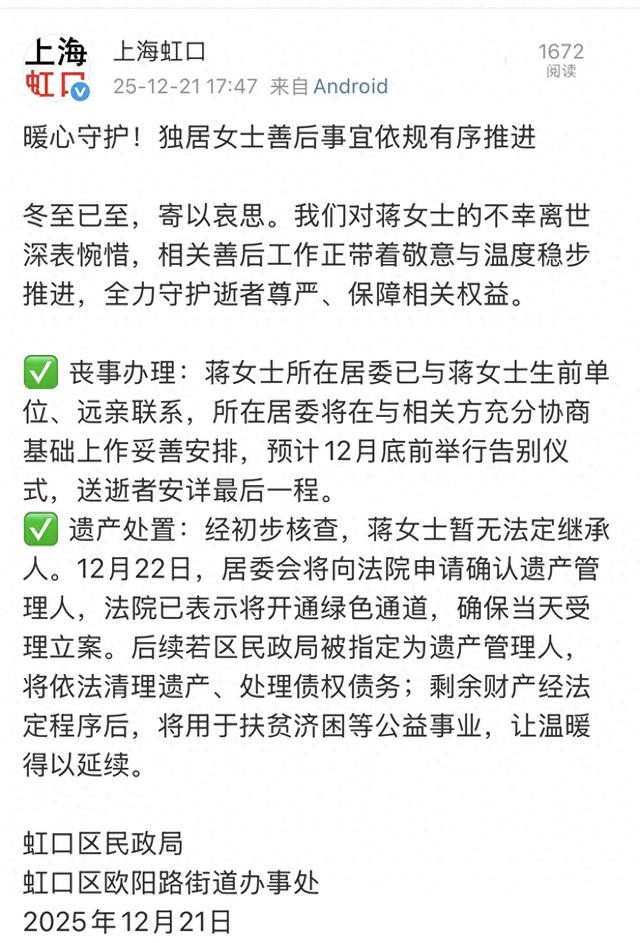
46岁上海独居女子突离世 最新进展:将办告别式
Xin Lang Cai Jing· 2025-12-21 14:32
Core Viewpoint - The unfortunate passing of a 46-year-old single woman in Shanghai has raised significant societal concerns regarding the handling of her estate, including property, savings, and funeral arrangements, due to the absence of designated guardians or heirs [1] Group 1: Estate Management Issues - The deceased had no children, was unmarried, and her parents had passed away, leading to complications in determining legal heirs [1] - The lack of a designated guardian has prompted discussions on the importance of legal frameworks such as guardianship and wills [1] Group 2: Government Response - The Shanghai Hongkou district's official Weibo account announced that the relevant departments are working systematically to address the aftermath of the situation [1] - Authorities are committed to handling all matters in accordance with the law, ensuring the dignity of the deceased is maintained and that legal rights are protected [1]