
遗址保护

Search documents
《郑州商代都城遗址保护条例》3月1日起施行
Zheng Zhou Ri Bao· 2026-01-15 01:06
Core Viewpoint - The introduction of the "Zhengzhou Shang Dynasty Capital Site Protection Regulations" aims to balance the protection of cultural heritage with urban development, providing a legal framework for the preservation and utilization of the site, effective from March 1, 2026 [2][3]. Group 1: Legislative Purpose and Framework - The regulations address the urgent need for effective governance and long-term management of heritage sites amidst rapid urban development, establishing a legal boundary for protection and clarifying management responsibilities [3][4]. - The regulations emphasize a new approach to cultural heritage work, prioritizing protection, management, value excavation, and effective utilization, ensuring that cultural heritage benefits the public [3][4]. Group 2: Legislative Process and Public Involvement - The legislative process involved extensive public participation and expert consultation, focusing on the unique challenges of the site, such as cross-jurisdictional management and protection responsibility clarity [4]. - A multi-faceted opinion collection system was established, incorporating expert input and public feedback to ensure the regulations are scientifically sound and locally relevant [4]. Group 3: Protection Mechanisms - The regulations introduce a tiered protection system, defining the site, protection zones, and construction control areas, along with a mechanism for immediate inclusion of newly discovered archaeological findings [5][6]. - A comprehensive monitoring and emergency response system will be established to protect both movable and immovable cultural properties, integrating various data sources for real-time risk tracking [6]. Group 4: Cultural Revitalization and Integration - The regulations include provisions for the active utilization of cultural heritage, aiming to integrate Shang Dynasty culture into modern life through digital experiences and tourism initiatives [7]. - Plans include creating a digital resource library, developing cultural products, and promoting cultural education to enhance public engagement and cultural identity [7]. Group 5: Implementation and Oversight - To ensure effective implementation, a dedicated management body will be established, with financial resources allocated for protection efforts, and a smart monitoring system will be developed to prevent risks [8]. - The regulations will facilitate the revitalization of the site, contributing to Zhengzhou's cultural tourism development and enhancing cultural confidence [8].

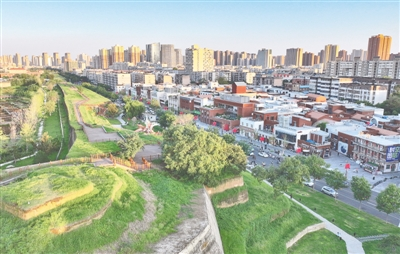
让千年商都文脉永续传承
Zheng Zhou Ri Bao· 2025-12-05 00:41
Core Viewpoint - The newly approved "Zhengzhou Shang Dynasty Capital Site Protection Regulations" aims to protect and utilize the Zhengzhou Shang Dynasty capital site, a significant archaeological site that reflects early Chinese civilization, ensuring its preservation and integration into modern life [1][2]. Group 1: Legislative Framework - The regulations consist of 33 articles that define the protection objects, scope, management responsibilities, and utilization of the Zhengzhou Shang Dynasty capital site, providing a legal framework for cultural heritage preservation [1][2]. - The regulations emphasize the principle of "protection first," focusing on management, value excavation, effective utilization, and ensuring the authenticity and integrity of the site [2]. Group 2: Protection Measures - The regulations prohibit specific activities within the protection area, including excavation on the city wall, climbing, planting harmful plants, and dumping waste, to safeguard the site [3]. - A smart monitoring management system will be established to oversee the protection status and surrounding environment, along with security and emergency response measures [3]. Group 3: Cultural and Commercial Integration - The "Bohdu·New Image" commercial street integrates Shang culture into modern commercial spaces, creating a unique area for cultural experiences and leisure consumption, attracting significant public interest [4]. - The regulations encourage the use of modern technologies like AI and virtual reality to create immersive interactive spaces that enhance public engagement with the Zhengzhou Shang culture [4]. Group 4: Community Involvement - A complaint and reporting system will be established to address violations related to the site, promoting community involvement in heritage protection through research, donations, and volunteer services [5].
美媒:被指保护不力,秘鲁马丘比丘恐失去新七大奇迹头衔
Huan Qiu Shi Bao· 2025-09-21 06:33
Core Points - Machu Picchu, a UNESCO World Heritage site and one of the New Seven Wonders of the World, is at risk of losing its title due to issues of over-tourism and inadequate protection, as highlighted by the New7Wonders organization [1] - Local conflicts have arisen, with recent protests against transportation policies affecting access to the site, indicating social unrest in the region [1] - Despite concerns, visitor numbers to Machu Picchu are expected to exceed 1.5 million this year, returning to pre-pandemic levels seen in 2019 [1] - The Peruvian government disputes the claims made by the New7Wonders organization, asserting that conservation efforts are effective and recognized by UNESCO, and that Machu Picchu is not classified as a World Heritage site in danger [1] Summary by Category Tourism Impact - Machu Picchu is facing challenges from over-tourism, which threatens its status as a New Wonder [1] - Visitor numbers are projected to reach 1.5 million, matching the peak levels of 2019 [1] Social and Political Context - Protests by local residents against transportation policies have disrupted access to the site, reflecting ongoing social tensions [1] Government Response - The Peruvian government has issued a statement defending its conservation efforts and rejecting the New7Wonders organization's claims [1]