
遗赠扶养协议

Search documents
老人与保姆签“养老送终”协议
Xin Lang Cai Jing· 2026-02-03 16:44
Core Viewpoint - The court ruled that the caregiver, 石某, could not inherit the property of the deceased, 李某, due to failure to fulfill the obligations outlined in the care agreement, leading to the property being passed to 李某's children instead [1][2]. Group 1: Case Overview - 李某, a resident of A, entered into a care agreement with 石某, promising to provide care in exchange for inheritance of property [1]. - The agreement stipulated that 石某 would cover all living and medical expenses for 李某 until death, and handle funeral arrangements [1]. - After 李某's death, 石某 sought to inherit the property based on the agreement, but 李某's children contested its validity [1]. Group 2: Evidence and Obligations - Evidence presented by 石某 was inconsistent, showing that 李某's medical and living expenses were paid from 李某's own bank account, contradicting the agreement [2]. - 石某 failed to provide sufficient proof of timely medical care and proper daily living support for 李某, as indicated by 李某's communication records and police reports [2]. Group 3: Legal Framework - According to Article 1158 of the Civil Code, individuals can sign a care agreement with non-heirs, where the caregiver assumes responsibilities for the individual's care and burial in exchange for inheritance rights [3]. - The fulfillment of care obligations is crucial for the caregiver to claim inheritance rights, emphasizing the need for clear and unambiguous agreements [3][4]. Group 4: Recommendations and Best Practices - Caregivers should maintain evidence of fulfilling their obligations, such as receipts for medical and living expenses, to substantiate their claims in case of disputes [4]. - The integrity of both parties in the agreement is essential, and any failure to meet obligations can result in the loss of inheritance rights [4].
这些老人为啥把遗产留给“外人”?
Xin Lang Cai Jing· 2026-01-07 06:54
Core Viewpoint - The increasing trend of elderly individuals without children opting for "bequest support" agreements to leave their properties to caregivers or friends instead of relatives has led to a rise in inheritance disputes, particularly as these relatives are often not obligated to provide care [1][6]. Group 1: Legal Context - Since the implementation of the Civil Code, there has been a significant increase in cases related to wills and bequest support agreements, with a 44.2% rise in such cases in Beijing's First Intermediate Court from the previous year [1]. - The definition of a bequest support agreement involves a natural person (the bequeather and the supported person) entering into a contract with a caregiver (not an heir) to provide care in exchange for inheritance rights upon the bequeather's death [1]. Group 2: Case Studies - An elderly woman, Wang Hongying, bequeathed her property to her caregiver's grandson, leading to disputes with her sisters who claimed she lacked the capacity to make a will due to her mental health issues [2][3]. - Another case involved an elderly couple, Zhang and Liu, who established a bequest support agreement with their caregiver, leading to inheritance disputes with their siblings who contested the arrangement but failed to provide evidence of neglect [4][5]. Group 3: Reasons for Bequest Support Agreements - Elderly individuals often choose to sign bequest support agreements with non-relatives due to a lack of available family members willing or able to provide care, as many siblings are elderly themselves or have limited contact [6]. - The absence of suitable elder care facilities and dissatisfaction with available services also contribute to this trend [6]. Group 4: Legal Recommendations - There is a call to amend the Elderly Rights Protection Law to include siblings as legal caregivers, aligning the rights of inheritance with caregiving responsibilities [6]. - Suggestions include establishing a regulatory mechanism for bequest support agreements to ensure caregivers are held accountable for their duties, similar to the oversight required for children's caregiving obligations [7][8]. Group 5: Implementation Suggestions - It is recommended that official templates for bequest support agreements be promoted to ensure clarity on obligations and conditions, including living arrangements and medical care [8]. - Community organizations should be involved in the oversight of these agreements to monitor caregiver performance and protect the rights of the elderly [8].
无继承人遗产买墓地需垫付后追偿
Xin Lang Cai Jing· 2025-12-29 15:11
Core Viewpoint - The article discusses the challenges faced by individuals without legal heirs in managing their estates after death, particularly in the case of a 46-year-old woman in Shanghai who passed away without any immediate family, highlighting the legal complexities and potential solutions for estate management [1] Group 1: Case Study - A 46-year-old woman, Ms. Jiang, passed away due to a cerebral hemorrhage, leaving behind an estate valued between 2 million to 3 million yuan, but without any legal heirs [1] - The court appointed the local civil affairs bureau as the estate manager due to the absence of any statutory heirs [1] Group 2: Legal Framework - The legal inheritance order typically prioritizes spouses, children, and parents, followed by siblings and grandparents [1] - According to Article 1160 of the Civil Code, if there are no heirs or legatees, the estate will revert to the state for public welfare purposes [1] Group 3: Expert Opinions - Legal expert Zhang Yonghui noted that while emergency medical treatment can proceed without authorization, accessing the deceased's assets for funeral expenses can be problematic without proper authorization [1] - Recommendations for independent individuals include creating a will to clarify estate distribution and funeral arrangements, signing a designated guardianship agreement for medical and financial decisions, and establishing a legacy support agreement to ensure care and inheritance [1]
法治在线丨遗嘱、遗赠扶养协议怎样订立才有效?一文了解
Xin Lang Cai Jing· 2025-12-29 11:01
Group 1 - The core issue revolves around the validity of two wills and whether a non-legal heir can be designated as a beneficiary [1][4][20] - The first will was established in 1998 and was notarized, indicating that the property should be inherited by the daughter and her husband [4][20] - The second will was discovered later, leading to a dispute among the siblings regarding the inheritance rights [7][11] Group 2 - The court ruled that the notarized will was legally valid, and the husband of the daughter was entitled to inherit the property as a beneficiary [20][24] - The key legal point was when the husband became aware of the will, which determined his right to accept the inheritance [16][18] - The court emphasized that the relationship between the husband and the daughter did not automatically imply prior knowledge of the will [20][22] Group 3 - In a separate case, the validity of two different caregiving agreements signed by an elderly man was questioned, focusing on which agreement would be honored [25][27] - The first agreement was signed in 2008 with a niece, while a second agreement was signed in 2014 with other relatives, leading to disputes over inheritance rights [33][43] - The court found that the first agreement remained valid as there was no evidence of its revocation, and the niece had fulfilled her caregiving obligations [45][47]

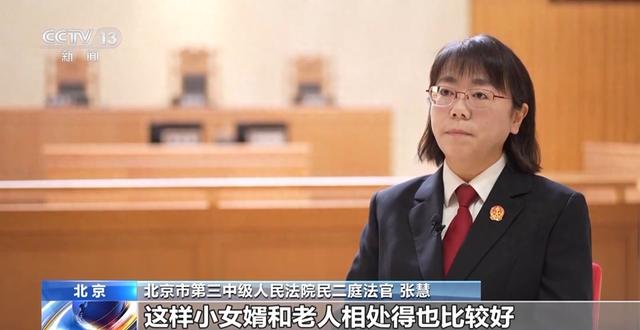
把遗产留给“想给的人”,法律为老人“撑腰”
Xin Jing Bao· 2025-10-29 12:04
Core Points - The article discusses the importance of elderly individuals arranging their assets according to their wishes to avoid disputes among heirs, highlighting the legal rights they possess in asset disposition [1] Group 1: Case Summaries - Case 1 involves an elderly man, Li Xiancheng, who signed multiple "nursing agreements" with different parties, leading to disputes over property after his death. The court ruled in favor of the party that provided continuous care, emphasizing the importance of fulfilling obligations under such agreements [2][3][4] - Case 2 features a couple who left a notarized will bequeathing their property to their daughters and sons-in-law, which sparked controversy among heirs. The court upheld the will, affirming that individuals can bequeath assets to non-heirs, reflecting the increasing trend of such arrangements [5][6] - Case 3 discusses a couple's joint will, which was altered by the surviving spouse after one passed away. The court recognized the validity of the new will, allowing the surviving spouse to change the distribution of their personal assets [7][8] Group 2: Legal Insights - The article highlights the significance of legally binding wills and agreements for elderly individuals to ensure their wishes are respected and to prevent disputes among heirs. Various forms of wills are recognized under the law, including handwritten and notarized versions [9] - It emphasizes that individuals who neglect or abuse their elderly parents may lose their inheritance rights, promoting a culture of familial responsibility and care [10] - The article also discusses the preferential validity of nursing agreements over statutory inheritance, encouraging social participation in elderly care and enhancing the quality of life for seniors [11]