
养老服务

Search documents
陆家嘴财经早餐2026年3月18日星期三
Wind万得· 2026-03-17 22:58
Group 1 - The National Development and Reform Commission is organizing the application for approximately 100 major application scenario projects, which will be prioritized for funding support [4] - The Ministry of Finance will continue to implement a more proactive fiscal policy in 2026, focusing on seven key areas including supporting the construction of a strong domestic market and promoting green transformation [7] - The State-owned Assets Supervision and Administration Commission emphasizes the implementation of major projects and the promotion of AI initiatives to accelerate the digital transformation of state-owned enterprises [7] Group 2 - The A-share market experienced a pullback, with the ChiNext index dropping over 2%, particularly in the computing power sector [9] - The China Securities Regulatory Commission has approved a new batch of 15 hard technology-themed funds, which are expected to launch fundraising soon [9] - The Hong Kong Stock Exchange is rumored to limit IPOs for red-chip companies, but local investment bankers have dismissed these rumors as unfounded [9] Group 3 - The North American stock indices showed slight gains, with the Dow Jones up 0.1% and the S&P 500 up 0.25%, while the Nasdaq increased by 0.47% [20] - The European stock indices closed higher, with the German DAX rising by 0.71% and the UK FTSE 100 increasing by 0.83% [20] - The Korean Composite Index rose by 1.63%, while the Japanese Nikkei 225 index fell by 0.09% [20] Group 4 - The Ministry of Health and the National Health Commission announced a focus on improving the standard treatment rates for acute cerebrovascular diseases by 2026 [7] - The Beidou satellite navigation system is set to undergo in-orbit upgrades to enhance service quality, with 50 satellites currently operational [13] - The real estate market in major cities is showing signs of recovery, with Shanghai's second-hand housing market expected to reach high transaction volumes [13]








从政府工作报告的一组数据,看民生保障持续加力
券商中国· 2026-03-05 11:52
Employment - The urban survey unemployment rate is projected to be around 5.5% by 2026, with over 12 million new urban jobs expected to be created [2] - Actions will be implemented to stabilize jobs in labor-intensive industries and to cultivate new jobs in emerging and future industries [2] Income - The economic growth target for this year is set between 4.5% and 5%, with resident income growth expected to align with economic growth [3] - A plan will be developed to increase income for urban and rural residents, focusing on low-income groups and enhancing property income, salary, and social security systems [3][4] Consumption - A special action plan will be implemented to boost consumption [5] - In 2026, 250 billion yuan will be allocated for long-term special government bonds to support the replacement of consumer goods [6] - A special fund of 100 billion yuan will be established to promote domestic demand, expanding personal consumption loans and service industry loan interest subsidies [6] Education - Conditions for participating in the high school entrance examination will be relaxed based on local circumstances [8] - There will be adjustments in the allocation of educational resources and an increase in the supply of ordinary high school places [9][10] - The enrollment scale for quality undergraduate education will continue to expand [11] - By the end of the "14th Five-Year Plan" period, the average years of education for the labor force is expected to increase to 11.7 years [12] Healthcare - A health-first development strategy will be implemented, establishing a comprehensive health promotion policy system [13] - By 2026, the per capita financial subsidy standard for resident health insurance will increase by 24 yuan [14] - A multi-tiered medical security system will be established, promoting the development of commercial health insurance and high-quality innovation in drugs and medical devices [15][16] - The average life expectancy is projected to increase to 80 years by the end of the "14th Five-Year Plan" period [17] Pension - By 2026, the minimum monthly standard for urban and rural residents' basic pensions will increase by 20 yuan [18] - A nationwide coordination system for basic pension insurance will be improved and implemented [19] - A national strategy to actively respond to population aging will be deeply implemented, expanding the supply of inclusive elderly care services [20] - The proportion of nursing beds in elderly care institutions is expected to increase to 73% by the end of the "14th Five-Year Plan" period [21] Agriculture - A new round of actions to enhance grain production capacity will be implemented, targeting an output of approximately 1.4 trillion jin by 2026 [22][23] Rural Development - A second round of land contract extensions for 30 years will be comprehensively carried out after the expiration of the current contracts [24] - Continuous improvement of rural living environments will be prioritized, addressing issues such as toilet renovations and waste management [25][26] Major Projects in Livelihood - During the "14th Five-Year Plan" period, 25 major projects will be proposed to ensure and improve people's livelihoods, focusing on cultural prosperity, high-quality education, health, and social care services [27]

正确政绩观有新部署——政策周观察第69期
一瑜中的· 2026-03-02 06:49
Core Viewpoint - The article emphasizes the importance of establishing and practicing a correct view of achievements within the Communist Party, highlighting recent directives and meetings aimed at reinforcing this perspective across various levels of leadership [2][3][7]. Group 1: Recent High-Level Activities - From February 22 to March 1, significant activities by the Central Committee and the State Council included meetings and discussions focused on the correct view of achievements and the implementation of the 14th Five-Year Plan [5]. - On February 25, the General Secretary met with German Chancellor Merz, indicating ongoing diplomatic engagements [6]. - A Politburo meeting on February 27 discussed the draft outline of the 14th Five-Year Plan and the government work report, emphasizing the need for a strong domestic market and high-level technological self-reliance [7]. Group 2: Policy and Educational Initiatives - On February 23, the Central Office issued a notice to launch educational initiatives on the correct view of achievements, targeting leadership at the county level and above, set to begin after the 2026 Spring Festival and conclude by the end of July [12]. - The State Council meeting on February 24 stressed the urgency for departments to quickly implement the Party's decisions and maintain a focus on practical achievements for the people [8]. - The Central Party's construction leadership group met on February 24 to discuss the educational initiatives, emphasizing the integration of learning, inspection, and reform [8]. Group 3: Anti-Corruption and Discipline Enforcement - The work report from the 20th Central Commission for Discipline Inspection on February 28 highlighted the need to combat issues such as "performance engineering" and statistical fraud, reinforcing the correct view of achievements [3][9]. - The report also called for strict adherence to political discipline and the prevention of corrupt practices during leadership transitions, ensuring that only qualified individuals are promoted [9][10]. - Emphasis was placed on addressing the behaviors of leaders who exploit their positions for personal gain, with a focus on maintaining integrity within the Party [10].

国内高频指标跟踪(2026年第8期):节后生产修复
GUOTAI HAITONG SECURITIES· 2026-03-02 02:45
Policy Focus - Recent policies emphasize post-holiday work initiation and pre-conference policy direction, with a focus on the silver economy and elderly care services to boost domestic demand[5] - The State Council meeting on February 24 highlighted the importance of consumer subsidies to stimulate silver consumption demand and improve elderly care services[5] Economic Indicators - Post-holiday travel and service consumption demand remain strong, with migration scale index at 142.4%, significantly higher than historical levels[6][8] - New and second-hand housing sales show year-on-year improvement, particularly in second-tier cities, while first-tier city real estate policy effects are still under observation[6][8] Production and Investment - Production activities are recovering overall, with industries like coking, steel, and chemicals showing marginal increases in operating rates[6][8] - Infrastructure and housing construction recovery is slow, with asphalt and cement operating rates at historically low levels[6][8] Price Trends - Consumer and industrial product prices are on the rise, with the iCPI index increasing to 7.7% driven by post-holiday demand for food and transportation[7][8] - Lithium carbonate prices surged due to supply disruptions from Zimbabwe, reflecting a significant increase of 117.9%[8] Liquidity and Currency - Liquidity has tightened slightly, with the central bank net withdrawing 727.4 billion yuan in the week of February 28[7] - The RMB appreciated against the USD, with the exchange rate moving from 6.91 to 6.86, aided by a reduction in the foreign exchange risk reserve ratio[7]
“养老不远、看病不难” 让老年人的生活更有质感
Xin Lang Cai Jing· 2026-02-26 04:14
Core Viewpoint - The article highlights the implementation of "Internet + Nursing Services" in Xingan League, which aims to provide high-quality medical care at home for elderly and immobile patients, addressing the pressing needs of the aging population [2][3]. Group 1: Internet + Nursing Services - The initiative allows patients to order home nursing services easily, exemplified by a case where a nurse visited an elderly patient to perform blood tests and coordinate with doctors [1]. - This service model is designed to deliver various medical and psychological support services directly to patients' homes, ensuring comprehensive care for those who are bedridden or have mobility issues [2]. Group 2: Elderly Care System - Xingan League is developing a coordinated elderly care system that integrates home, community, and institutional services, focusing on basic guarantees and shared benefits [2]. - The management structure involves local towns and streets as primary management bodies, with the civil affairs department providing guidance, creating a clear responsibility and accountability framework [2]. Group 3: Six Assistance Services - The "Six Assistance +” service system includes meal assistance, bathing services, medical support, and more, tailored to meet the specific needs of the elderly [3]. - Additional services such as cleaning, emergency assistance, mobility support, daytime care, and short-term foster care are also being expanded, with approximately 600,000 elderly individuals served annually [5]. Group 4: Addressing Special Needs - For elderly individuals facing significant challenges, such as high age or disabilities, the initiative retains manual service options to help them overcome the "digital divide" [6]. - The plan includes co-locating elderly care facilities with medical institutions to ensure that healthcare access is convenient and integrated, enhancing the quality of life for seniors [6].

超六成受访者期待具身智能等前沿技术更快走进日常生活
Zhong Guo Qing Nian Bao· 2026-02-26 02:15
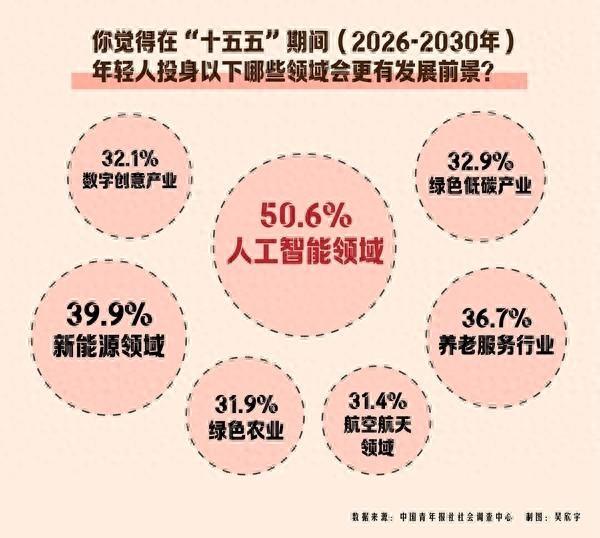
Group 1 - The core viewpoint of the article emphasizes the public's anticipation for advanced technologies, such as embodied intelligence, to integrate more rapidly into daily life, with over 62.1% of respondents expressing this expectation [1][3] - The survey indicates that more than half (50.6%) of respondents believe that young people have better development prospects in the field of artificial intelligence [1][5] - The article highlights the significant role of technology in various sectors, including education, where AI tools are being utilized to enhance teaching efficiency and personalize learning experiences [3][4] Group 2 - Respondents foresee promising opportunities for young individuals in sectors such as artificial intelligence, new energy, and elderly care, with 50.6% favoring AI as the top choice for future careers [4][5] - The article notes that the "14th Five-Year Plan" emphasizes technological innovation, with 46 mentions of "technology" and 61 mentions of "innovation," positioning these as central to national strategy [4] - The survey reveals that 39.9% of respondents are interested in the new energy sector, while 36.7% are inclined towards elderly care services, indicating a diverse range of fields with growth potential [5]
消费补贴+新业态新场景 银发经济和养老服务再迎政策力挺
2 1 Shi Ji Jing Ji Bao Dao· 2026-02-25 23:06
Core Insights - The Chinese government is focusing on the development of the silver economy and elderly care services, recognizing its significant potential and the need for supportive measures to address the challenges of an aging population [1][3][4] Policy Initiatives - A series of policies have been introduced since 2024 to enhance the silver economy, including opinions and measures aimed at improving elderly welfare and promoting consumption in the sector [3][4] - By 2026, additional measures will be implemented to cultivate service providers and promote technological innovation in elderly care [3][4] Market Potential - The silver economy is projected to exceed 30 trillion yuan by 2035, indicating substantial growth potential [3] - Despite this potential, challenges such as insufficient supply, low professional standards, and a shortage of workforce in elderly care services remain [3][4] Service Quality and Safety - The government aims to improve the quality and accessibility of elderly care services, ensuring a sustainable system that covers both urban and rural areas [4] - Safety management in elderly care institutions will be strengthened, with measures to combat fraud and protect the rights of the elderly [4] Consumption Incentives - The government is encouraging the issuance of consumption subsidies to stimulate demand among the elderly, with plans to create new consumption scenarios and business models [4][5][7] - Various regions have started providing electronic vouchers for elderly care services, enhancing purchasing power for the elderly [6] Technological Innovation - The Ministry of Civil Affairs is promoting technological innovation as a key strategy to address aging, focusing on developing smart elderly care products and services [8][9] - The integration of technology, such as robots and AI, is expected to play a significant role in the future of elderly care [8][9] Market Development - The exploration of new consumption scenarios for the silver economy is ongoing, with initiatives to showcase products and services at major trade events [9] - E-commerce platforms are being encouraged to enhance the supply of elderly-friendly products and services, catering to diverse needs [9]
“十五五”期间,超半数受访者看好年轻人投身人工智能领域
Xin Lang Cai Jing· 2026-02-25 23:03
Group 1 - Over 60% of respondents expect cutting-edge technologies like embodied intelligence to be integrated into daily life more quickly, indicating a strong public interest in technological advancements [3][5] - The survey shows that more than half (50.6%) of respondents believe that young people have better development prospects in the field of artificial intelligence [6][7] - The survey included 1,489 participants, reflecting a diverse demographic with 66.8% holding a bachelor's degree and a significant representation from various city tiers [7][8] Group 2 - Key areas identified for youth development opportunities include artificial intelligence (50.6%), renewable energy (39.9%), and elder care services (36.7%) [6][7] - The report highlights the increasing integration of AI in various sectors, such as education, where AI tools are being used to create personalized learning experiences [5][6] - The "14th Five-Year Plan" emphasizes the importance of technological self-reliance and innovation, positioning technology as a core national strategy [6][8]
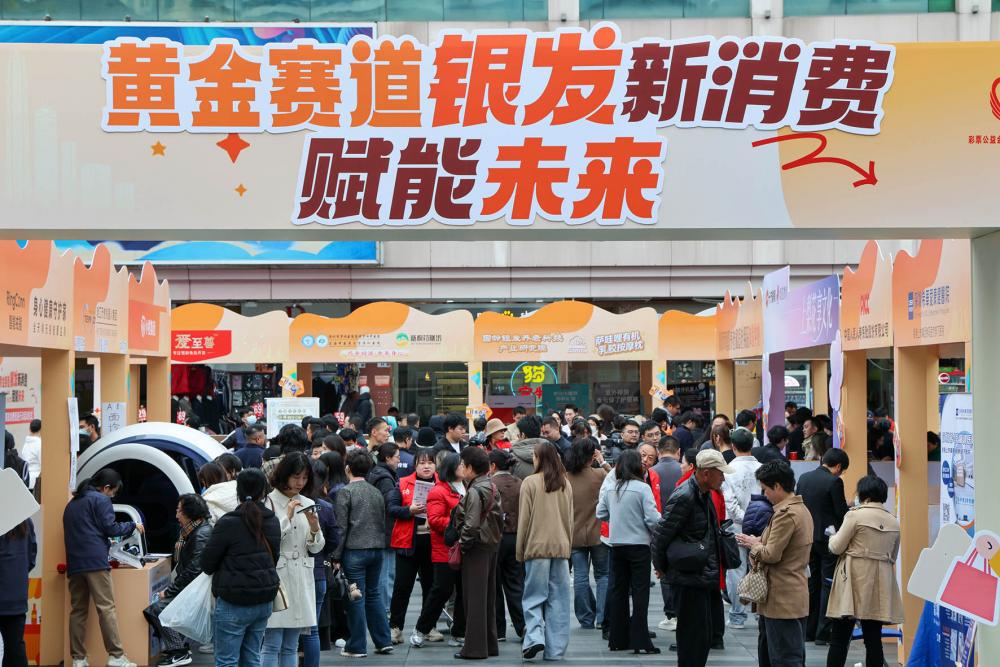
国常会最新部署,这样推进银发经济和养老服务
Jing Ji Guan Cha Wang· 2026-02-25 11:37
Core Viewpoint - The State Council meeting emphasizes the significant potential of the silver economy in China, highlighting the need for improved support measures and policy implementation to promote the development of elderly care services and industries, addressing the challenges of an aging population [1][2] Group 1: Silver Economy Potential - The silver economy is projected to exceed 30 trillion yuan, with the elderly population aged 60 and above expected to reach 320 million by the end of 2025 and over 400 million by 2035 [1][3] - There is a structural imbalance in the consumption of the elderly, with a potential demand of trillions of yuan not fully realized due to limitations in consumption capacity, scenarios, and perceptions [2][3] Group 2: Enhancing Consumption Capacity - A "policy toolbox" is needed to enhance consumption capacity, focusing on three areas: improving the multi-tiered pension insurance system, innovating consumption subsidy mechanisms, and optimizing consumption time arrangements [2][3] - Specific measures include expanding long-term care insurance coverage, providing targeted subsidies for rehabilitation aids and smart elderly care devices, and encouraging flexible retirement systems [2] Group 3: Improving Elderly Care Services - The meeting calls for the enhancement of the elderly care service system, aiming to address the structural contradiction of insufficient supply [3][4] - By the end of 2025, the goal is to have 394,000 elderly care institutions and 7.68 million beds, with various subsidies benefiting over 52.86 million people [3] Group 4: Service System Development - A tiered service system is essential, promoting a network that integrates home-based care, community support, and institutional care, with a focus on quality improvement [4][5] - The development of nursing beds and professional care capabilities is prioritized to meet the needs of disabled and semi-disabled elderly individuals [4] Group 5: Safety and Ethical Considerations - Strengthening safety management in elderly care institutions is crucial, with a focus on combating fraud and protecting the rights of the elderly [4][5] - The principle of "technology for good" should guide the introduction of smart products in elderly care, ensuring safety and ethical considerations are prioritized [5]
四川:扩大长期护理保险制度覆盖面
Bei Jing Shang Bao· 2026-02-25 10:50
Group 1 - The core viewpoint of the article highlights the Sichuan Provincial Government's recent implementation opinions aimed at promoting innovation and breakthroughs in the service industry, particularly in the area of elderly care services and long-term care insurance [1] - The initiative includes plans to enrich multi-level elderly care services and expand the coverage of long-term care insurance systems [1] - The government aims to attract national-level funds, insurance companies, and financial asset investment companies to establish or invest in venture capital funds [1] Group 2 - The policy encourages regions with suitable conditions to establish futures delivery warehouses and explore the development of "insurance + futures" services [1]