避税天堂

Search documents
海南自贸港不当“避税天堂”
第一财经· 2025-12-18 02:20
Core Viewpoint - The Hainan Free Trade Port (Hainan FTP) has officially commenced its full island closure operations, implementing significant tax incentives while ensuring it does not become a "tax haven" through stringent regulatory measures [3][4][9]. Tax Incentives - Hainan FTP offers substantial tax benefits, including "zero tariffs" on imported goods outside the "negative list" and a reduced corporate income tax rate of 15% for qualifying enterprises, compared to the mainland's 25% [3][5][9]. - Individuals in Hainan can benefit from a maximum personal income tax rate of 15%, significantly lower than the mainland's maximum rate of 45% [3][9]. Regulatory Measures - The central government has designed the tax incentive system with numerous restrictions to prevent Hainan from becoming a "tax haven," including the establishment of "first line" and "second line" customs regulations [4][5][6]. - To qualify for the 15% corporate income tax rate, companies must have substantial operations within Hainan FTP and belong to encouraged industries, preventing the misuse of tax benefits by shell companies [6][7]. Monitoring and Compliance - Hainan FTP has implemented strict regulatory measures, including a "one line open, two lines controlled" approach to trade supervision and the use of technology for monitoring fund flows [8][9]. - A comprehensive anti-money laundering system has been established, utilizing big data and AI to monitor cross-border fund transfers and ensure transaction traceability through blockchain technology [8][9]. Strategic Importance - The tax system in Hainan FTP is a strategic choice for promoting high-level openness, aiming to attract global resources while preventing systemic risks, positioning Hainan as a hub for orderly economic exchange rather than a chaotic tax haven [9].

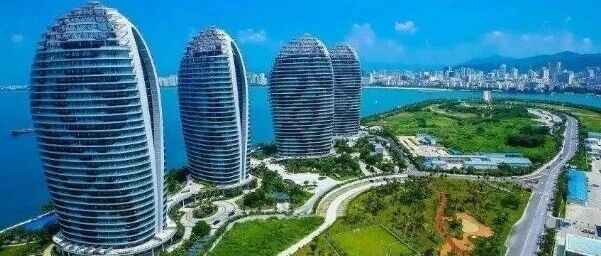
海南自贸港不当“避税天堂”
Di Yi Cai Jing· 2025-12-18 02:05
Core Viewpoint - Hainan Free Trade Port aims to prevent becoming a "tax haven" through comprehensive institutional design and regulatory strategies, despite the introduction of significant tax incentives [1][2][6] Tax Incentives - Hainan Free Trade Port offers substantial tax incentives, including "zero tariffs" on imported goods outside the "negative list" and a reduced corporate income tax rate of 15%, compared to the mainland's standard rate of 25% [1][2] - Individuals in Hainan can benefit from a maximum personal income tax burden of 15%, significantly lower than the mainland's highest rate of 45% [1] Regulatory Measures - The central government has implemented restrictions on tax incentives to prevent misuse, such as requiring substantial operational presence in Hainan for companies to qualify for the 15% corporate tax rate [3][4] - Hainan has established a regulatory framework that includes "one line open, two lines controlled" for trade supervision, and utilizes technology for monitoring fund flows to mitigate tax risks [5] Anti-Avoidance Strategies - Measures are in place to prevent the establishment of "shell companies" that could exploit tax benefits, ensuring that only companies with genuine operations in Hainan can access these incentives [4][6] - A robust anti-money laundering system is being developed, leveraging big data and AI to monitor cross-border fund transfers and ensure transaction traceability [5][6] Strategic Importance - The tax system in Hainan is part of a national strategy for high-level openness, aiming to create an orderly tax environment that attracts global resources while preventing systemic risks [6] - Hainan is positioned to become a hub for "dual circulation" and a model for orderly openness, contrasting with the characteristics of a "tax haven" [6]
官方辟谣海南会成为“避税天堂”
Sou Hu Cai Jing· 2025-12-17 11:46
Core Viewpoint - The article addresses and debunks several rumors regarding the operation of the Hainan Free Trade Port, clarifying that the upcoming closure on December 18, 2025, will not hinder the movement of residents and that the development of the free trade port is a long-term process rather than an immediate completion [3][4]. Group 1: Rumor Clarifications - Rumor 1: The closure will make it inconvenient for mainland residents to travel to Hainan. Truth: The management of residents' movement will remain unchanged, with the closure primarily affecting the management of goods [3]. - Rumor 2: The closure signifies the completion of the free trade port. Truth: The closure is a significant milestone but not the endpoint; the full establishment of the free trade port is expected by 2050 [3]. - Rumor 3: Hainan will become a "tax haven." Truth: Hainan's tax policies are strictly regulated to promote the real economy, not to create a tax haven environment [3]. Group 2: Real Estate and Regulatory Environment - Rumor 4: Properties in Hainan will become "offshore assets." Truth: Hainan's real estate remains subject to domestic laws and policies, and measures will continue to prevent speculation while ensuring housing demand is met [4].
广东人,又连任了一个外国总统?
创业邦· 2025-10-26 11:04
Core Viewpoint - The article discusses the political journey of David Adeang, a native of Guangdong, who became the president of Nauru, the world's smallest republic, highlighting the historical and socio-economic context of Nauru and its challenges [5][6][10]. Group 1: Background of Nauru - Nauru is the smallest island nation with a population of approximately 11,000, which is about half of the population of Adeang's hometown, Qikang, Guangdong [6][12]. - The country gained independence in 1968 and has no military, relying on Australia for defense and judicial matters [15][24]. - Nauru's economy was once prosperous due to phosphate mining but has since faced severe resource depletion and economic challenges [24][25]. Group 2: David Adeang's Political Journey - David Adeang's family history is tied to the early Chinese laborers who worked in phosphate mining, with his grandfather being one of the first contract workers [18][20]. - Adeang's political career began as a lawyer, and he held various ministerial positions before becoming president in October 2023 [20][21]. - His election reflects the influence of the Chinese community in Nauru, which has historically played a significant role in the country's leadership [17][22]. Group 3: Economic Challenges and Strategies - Nauru's reliance on phosphate mining led to economic decline after resources were exhausted, and the country struggles with infrastructure and food security [25][27]. - Attempts to diversify the economy through financial investments and selling citizenship for income have largely failed, leading to significant financial losses [28][29]. - The country has faced health crises, with high obesity rates and related diseases due to reliance on imported unhealthy foods [32][33]. Group 4: Adeang's Reforms and Future Plans - Upon taking office, Adeang initiated reforms to strengthen ties with China, aiming to reduce dependency on Australia and improve Nauru's economic situation [33][34]. - Proposed initiatives include developing port infrastructure, renewable energy projects, and disaster response strategies to combat climate change [35][37]. - Adeang's approach aims to address public health issues and promote sports as a means to improve the overall health of the population [39].