酒店本土化

Search documents
“0元购”成常态,酒店交易市场更热了
Xin Lang Cai Jing· 2026-01-23 05:36
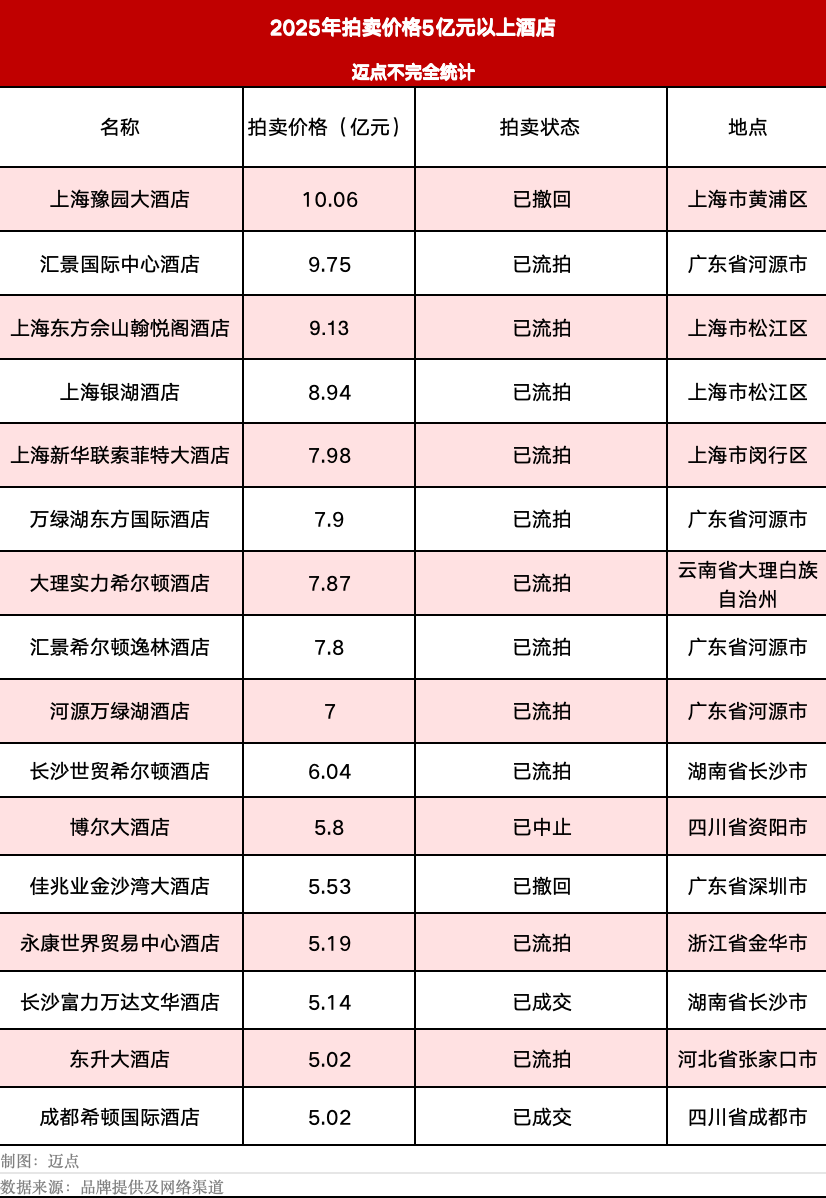
Core Insights - The hotel asset trading market has seen significant activity from late 2025 into early 2026, marked by notable transactions and brand changes, indicating a period of industry transformation [1][2] Group 1: Hotel Asset Transactions - The hotel asset trading market has experienced a "two extremes" scenario, with a high volume of auction projects and frequent brand changes, yet a low transaction success rate [2] - In 2025, there were 764 hotel auction projects totaling 752 billion, with 228 projects exceeding 1 billion, but over 60% of high-value hotels (over 5 billion) faced unsuccessful bids, resulting in a mere 12.5% transaction rate [2][3] - The majority of auctioned hotels are located in East and South China, with high-end brands like Hilton and Wanda facing challenges due to debt issues and high operational costs, leading to cautious investor behavior [3] Group 2: Brand Changes and Market Dynamics - Since 2025, several well-known hotels have announced brand changes or terminated partnerships, primarily involving international high-end brands [4][5] - The trend of brand changes is driven by high management fees, debt pressures, and strategic adjustments from hotel owners, with local operators increasingly taking over previously branded hotels [5][6] - Owners are focusing on core brands and simplifying non-core product lines, with some hotels opting for independent operations to balance brand effects and decision-making autonomy [6] Group 3: Underlying Industry Challenges - The surge in auctions and brand changes reflects the industry's struggle with high debt and ongoing losses, with many core assets becoming burdensome [7][8] - High-profile cases, such as the "0 yuan transfer" of the Andaz Hotel, illustrate that many hotels, despite their prime locations, are facing negative net assets and significant debt, leading to reduced valuations [8] - The mismatch between international brands and local market demands is causing a shift, as consumers increasingly prefer local experiences over traditional international offerings [9][10] Group 4: Future Trends and Strategic Shifts - The hotel industry is undergoing a "major reshuffle," with the diminishing allure of international brands and a focus on local market adaptability and operational efficiency [11] - The emphasis is shifting from merely having prime locations to ensuring low debt, healthy cash flow, and potential for asset improvement as key value indicators [11][12] - Investors are now prioritizing high-quality locations with low debt and strong operational capabilities, leading to a more rational asset allocation in the market [12] Group 5: Operational Excellence and Brand Synergy - The relationship between brand, asset, and operations is becoming increasingly interconnected, with effective operations being crucial for realizing brand value and asset appreciation [13] - The industry is expected to enter a new phase where hotel owners will select suitable brands based on asset characteristics and enhance synergy through refined operations [13][14] - The ongoing transformation in the hotel sector is a response to market demands, with a focus on service quality and profitability becoming paramount [14]

国际酒店品牌亚太首店,为何热衷开在中国?
3 6 Ke· 2025-07-31 12:48
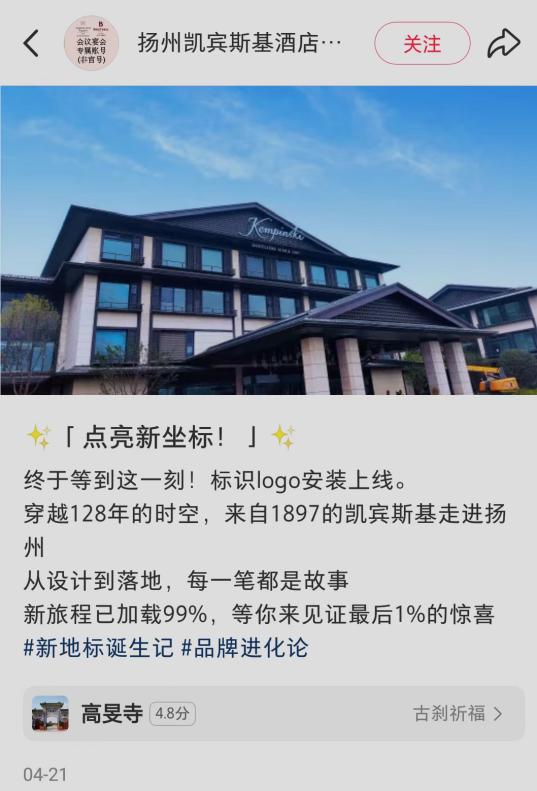
Core Insights - The Shanghai Expo Thompson Hotel is set to open in Q4 2025, marking the debut of the Thompson brand in the Asia-Pacific region and a significant move by Hyatt Group in the lifestyle sector [1][2] - International hotel brands are increasingly choosing China for their first stores, with a notable surge in new brand entries into the domestic market [1][12] - The Chinese hotel market is experiencing a "first store" boom, with multiple international hotel groups expanding their presence [1][12] Hyatt Group - The Shanghai Expo Thompson Hotel is part of Hyatt's lifestyle strategy and represents the brand's first entry into the Asia-Pacific region [2] - Hyatt has also announced the introduction of its Destination by Hyatt brand in China, with two hotels planned in Sichuan and Dalian [2] Hilton Group - The Qingdao Zhanqiao Hilton Motto Hotel is scheduled to open in June 2026, marking the brand's first signing in mainland China [3] - Hilton is also launching the LXR brand in Xi'an, with plans for a hotel and resort to open in 2027 [11] Accor Group - The soft brand Emblems Collection is expected to open its first store in Hangzhou in Q4 2025, although it was initially planned for a 2022 opening [4] - Accor has previously signed a cooperation agreement for a luxury hotel in Guiyang, which has faced delays [4] Wyndham Group - The Xi'an Registry Collection Hotels is set to be the brand's first store in China, with an opening planned for December 2025 [5] Langham Group - The Ying'nFlo brand has officially entered the mainland market, with its first store opening in Hangzhou in July [6] Kempinski Group - The first Bistrôt Hotel in China is expected to open in 2025, developed in collaboration with a local tourism group [7] Market Dynamics - The Chinese hotel market is highly competitive, yet international hotel groups continue to invest due to the country's large population and economic potential [12][13] - By 2030, it is predicted that 58% of Chinese households will belong to the "mass affluent" or higher, driving significant consumer spending growth [13] - Domestic tourism is expected to see a substantial increase, with 56.2 billion trips projected for 2024, reflecting a 14.8% growth from 2023 [15] Strategic Considerations - International hotel brands must adapt to the increasingly discerning Chinese consumers by focusing on localization and cultural integration [17] - The competition for market share in the existing hotel inventory is intensifying, with brands leveraging soft brands to capture market segments [20] - Digital transformation is essential for enhancing operational efficiency and customer experience in the hotel industry [20] - Successful integration with local ecosystems and tourism experiences is crucial for international brands to thrive in China [21]