
酒店RWA

Search documents
酒店RWA新模型,让消费者变投资者,2万份权益发行锁定4000万流水
Sou Hu Cai Jing· 2026-01-11 14:53
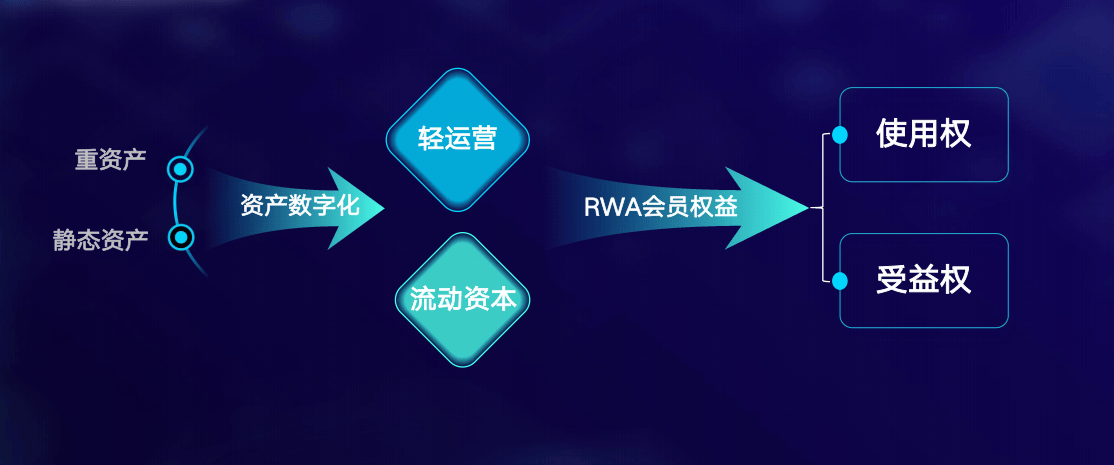
Application Scenarios - The solution is applicable to traditional hotel industry, especially for hotels facing issues like high asset investment, serious capital lock-up, poor liquidity, and a single membership system [1] - It aims to digitize and tokenize future revenue rights of hotels, achieving asset lightweighting, rapid capital recovery, and flexible circulation of user rights [1] Core Algorithms and Mechanisms - The asset packaging and issuance mechanism involves bundling hotel operational costs and revenues for a certain period (e.g., 5 years) into an "asset package" [3] - Limited digital rights certificates (NFG) are issued based on blockchain, with each certificate corresponding to a fixed amount (e.g., 2000 yuan per certificate), representing usage and benefit rights [5] - The profit-sharing rules and calculation model include a service fee of 10% on room rates for users using NFG rights [6] - Each NFG certificate's value is calculated as total hotel revenue divided by total issued NFG certificates, exemplified by a total revenue of 63.5 million yuan divided by 20,000 certificates, resulting in 3,175 yuan per certificate [6] - The annualized return calculation formula is provided, showing an example of an 11.75% annualized rate based on the increase in certificate value over 5 years [6] Problem Resolution - For hotels, the solution allows for the packaging of future revenues, enabling quick capital recovery (e.g., issuing 20,000 certificates can recover 40 million yuan) [10] - It reduces asset lock-up pressure, shifting towards "light asset operation" [10] - The design binds user rights to enhance repurchase and loyalty [10] - For users/investors, it offers low-threshold ownership of hotel asset shares (e.g., 2000 yuan per share) [10] - It combines consumption rights with investment returns, allowing for the transfer and appreciation of rights, breaking the traditional prepaid card "funds lock-up" dilemma [10] Design Rationale - The design is based on a trusted blockchain infrastructure (Tencent Cloud TBaaS), ensuring rights confirmation, transaction transparency, and immutability [11] - It digitizes asset revenue rights, aligning with policy advocacy for "digital transformation" and enhancing asset liquidity [11] - The dual rights design (usage rights + benefit rights) meets consumer needs while possessing investment attributes, expanding the user base [11] - The tradable rights resolve the rigidity of traditional membership cards, forming a secondary market and activating the ecosystem [11] Example Illustration - A hotel issues 5-year NFG rights, with each share priced at 2000 yuan, totaling 20,000 shares [12] - The hotel can recover 40 million yuan upfront for operational upgrades, while users become "co-investors," sharing in the hotel's profits [12] - Users can utilize their rights for 10 nights, with the hotel charging a 10% service fee on room rates, while also holding a benefit right to share in hotel operating profits [12]

融资难?酒店RWA模式:不抵押、不稀释股权!3个月收回5年成本!
Sou Hu Cai Jing· 2026-01-04 09:40
Core Insights - The hotel RWA (Real World Assets) model represents an innovative approach that combines blockchain technology with the digital economy, allowing hotel assets to be tokenized and traded as security tokens, thus facilitating digitalization, liquidity, and global asset allocation [1][3]. Group 1: Core Logic of Hotel RWA Model - Traditional hotels are capital-intensive, with core assets including property rights, facilities, brand value, and stable cash flows from various revenue streams [3]. - The RWA model enables the tokenization of these assets, allowing investors to indirectly hold shares in hotel assets through the purchase of standardized digital tokens, which entitle them to profit-sharing and potential capital gains [3][5]. Group 2: New Opportunities for Traditional Hotel Transformation - The RWA model addresses several pain points in the traditional hotel industry, such as high capital investment, limited financing channels, poor asset liquidity, and weak digital capabilities [5]. - It facilitates a shift towards asset-light operations by allowing hotels to tokenize part of their assets, thereby releasing liquidity and reducing capital requirements [6]. - The model promotes digital upgrades through blockchain's smart contract capabilities, enhancing operational efficiency and cost reduction [6]. - Token trading on blockchain networks allows hotels to reach a global customer base, attracting small investors and high-net-worth individuals [6]. Group 3: New Entrepreneurial Opportunities - The implementation of the hotel RWA model creates new business avenues for entrepreneurs, including RWA technology service providers that offer asset tokenization solutions [8]. - Vertical platforms focusing on hotel asset tokenization and trading can emerge, providing more flexibility than traditional real estate investment trusts (REITs) [10]. - Innovative product offerings such as fractional ownership and time-sharing rights can be developed, allowing tourists to invest in hotel revenue streams [10]. - Compliance and consulting services are needed due to the regulatory aspects of RWA, creating demand for professionals with expertise in law, finance, and blockchain [10]. Group 4: New Financing Channels - The RWA model opens up low-cost, efficient, and widely accessible financing channels for traditional hotels [13]. - Tokenization lowers financing thresholds by allowing large assets to be divided into smaller shares, attracting a broader range of investors [13]. - The model shortens financing cycles through automated processes, significantly reducing time costs compared to traditional methods [13]. - Global fundraising is facilitated by the open nature of blockchain networks, enabling hotels to attract investors from around the world [13]. - The dynamic valuation and liquidity of tokens allow real-time reflection of hotel asset values, addressing traditional real estate valuation and liquidity challenges [13]. Conclusion - The hotel RWA model represents a dual innovation of asset financialization and digitalization, revitalizing traditional hotel operations and enhancing financing flexibility [18]. - It serves as a critical lever for traditional hotels transitioning from heavy asset operations to a model that combines light assets with capital operations [18]. - For entrepreneurs, it presents a new avenue for integrating digital economy with traditional industries [18]. - For investors, it offers a new tool for participating in the growth of the hotel industry [18].
W酒店RWA,一间客房拆成10万份卖?
3 6 Ke· 2025-11-06 03:59
Core Viewpoint - The emergence of Real-World Assets (RWA) in the hotel industry reflects both the challenges faced by traditional hotel operations and the potential for democratizing investment opportunities through blockchain technology [1][2][3] Group 1: RWA Overview - RWA stands for Real-World Assets, which refers to the tokenization of tangible and intangible assets using blockchain technology, allowing for ownership, trading, and fractionalization [3][4] - The hotel RWA model allows for the division of hotel assets into smaller, tradable units, enabling investors to hold shares starting from as low as $100 [1][3] Group 2: Strategic Development - A "three-step" strategy has been agreed upon to advance the digitalization of hotel assets, with the first phase aiming to complete the on-chain confirmation of $500 million in hotel properties by Q4 2025 [2] - The issuance of compliant hotel REITs tokens is planned for Q1 2026, followed by the integration of DeFi protocols by Q2 2026 [2] Group 3: Industry Challenges - The traditional hotel industry faces significant structural challenges, including low asset liquidity, limited financing channels, and high investment thresholds, which hinder effective capital allocation [9][10] - The hotel asset market is characterized by long investment cycles and difficulties in converting high-value properties into liquid capital, especially during economic downturns [9][10] Group 4: Regulatory Environment - Hong Kong's regulatory framework for digital assets has evolved, with the release of the "Hong Kong Digital Asset Development Policy Declaration 2.0," indicating a shift towards a more structured approach to digital asset management [6][7] - Compliance with the Securities and Futures Commission (SFC) and the Hong Kong Monetary Authority (HKMA) is essential for RWA issuance, which typically involves special purpose vehicles (SPVs) and cross-border tokenization [6][12] Group 5: Market Opportunities - The RWA model is seen as a means to enhance liquidity and democratize investment in the hotel sector, potentially allowing for a broader range of investors to participate [10][13] - The integration of RWA technology could lead to more accurate asset valuations and improved market recognition of hotel assets, transforming them from mere properties into investment vehicles [13][14]