资产轻量化

Search documents
HWORLD(HTHT) - 2025 Q4 - Earnings Call Transcript
2026-03-18 13:02
Financial Data and Key Metrics Changes - In 2025, the group revenue grew 5.9% year-over-year to RMB 25.3 billion, with Legacy-Huazhu's revenue rising by 7.9% to RMB 20.5 billion [28][29] - Group adjusted EBITDA increased 24.2% year-over-year to RMB 8.5 billion, with a margin improvement of 4.9 percentage points to 33.5% [28][29] - Adjusted net income rose by 32.9% year-over-year to RMB 4.9 billion [29] Business Line Data and Key Metrics Changes - The managed and franchised revenue increased by 23.1% year-over-year to RMB 11.7 billion, with gross operating profit rising by 20.8% to RMB 7.6 billion [30] - Room nights sold to members rose 21.5% year-over-year, exceeding 245 million in 2025 [11] - The asset-light monetized and franchised business delivered solid growth, contributing 69% to the overall profit in 2025, a 5 percentage point increase year-over-year [30] Market Data and Key Metrics Changes - Demand for travel in China is shifting from discretionary to necessity, with a steady increase in trips and consumer spending [5][6] - The hotel industry faces an oversupply of low-quality products, while high-quality, value-for-money options remain insufficient [6][7] - The company is focusing on lower-tier cities and rural areas to fill the gap in quality accommodation [8] Company Strategy and Development Direction - The company aims to deepen its roots in the China market, focusing on high-quality growth and service excellence [9][19] - A multi-brand strategy is being employed in the upper mid-scale segment, with four key brands targeting different market niches [63][66] - The introduction of the HanTing Inn brand aims to balance cost-effectiveness and quality, catering to family and group travel needs [15][50] Management's Comments on Operating Environment and Future Outlook - The management is cautiously optimistic about the overall RevPAR performance for 2026, expecting a flat to slight year-over-year increase [44] - The company plans to continue enhancing customer experience and operational efficiency while pursuing a strategic goal of 2,000 cities and 20,000 hotels [19][32] - The Legacy-DH business has achieved a successful turnaround, with a record adjusted EBITDA of around RMB 500 million [22] Other Important Information - The company declared a $400 million cash dividend for the second half of 2025, contributing to a total shareholder return of around $760 million for the year [31][32] - The company has completed over 75% of its $2 billion three-year shareholder return plan [32] Q&A Session Summary Question: Direction of Arthur's new role and expected changes - Management expressed confidence in Arthur Yu's expertise to lead the company towards becoming a global, world-class entity [39] Question: 2026 revenue guidance and demand-supply outlook - Management noted a recovering trend in the hotel industry, with growing demand for leisure and business travel, and cautiously optimistic RevPAR expectations for 2026 [43][44] Question: Hotel opening pace and new brands - The company plans to open 2,200-2,300 new hotels in 2026, focusing on high-quality standards [48] Question: Asset-light transformation strategy for DH - Management highlighted ongoing efforts in cost control and portfolio restructuring, with confidence in expanding the hotel network internationally [56] Question: Future shareholder return plans - The company is committed to returning value to shareholders through dividends and share repurchases, supported by strong cash flow [59] Question: Plans for upper mid-scale hotel segment - The upper mid-scale segment remains a strategic focus, with plans for continued development and brand enhancement [63][66]

JINGDONG Property, Inc.(H0355) - Application Proof (1st submission)
2026-01-25 16:00
Disclaimer Statement The Stock Exchange of Hong Kong Limited and the Securities and Futures Commission take no responsibility for the contents of this Application Proof, make no representation as to its accuracy or completeness and expressly disclaim any liability whatsoever for any loss howsoever arising from or in reliance upon the whole or any part of the contents of this Application Proof. Application Proof of JINGDONG Property, Inc. 京东智能产发股份有限公司 (the "Company") (incorporated in the Cayman Islands with ...
酒店RWA新模型,让消费者变投资者,2万份权益发行锁定4000万流水
Sou Hu Cai Jing· 2026-01-11 14:53
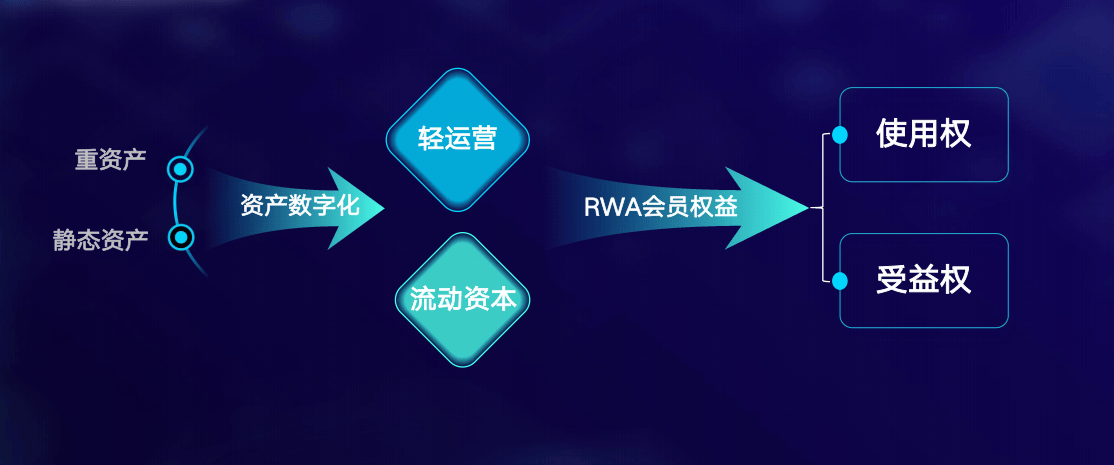
Application Scenarios - The solution is applicable to traditional hotel industry, especially for hotels facing issues like high asset investment, serious capital lock-up, poor liquidity, and a single membership system [1] - It aims to digitize and tokenize future revenue rights of hotels, achieving asset lightweighting, rapid capital recovery, and flexible circulation of user rights [1] Core Algorithms and Mechanisms - The asset packaging and issuance mechanism involves bundling hotel operational costs and revenues for a certain period (e.g., 5 years) into an "asset package" [3] - Limited digital rights certificates (NFG) are issued based on blockchain, with each certificate corresponding to a fixed amount (e.g., 2000 yuan per certificate), representing usage and benefit rights [5] - The profit-sharing rules and calculation model include a service fee of 10% on room rates for users using NFG rights [6] - Each NFG certificate's value is calculated as total hotel revenue divided by total issued NFG certificates, exemplified by a total revenue of 63.5 million yuan divided by 20,000 certificates, resulting in 3,175 yuan per certificate [6] - The annualized return calculation formula is provided, showing an example of an 11.75% annualized rate based on the increase in certificate value over 5 years [6] Problem Resolution - For hotels, the solution allows for the packaging of future revenues, enabling quick capital recovery (e.g., issuing 20,000 certificates can recover 40 million yuan) [10] - It reduces asset lock-up pressure, shifting towards "light asset operation" [10] - The design binds user rights to enhance repurchase and loyalty [10] - For users/investors, it offers low-threshold ownership of hotel asset shares (e.g., 2000 yuan per share) [10] - It combines consumption rights with investment returns, allowing for the transfer and appreciation of rights, breaking the traditional prepaid card "funds lock-up" dilemma [10] Design Rationale - The design is based on a trusted blockchain infrastructure (Tencent Cloud TBaaS), ensuring rights confirmation, transaction transparency, and immutability [11] - It digitizes asset revenue rights, aligning with policy advocacy for "digital transformation" and enhancing asset liquidity [11] - The dual rights design (usage rights + benefit rights) meets consumer needs while possessing investment attributes, expanding the user base [11] - The tradable rights resolve the rigidity of traditional membership cards, forming a secondary market and activating the ecosystem [11] Example Illustration - A hotel issues 5-year NFG rights, with each share priced at 2000 yuan, totaling 20,000 shares [12] - The hotel can recover 40 million yuan upfront for operational upgrades, while users become "co-investors," sharing in the hotel's profits [12] - Users can utilize their rights for 10 nights, with the hotel charging a 10% service fee on room rates, while also holding a benefit right to share in hotel operating profits [12]

酒店NFG权益模式:30天锁定20000会员,提前回笼4000万流水
Sou Hu Cai Jing· 2025-12-24 16:29
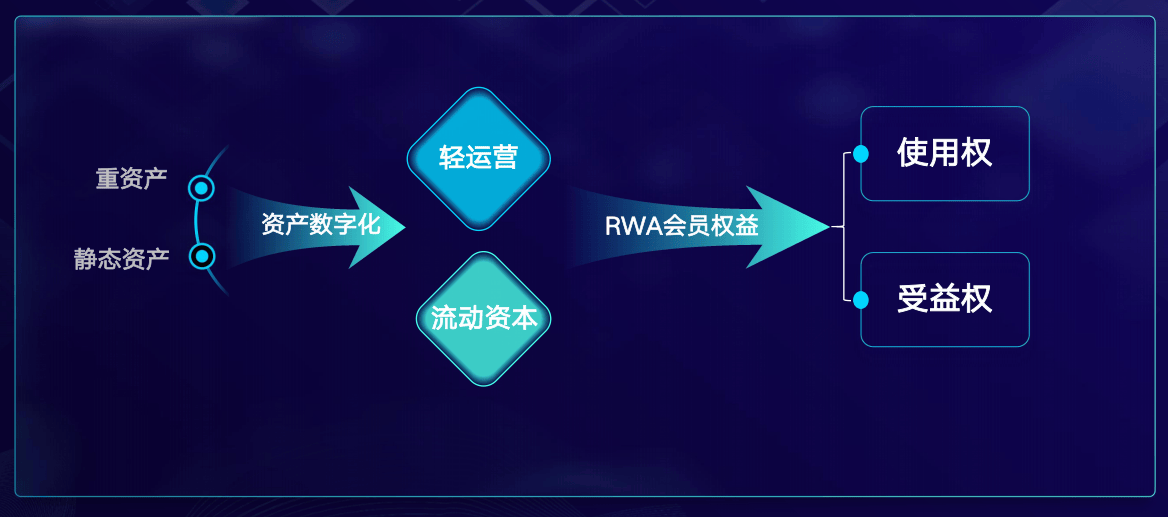
Application Scenarios - The solution is applicable to the traditional hotel industry, particularly for hotel enterprises facing issues such as high capital investment, significant fund immobilization, poor liquidity, high operating costs, and a single membership system. The approach aims to digitize and tokenize future revenue rights of hotels, achieving asset lightweighting, rapid fund recovery, and flexible circulation of user rights [1]. Core Algorithms and Mechanisms - The solution includes mechanisms for asset on-chain and rights confirmation, as well as profit-sharing and revenue distribution [3]. Value Calculation Formula - Each NFG equity value is calculated as: Total hotel revenue ÷ Total NFG issued shares. For example, if a hotel issues 20,000 NFG shares at 2,000 yuan each, and after 5 years the total revenue reaches 63.5 million yuan, the value of each share increases to 3,175 yuan, resulting in an annual appreciation of 11.75% [5]. Rights Circulation and Splitting Mechanism - NFG rights support transfer, splitting, and trading, enhancing liquidity [6]. Problem Resolution - The NFG rights address the rigidity of traditional membership cards, which are limited to consumption, by incorporating usage, investment, and circulation attributes [10]. Design Rationale - The design addresses issues such as fund immobilization and heavy asset pressure by allowing hotels to monetize future revenues in advance, thus facilitating a transition to a lightweight asset operation model. It also improves liquidity by enabling rights to be transferable, breaking the traditional prepaid fund "dead cycle." Additionally, it strengthens user engagement by transforming consumers into "co-builders and investors," enhancing repurchase and loyalty. The fragmented issuance of rights lowers the investment threshold, allowing small funds to participate in high-end asset investments [12]. Trust Mechanism Based on Blockchain - The blockchain-based mechanism ensures transparent asset ownership and traceable transactions, establishing a foundation of trust. The dual rights structure (usage rights + benefit rights) meets consumption needs while providing investment attributes, expanding the user base. The profit-sharing rules are clearly defined, with all revenue distributions executed automatically through smart contracts, making them publicly verifiable and avoiding disputes. The liquidity design allows rights to circulate and split, activating the secondary market and enhancing asset vitality. The ecosystem is expandable, enabling multiple hotels to independently issue NFGs, forming an alliance ecosystem with interlinked rights and expanded scenarios [13]. Example Illustration - A hotel plans to issue 5-year NFG rights, with a total issuance of 20,000 shares priced at 2,000 yuan each. If a user purchases one share for 2,000 yuan and the hotel achieves total revenue of 63.5 million yuan after 5 years, the value of each NFG equity will rise to 3,175 yuan. The hotel can recover 40 million yuan in advance through the issuance of NFGs for lightweight operations while establishing long-term interest alignment with users [15]. Rights Utilization - Users receive 10 accommodation rights (usage rights), with the hotel charging a 10% service fee on room rates. They also receive one benefit right, which appreciates with the hotel's operational growth. Users can choose to use the accommodation rights, transfer or gift the rights to others, or hold them until maturity to enjoy asset appreciation [17].
远东发展(00035) - 2026 Q2 - 业绩电话会
2025-11-27 15:05
Financial Data and Key Metrics Changes - Adjusted revenue reached HKD 4.9 billion, with cash profits of HKD 203 million, despite a net loss attributable to shareholders of HKD 988 million due to impairment losses [4][6][12] - The adjusted gross profit margin increased by 3.6 percentage points to 34.8%, driven mainly by property sales [12][13] - The net gearing ratio improved to 64.9%, down 2.7 percentage points compared to the end of March [7][14] Business Line Data and Key Metrics Changes - Property development revenue was HKD 3.2 billion, with a profit margin increase from 31.3% to 36.8% [25][26] - Hotel revenue increased by 9.5% to nearly HKD 1 billion, with occupancy rates improving significantly [36] - Car park revenue decreased by 10% to HKD 343 million, attributed to holding costs [45] - Gaming revenue increased by 11% to HKD 2,018 million, with an adjusted gross profit margin of 42% [46] Market Data and Key Metrics Changes - The company reported strong sales momentum in Manchester, with prices increasing over 50% in recent years [27] - In London, the Aspen at Consort Place project is expected to benefit from a housing supply shortage [29] - The Melbourne market showed strong performance with Westside Place selling out 1,400 units [31] Company Strategy and Development Direction - The company aims to accelerate project completions to optimize cash flow and reduce debt levels, maintaining a robust development pipeline of approximately HKD 62 billion [25][28] - There is a focus on divesting non-core assets and transitioning towards an asset-light business model [52] - The company plans to unlock hotel revaluation surplus and continue to enhance its hotel portfolio [9][23] Management's Comments on Operating Environment and Future Outlook - Management expressed optimism about the stabilization of the Hong Kong property market and the potential for no further material impairments [55][56] - The company is focused on reducing bank loans and maintaining a healthy financial position, with plans to complete ongoing projects [62][63] - Future cash flow visibility is strong, with HKD 9.3 billion in pre-sales and contracted sales expected to contribute to revenue [51] Other Important Information - The company has entered into agreements to dispose of certain non-core assets, including a car park in Sydney for AUD 3.7 million [9][45] - The company is actively involved in community support following a recent tragedy, demonstrating its commitment to social responsibility [2][24] Q&A Session Summary Question: Is there a risk of further impairment for the Sai Ying Pun project? - Management does not foresee further impairment, citing recent market stabilization and strong sales performance in the Pavilion Forest project [55][56] Question: What is the company's strategy regarding sustainability? - The company is converting loans to sustainability-focused financing and emphasizes its commitment to social impact through various initiatives [57][58] Question: What are the plans for the perpetual bonds? - The priority is on reducing bank loans, with no immediate rush to address the high coupon rates of perpetual bonds [62][63]

硕远咨询:2025年中国房地产开发行业市场洞察报告
Sou Hu Cai Jing· 2025-10-15 13:37
Group 1: Macro Environment Analysis - The Chinese economy is expected to grow by approximately 5.0% in 2025, despite facing global economic uncertainties and domestic structural adjustment pressures [8][11][12] - Monetary policy will remain prudent and neutral, with short-term interest rates kept low to reduce corporate financing costs and support reasonable housing demand [12][19] - Urbanization rate is projected to exceed 65% by 2025, driving diverse housing demands including affordable, improved, and high-end housing [13][15] Group 2: Market Size and Structure - The total investment in the real estate development industry is estimated to reach approximately 16 trillion yuan in 2025, with a growth rate of around 4% [2][33] - Residential properties will continue to dominate the market, accounting for about 70%, while commercial and industrial real estate will represent 20% and 10%, respectively [2][28] - Emerging sectors such as elderly care real estate, long-term rental apartments, and logistics real estate are expected to show significant potential [2][34] Group 3: Policy and Regulatory Environment - Land policies will focus on optimizing supply structure and enhancing land use efficiency, prioritizing affordable housing and public infrastructure [18][19] - Real estate regulation will adhere to the principle of "housing is for living, not for speculation," with a shift towards supporting reasonable housing demand [19][20] - Tax policies will favor green and prefabricated buildings, encouraging innovation and transformation in the industry [20] Group 4: Technological Innovation - Green buildings will be supported through energy-saving designs and materials, with government backing for related policies [2][52] - Smart buildings integrating IoT and BIM technologies will enhance management efficiency and living experience [2][54] - Automation and digital management in construction will optimize processes and ensure quality and safety [2][57] Group 5: Market Demand Analysis - Demand from first-time homebuyers is characterized by a focus on cost-effectiveness and supporting facilities [61] - Improvement housing demand is driven by middle-class families seeking quality and personalized living spaces [63] - Investment demand has shifted towards rationality, with a focus on long-term value and stability [64] Group 6: Competitive Landscape - The market concentration of leading real estate companies is increasing, with the top ten firms holding over 40% market share [2][44] - Small and medium-sized enterprises need to focus on regional markets and differentiated competition to survive [48] - Leading firms are diversifying their business models to enhance resilience and profitability [71][72]

复星国际(00656) - 2025 H1 - 电话会议演示
2025-08-28 02:00
Financial Highlights - Total revenue reached RMB 873 billion, down by 108% year-on-year, mainly impacted by Yuyuan revenue declining[8] - Overseas revenue accounted for 53% of total revenue, up by 7 percentage points year-on-year, reaching RMB 4667 billion[8] - Industrial operating profit slightly increased to RMB 315 billion, excluding the impact of Happiness Business[8] - Investment in Technology and Innovation was RMB 636 billion, with a stable share of total revenue at 73%[8] - Adjusted NAV was HKD 180 per share, totaling HKD 258 billion[8] - Public markets financing reached RMB 1362 billion, excluding consolidated subsidiaries[14] Business Segment Performance - Health segment revenue was RMB 2257 billion[50] - Happiness segment revenue was RMB 3372 billion, a decrease of 219% year-on-year[10, 95] - Intelligent Manufacturing segment revenue was RMB 402 billion[143] - Wealth segment revenue was RMB 2783 billion, up by 33% year-on-year[10, 134] Strategic Development and Globalization - Fosun Insurance Portugal's international business recorded premiums of EUR 924 million, nearly 30% of total[21] - Henlius' overseas product profits grew over 200% year-on-year[26] - Shede Spirits' overseas sales exceeded RMB 10 million, up by 35% year-on-year[26]