重生

Search documents
00后的欲望与压抑,藏在12888部漫剧名字里
3 6 Ke· 2026-02-02 12:27
Core Insights - The rise of "manhua" dramas has shifted focus towards younger audiences, particularly males under 25, with titles that directly convey the core story elements [1][17] - The naming conventions of these dramas emphasize straightforwardness, often highlighting key themes like "rebirth," "reverse," and "apocalypse," which resonate with viewers seeking immediate gratification [26][19] - The production of manhua dramas benefits from AI technology, allowing for low-cost creation of diverse scenarios, particularly apocalyptic settings, which serve as backdrops for character development and plot progression [21][19] Summary by Categories Audience Demographics - Manhua dramas are primarily targeted at audiences aged 25 and below, with 60-80% of viewers being male, reflecting a demographic that is confused and aggressive in their desires and understanding of the times [1] Naming Conventions - Titles of manhua dramas often explicitly state the core story, allowing viewers to quickly grasp the main character's journey and relationships [1][26] - The most popular themes include "rebirth" and "reverse," which are positioned prominently in titles to attract viewers by promising a satisfying narrative arc [17][26] Story Themes - Common storylines include characters experiencing rebirth in various historical contexts, often leveraging past knowledge to achieve success, such as becoming wealthy or overcoming adversities [3][10] - Apocalyptic scenarios are frequently used, where characters must navigate extreme challenges, often enhanced by the introduction of a "system" that aids in their survival and success [6][19] Production and Cost Efficiency - The use of AI in the production of manhua dramas allows for rapid and cost-effective creation of series, enabling the release of multiple related titles in a short timeframe, which is difficult for traditional live-action productions [29][21] - This efficiency contributes to a continuous stream of content that keeps viewers engaged and satisfied with the "爽感" (pleasurable experience) that these dramas provide [29][19] IP Universe Development - Many manhua dramas are interconnected through a shared IP universe, allowing for a cohesive narrative experience across different titles, which enhances viewer engagement and brand loyalty [27]


一周漫剧观察:AI漫剧集体兽化,日式福瑞重构中式叙事
3 6 Ke· 2026-01-04 03:22
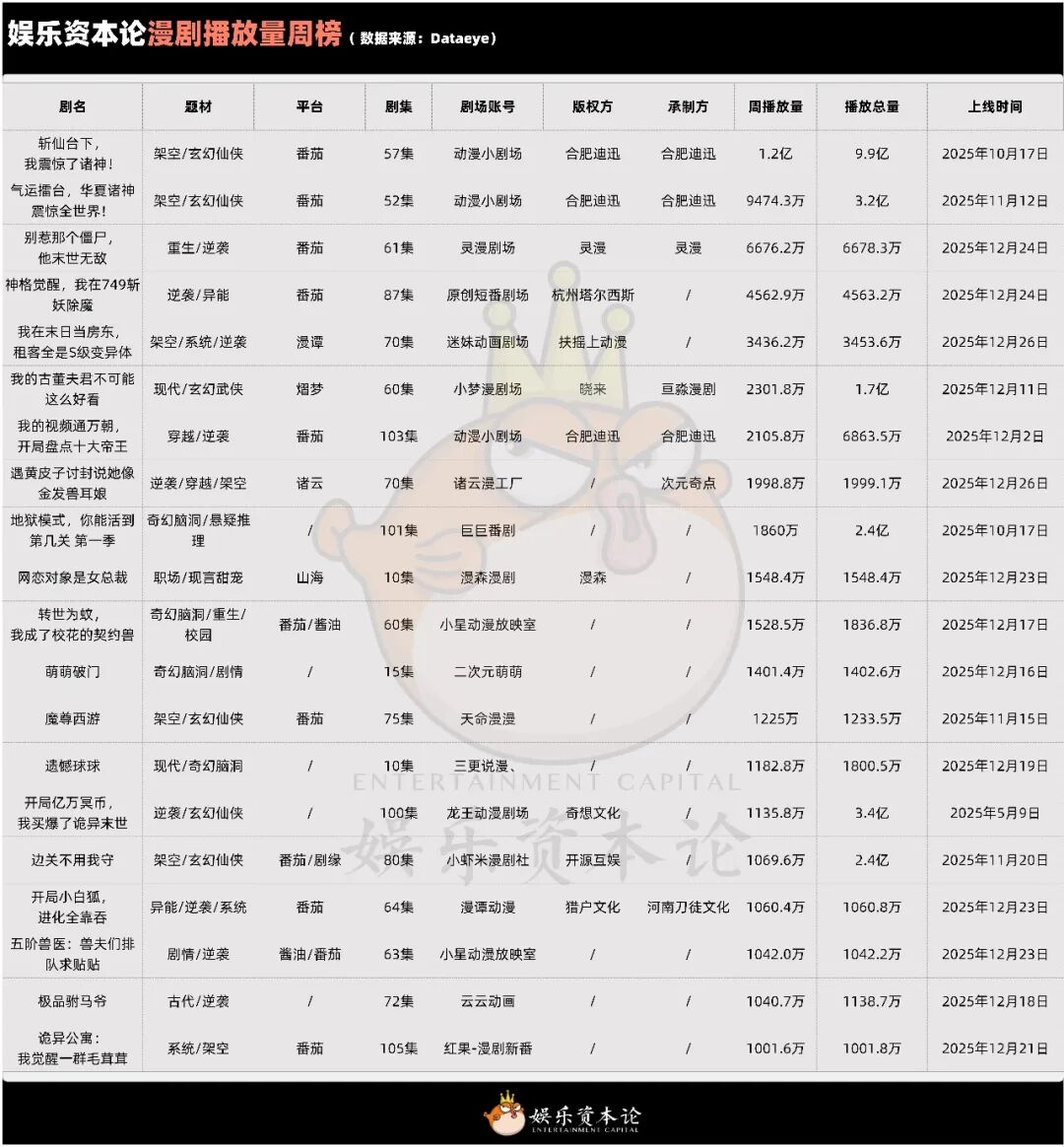
Core Insights - The current animation market is witnessing a shift where creators are integrating deeper themes and styles from Japanese anime, particularly focusing on "furry" elements and subcultures [1] - The "furry" genre has seen a significant surge in popularity, with numerous works featuring animal-human relationships [1][3] - The blending of traditional Chinese folklore with diverse themes has revitalized the animation genre, making it more appealing to younger audiences [1][3] Group 1: Market Trends - Creators are moving beyond simple adaptations of web literature to explore more complex themes, particularly through the lens of "furry" narratives [1] - The "furry" genre has exploded in popularity, with many top-ranking works featuring stories about animal-human emotional entanglements [1][3] - The integration of AI in animation is allowing for more precise targeting of niche audiences, particularly those familiar with Japanese anime [1][3] Group 2: Notable Works - "遇黄皮子讨封说她像金发兽耳娘" (Encountering the Yellow Weasel) has become the highest-ranking furry-themed animation, with a weekly viewership increase of 1,998,800 and a total view count of 1,999,100 [5] - "转世为蚊,我成了校花的契约兽" (Reborn as a Mosquito) ranks second, with a weekly increase of 1,528,500 and a total of 1,836,800 views [10][11] - "五阶兽医:兽夫们排队求贴贴" (Fifth-Level Veterinarian) is the third highest, with a weekly increase of 1,042,000 views, totaling 1,042,200 [16][20] Group 3: Cultural Integration - "遇黄皮子讨封" creatively merges traditional Chinese folklore with modern anime aesthetics, featuring a character that embodies both cultural elements [7][9] - The series utilizes familiar tropes from both Chinese and Japanese narratives, enhancing its appeal to a broader audience [7][9] - "转世为蚊" subverts typical gender roles by focusing on a male protagonist who transforms into a mosquito, thus differentiating itself in a crowded market [13][15] Group 4: Audience Engagement - The incorporation of music and band performances within episodes of "黄皮子讨封" aligns with current trends in animation, aiming to engage the target audience more effectively [9] - "五阶兽医" features a cast of attractive animal characters, catering to diverse audience preferences and enhancing viewer satisfaction [18][20] - The narrative strategies employed in these works reflect a keen understanding of audience expectations and cultural references, contributing to their success [7][9][20]
2008年已经远去 廖智没有忘记那片废墟|我们的四分之一世纪
Jing Ji Guan Cha Wang· 2025-12-24 09:04
Core Insights - The article highlights the journey of Liao Zhi, a survivor of the 2008 Wenchuan earthquake, who transformed her trauma into a mission of empowerment and advocacy for the disabled community [5][10][20]. Group 1: Personal Journey and Resilience - Liao Zhi lost her daughter and both legs in the earthquake, but she redefined her identity as a survivor and embraced life with gratitude [5][10]. - After her rescue, she focused on recovery and actively engaged with other patients, using humor and camaraderie to uplift spirits [11][12]. - Liao Zhi's determination led her to perform on stage again, symbolizing her defiance against her past and her commitment to living fully [13][14]. Group 2: Advocacy and Community Support - Liao Zhi founded "Morning Star Home" with her husband Charles, providing prosthetic support and emotional care for amputee children [20][21]. - The initiative aims to empower children to embrace their identities and combat societal prejudices against disabilities [22][23]. - Liao Zhi's personal experiences drive her mission to help others, emphasizing that her journey of giving back is also a form of healing for herself [24][26]. Group 3: Future Aspirations and Innovations - Liao Zhi and Charles are working on advanced prosthetic technologies, including 3D printing and AI, to improve comfort and accessibility for amputees [26]. - Their goal is to bring these innovations back to China, enhancing the quality of life for disabled individuals [26].