量化资金去杠杆

Search documents
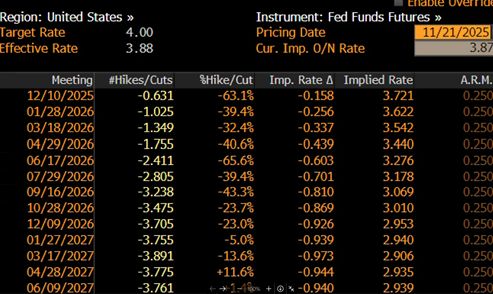
《周末小结系列》: 英伟达季报爆炸、比特币跳水、美联储分裂——市场到底在怕什么?
Xin Lang Cai Jing· 2025-11-25 08:40
Group 1 - The core point of the article is that while recent labor data indicates a slowing U.S. economy, it is not yet at a critical point, and the Federal Reserve's decision on interest rate cuts is becoming more contentious among its members [2][25]. - The September labor data showed non-farm payrolls increased by 119,000 and private sector jobs rose by 97,000, with a two-month downward revision of 33,000, indicating a mixed but not alarming labor market [2][25]. - The unemployment rate rose to 4.4%, higher than expected, primarily due to an increase in labor force participation, which is not considered a negative sign [2][25]. Group 2 - There is a growing divide within the Federal Reserve, with hawkish members opposing a rate cut in December, while some members support it, leading to fluctuating market expectations [2][3]. - Following comments from Williams, a key Fed official, the probability of a December rate cut surged back to around 65%, indicating a shift in sentiment towards a potential easing of monetary policy [3][5]. - Even if a rate cut does not occur in December, the market anticipates that it will be postponed to January, suggesting a continuation of the easing trend [5]. Group 3 - Nvidia's recent earnings report initially alleviated concerns about the AI investment bubble and the labor market, but subsequent skepticism arose from a critical analysis of its financial structure [6][7]. - The critical analysis raised three main concerns: increasing accounts receivable turnover days, a 32% rise in inventory, and declining prices in GPU rental markets, suggesting potential demand weakness [8][9]. - Despite these concerns, it is argued that it may be premature to label the situation as a bubble, as the data may reflect transitional issues rather than a fundamental decline in demand [9]. Group 4 - The market is currently facing fears related to MSTR (MicroStrategy), as MSCI questions the classification of Bitcoin treasury companies, which could lead to significant passive selling pressure [10][12]. - MSTR could face up to $8 billion in potential passive selling if it is removed from indices, but its average trading volume suggests it may not significantly disrupt the market [12]. - MSTR's convertible debt does not pose an immediate liquidation risk, as it matures in 2028, allowing for potential recovery in a favorable market environment [12][14]. Group 5 - The article concludes that the current market downturn is driven more by mechanical deleveraging from quantitative funds rather than fundamental economic weaknesses, suggesting that future market dips could present buying opportunities [25][26].