量子多体系统

Search documents
在量子世界找到“慢放键”
Huan Qiu Wang Zi Xun· 2026-02-03 01:41
来源:光明日报 本报北京2月2日电(记者崔兴毅) 就像为一段混乱的进程找到慢放键,中国科学家在量子世界实现了一项关键控制。中国科学院物理研究 所与北京大学的联合科研团队在国际上首次利用超导量子芯片,实验观测并人工调控量子多体系统走向 混沌前的关键中间状态——"预热化"平台。这一发现为理解并控制复杂的量子动力学过程打开了新窗 口,相关成果日前在线发表于国际学术期刊《自然》。 在量子世界中,系统在外部驱动下通常会逐步丢失初始信息,最终达到混乱的热平衡状态,该过程被称 为"热化"。然而,实验揭示,在完全热化之前,系统会经历一个反直觉的、相对稳定的"预热化"平台 期。这类似于给冰加热——在冰完全融化成水之前,温度会长时间稳定在0摄氏度。在预热化阶段,量 子系统虽受驱动,但信息扩散被抑制,有序性得以短暂保持。 研究团队在集成78个量子比特的超导量子处理器"庄子2.0"上完成这项实验。他们采用一种名为"随机多 极驱动"的特殊序列对系统进行精确操控。该驱动方式基于非周期的数学序列,通过调节序列的阶数与 周期,研究人员如同掌握不同的"加热节奏",成功实现对预热化平台持续时间的主动调控。当平台期结 束后,系统内部纠缠度急剧增长 ...
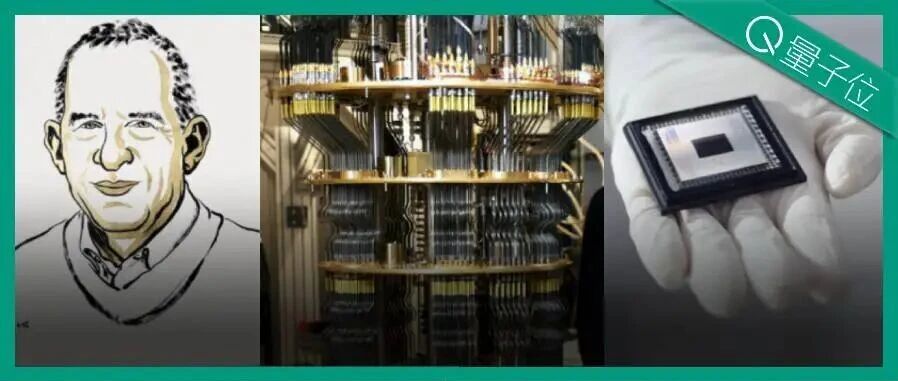
刚拿诺奖就登Nature封面!谷歌“量子回声”算法计算提速13000倍,可重复验证结果
量子位· 2025-10-22 15:27
Core Viewpoint - Google's quantum team, recently awarded the Nobel Prize in Physics, has introduced a new algorithm called "Quantum Echoes," which allows for repeatable verification of quantum computing results, addressing previous challenges in confirming quantum outcomes [1][4]. Group 1: Quantum Computing Advancements - The new algorithm enables quantum computers to perform calculations that would take traditional supercomputers 3.2 years in just 2.1 hours, achieving a speed increase of 13,000 times [2][17]. - The research involved over 200 authors, including notable scientists from Princeton University, UC Berkeley, and MIT, highlighting the collaborative effort in advancing quantum computing [4]. Group 2: Algorithm Functionality and Applications - The "Quantum Echoes" algorithm utilizes a method called "non-temporal correlation function" (OTOC), which enhances the ability to observe quantum systems over extended periods compared to traditional methods [12][14]. - OTOC has demonstrated the capability to reveal phenomena that classical computers cannot simulate, such as "large-loop interference," which classical simulations struggle to replicate [16][17]. - The algorithm has practical applications in determining unknown parameters of quantum systems, showcasing its utility in real-world scenarios like analyzing quantum materials [21][23]. Group 3: Hardware and Future Directions - The breakthrough relies on the Willow chip's hardware advantages, which has shown low error rates and high-speed operations, essential for the algorithm's performance [23]. - The current generation of the Willow chip achieves a fidelity of 99.97% for single-qubit gates and 99.88% for entangling gates, indicating significant advancements in quantum hardware [23]. - Looking ahead, the Google quantum team plans to focus on developing "long-lived logical qubits" to lay the groundwork for larger-scale, error-corrected practical quantum computers [26].