
金钱政治

Search documents
高市有事了!人情世故惹来政治麻烦?
Xin Lang Cai Jing· 2026-02-27 12:15
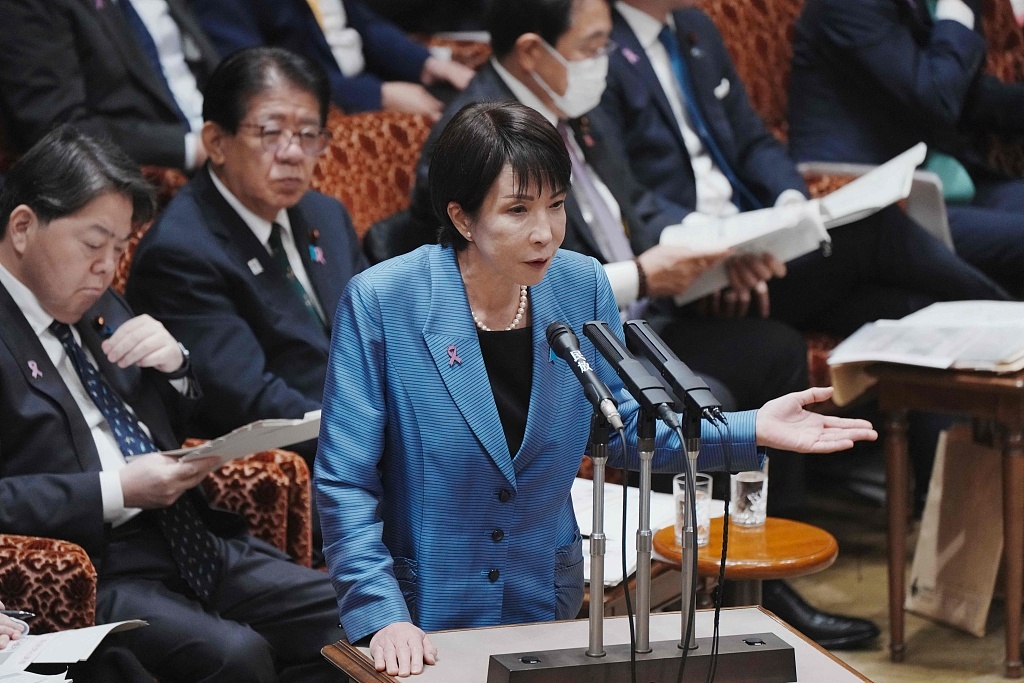
Core Viewpoint - Japanese Prime Minister Sanae Takaichi is embroiled in a controversy over distributing gifts to over 300 members of the ruling Liberal Democratic Party (LDP) following a recent election victory, raising concerns about potential violations of political funding laws [1][3][5]. Group 1: Gift Distribution Details - Takaichi sent gift catalogs, each valued at approximately 34,000 yen (about 1,500 RMB), to 315 LDP members, totaling an expenditure of around 10.71 million yen (approximately 470,000 RMB) [3]. - The gifts were presented as a congratulatory gesture, but critics argue this could be seen as a misuse of party funds to enhance personal political influence [5][6]. Group 2: Political Reactions and Implications - The action has drawn strong condemnation from various political figures, including opposition leaders who express outrage over the perceived misuse of party resources [5][9]. - There are concerns within the LDP itself, with some members questioning the appropriateness of Takaichi's actions and drawing parallels to a previous scandal involving former Prime Minister Shigeru Ishiba, who faced backlash for similar gift distributions [5][6]. Group 3: Broader Context and Consequences - Takaichi's ability to raise political funds is notable, with her organization reportedly receiving over 250 million yen in donations in 2012, indicating a strong financial backing [6][8]. - The ongoing controversy may hinder Takaichi's policy agenda, as opposition parties could leverage this issue to stall discussions on critical matters such as the new fiscal budget and defense policies [9][10].


从总统到“首富”:特朗普狂赚15亿,美国金钱政治彻底失控
Sou Hu Cai Jing· 2026-02-24 10:42
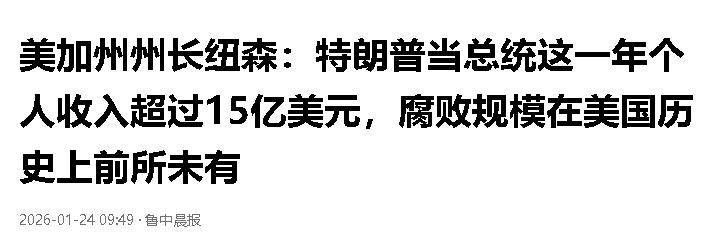
Core Viewpoint - The article discusses how former President Trump transformed the presidential role into a wealth-generating machine, with his personal income exceeding $1.5 billion in just one year, highlighting significant issues within the U.S. political system [1][29]. Group 1: Wealth Accumulation Strategies - Trump issued "Trump Coins" just before his inauguration, which surged from $0.18 to $75, allowing him to earn approximately $864 million from the sale of 200 million coins [4][7]. - He signed executive orders to loosen regulations on crypto assets and classified "Trump Coins" as cultural collectibles, avoiding federal securities laws [9]. - Trump's family members actively participated in wealth accumulation, with his son Eric claiming 2025 would be the most prosperous year for the Trump Organization [11]. Group 2: Market Manipulation and Policy Exploitation - Trump manipulated stock markets by announcing trade sanctions, allowing his companies to profit significantly from market fluctuations [14]. - He suspended parts of the Foreign Corrupt Practices Act, leading to substantial investments from foreign entities, including $5 billion from Saudi Arabia for building projects [14]. - Trump's brand licensing strategy in various countries allowed him to earn 30% to 40% returns, effectively linking political power with capital interests [14]. Group 3: Systemic Issues in U.S. Politics - The article highlights the vulnerabilities in the U.S. political system that enable such wealth accumulation, including weak campaign finance laws and regulatory frameworks [16][18]. - Trump's financial disclosures were criticized for being vague, with significant hidden income not accounted for, raising concerns about conflicts of interest [19]. - The article argues that Trump's actions reflect a broader issue of political corruption, undermining democratic principles and potentially leading to a global decline in trust in U.S. political integrity [23][29].
印度国大党成员指控腐败问题:“花50亿卢比能当首席部长”
Huan Qiu Shi Bao· 2025-12-10 22:58
Core Viewpoint - The Indian National Congress party is facing serious allegations of corruption, particularly regarding the practice of paying for candidacy nominations, as highlighted by party member Navjot Kaur Sidhu [1][2] Group 1: Allegations of Corruption - Navjot Kaur Sidhu publicly claimed that it costs 5 billion rupees (approximately 390 million RMB) to become a chief minister, indicating a systemic issue of money politics within the Congress party [1] - Sidhu revealed that a party member was asked for a bribe of 50 million rupees (approximately 3.9 million RMB) to secure a nomination for the state elections, while another candidate lost their nomination for failing to pay 30 million rupees (approximately 2.3 million RMB) [1] - The allegations include accusations of collusion with gangsters and conspiracies with other political parties among senior Congress officials [1] Group 2: Reactions and Consequences - The allegations have sparked widespread criticism from various sectors, with the Bharatiya Janata Party (BJP) calling for a clear explanation from the Congress party regarding Sidhu's claims [2] - Within the Congress party, there has been significant backlash, with a former MP stating that he has never been asked for money during his election campaigns, and a senior official demanding that Sidhu provide evidence for her claims [2] - In response to the controversy, the Congress party has officially suspended Sidhu's party membership [2]
首相高市“没有反省”,信任恢复“无从谈起”,日本“金钱政治”困境为何难解?
Huan Qiu Shi Bao· 2025-11-20 22:49
Core Points - The article discusses the political turmoil in Japan following Prime Minister Sanna Takashi's controversial appointments of officials involved in "black money" scandals, raising concerns both domestically and internationally [1][4][6] - There is a growing public distrust towards the ruling Liberal Democratic Party (LDP) due to ongoing issues related to political funding and corruption, with nearly 40% of respondents in a poll identifying "politics and money" as a key issue in the LDP presidential election [2][4] Group 1: Political Appointments and Controversies - Prime Minister Takashi has appointed several officials linked to "black money" scandals, including Koichi Hagiuda, who was previously penalized for a scandal involving 27.28 million yen [4][5] - Another controversial appointment is Satoshi Sato, who received over 3 million yen in unreported funds during his tenure as a government official, leading to strong opposition from the opposition party [5][6] - Takashi's appointments have been criticized for potentially causing chaos in the National Diet, yet she expressed deep trust in these officials, stating her intention to allow them to utilize their talents [5][6] Group 2: Political Funding Issues - The article highlights the systemic issues of "money politics" in Japan, which are intertwined with long-standing fundraising practices and institutional loopholes [1][11] - The Political Funds Control Law, established in 1948, has undergone multiple revisions but still contains significant loopholes that allow for the exchange of money and political power [9][10] - Despite reforms aimed at increasing transparency and accountability, the effectiveness of these measures remains limited due to the existence of gray areas and a lack of independent oversight [10][11] Group 3: Cultural Context and Public Perception - Japanese political culture emphasizes personal relationships and favors, which complicates the perception of political funding as corruption [12][13] - There is a complex public sentiment towards "money politics," where citizens express disappointment over scandals but also exhibit a degree of tolerance, believing that all politicians engage in similar practices [13][14] - The dissolution of the "Abe faction" and the rise of Takashi as the first female Prime Minister were seen as symbolic changes, yet many analysts argue that these shifts are superficial and do not address the underlying issues of political funding and corruption [14]
画大饼与开小灶——美国关税与减税政策背后的财富转移
Xin Hua She· 2025-07-02 13:06
Core Viewpoint - The article discusses the implications of the U.S. tax and tariff policies under President Trump's administration, highlighting a significant wealth transfer from the general public to the wealthy elite and large corporations, framed as a "gift" to billionaires [1][3]. Tax Policy Summary - The "Big and Beautiful" tax and spending bill passed by the Senate promises a prosperous economy but primarily benefits the wealthiest 1% of Americans, providing $975 billion in tax cuts, with the top 0.2% receiving $211 billion in estate tax exemptions [1][2]. - Large corporations are set to gain $918 billion in tax reductions, which critics argue represents a regressive redistribution of wealth [1][3]. Social Welfare Impact - The tax cuts are expected to lead to significant reductions in social welfare programs, including the Affordable Care Act and Medicaid, potentially resulting in over 16 million Americans losing health insurance [2]. - The proposed cuts may also impose new out-of-pocket costs on Medicaid beneficiaries, creating an unbearable financial burden for many [2]. Tariff Policy Summary - The U.S. government's imposition of "reciprocal tariffs" aims to protect American workers and revitalize manufacturing but has led to increased prices for imported goods, disproportionately affecting low- and middle-income families [2][3]. - Research indicates that the impact of tariffs on low-income households is more than three times that on high-income groups, with tariffs raising the price level by 2.3% this year, costing each household approximately $3,800 in purchasing power [2][3]. Wealth Transfer Mechanism - The combination of tax cuts and tariffs creates a clear pathway for wealth transfer, where government resources intended for the public are redirected to the wealthy and corporate shareholders, while consumers, especially those with lower incomes, bear the increased costs [3]. - Critics express concerns that this policy combination exacerbates income inequality and social tensions in the U.S. [3]. Long-term Fiscal Implications - The tax bill is projected to add approximately $3.3 trillion to the national deficit over the next decade, worsening the existing national debt of $36.2 trillion [4]. - The immediate benefits of tax cuts for the wealthy are contrasted with the long-term burden of debt repayment, which will fall on future generations [4]. Political and Economic System Critique - The article highlights systemic issues within the U.S. political economy, where policy decisions are heavily influenced by powerful capital interest groups, prioritizing their needs over those of the general public [5]. - The design of the tax bill reflects a preference for capital interests, while the tariff policy, despite its stated goals, ultimately shifts the financial burden onto ordinary consumers [5].