
派阀政治

Search documents
首相高市“没有反省”,信任恢复“无从谈起”,日本“金钱政治”困境为何难解?
Huan Qiu Shi Bao· 2025-11-20 22:49
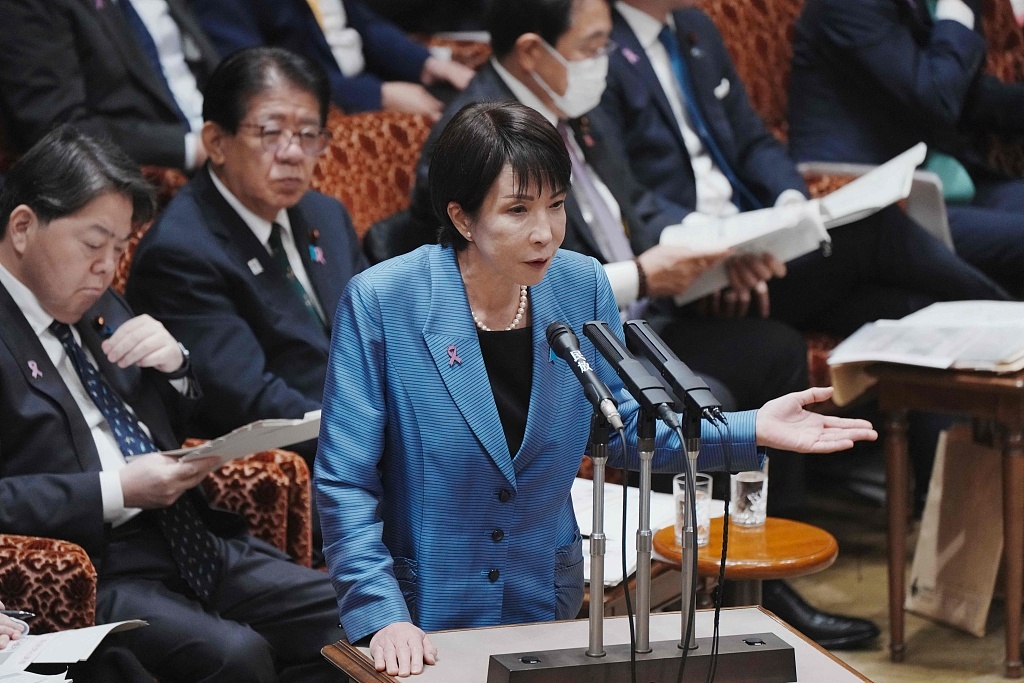
Core Points - The article discusses the political turmoil in Japan following Prime Minister Sanna Takashi's controversial appointments of officials involved in "black money" scandals, raising concerns both domestically and internationally [1][4][6] - There is a growing public distrust towards the ruling Liberal Democratic Party (LDP) due to ongoing issues related to political funding and corruption, with nearly 40% of respondents in a poll identifying "politics and money" as a key issue in the LDP presidential election [2][4] Group 1: Political Appointments and Controversies - Prime Minister Takashi has appointed several officials linked to "black money" scandals, including Koichi Hagiuda, who was previously penalized for a scandal involving 27.28 million yen [4][5] - Another controversial appointment is Satoshi Sato, who received over 3 million yen in unreported funds during his tenure as a government official, leading to strong opposition from the opposition party [5][6] - Takashi's appointments have been criticized for potentially causing chaos in the National Diet, yet she expressed deep trust in these officials, stating her intention to allow them to utilize their talents [5][6] Group 2: Political Funding Issues - The article highlights the systemic issues of "money politics" in Japan, which are intertwined with long-standing fundraising practices and institutional loopholes [1][11] - The Political Funds Control Law, established in 1948, has undergone multiple revisions but still contains significant loopholes that allow for the exchange of money and political power [9][10] - Despite reforms aimed at increasing transparency and accountability, the effectiveness of these measures remains limited due to the existence of gray areas and a lack of independent oversight [10][11] Group 3: Cultural Context and Public Perception - Japanese political culture emphasizes personal relationships and favors, which complicates the perception of political funding as corruption [12][13] - There is a complex public sentiment towards "money politics," where citizens express disappointment over scandals but also exhibit a degree of tolerance, believing that all politicians engage in similar practices [13][14] - The dissolution of the "Abe faction" and the rise of Takashi as the first female Prime Minister were seen as symbolic changes, yet many analysts argue that these shifts are superficial and do not address the underlying issues of political funding and corruption [14]

五人角逐、两大决定因素 谁会是日本下任首相
Xin Hua She· 2025-09-23 00:36
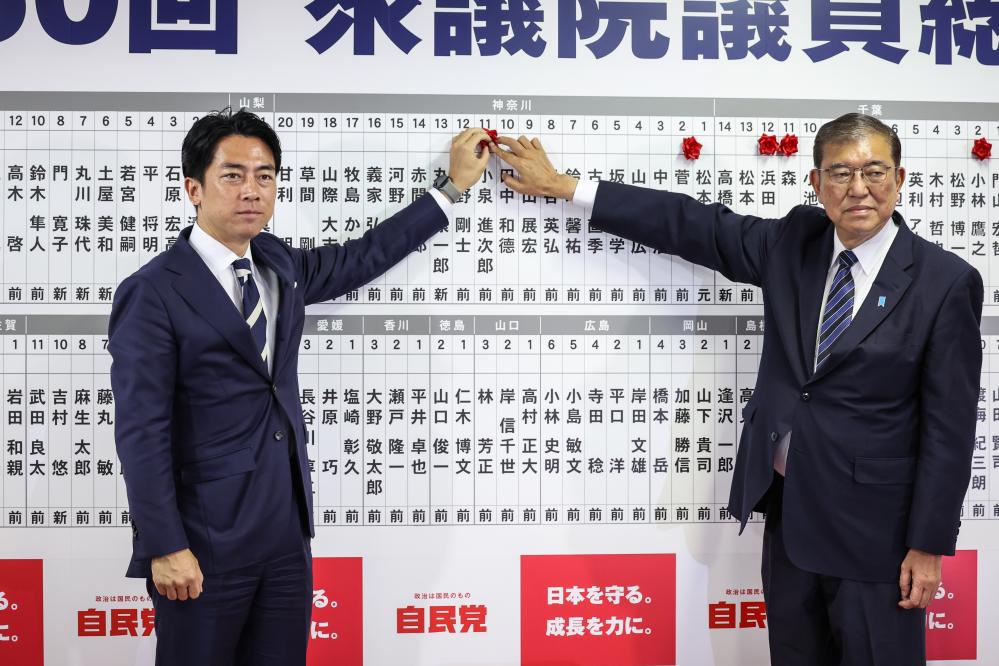
Core Points - The upcoming election for the president of Japan's ruling Liberal Democratic Party (LDP) will take place on October 4, with five candidates competing for the position, which is expected to lead to the next Prime Minister of Japan [1][2] - The candidates have varying policy positions and strengths, and two main factors are likely to influence the election outcome [1][6] Candidate Overview - The five candidates are: - **Shinjiro Koizumi**: Current Minister of Agriculture, Forestry and Fisheries, advocates for constitutional amendments and military enhancement, faces criticism for lack of experience [2][4] - **Sanae Takaichi**: Former Minister for Economic Security, proposes active fiscal policies and increased defense spending, has strong support from conservative factions but may be hindered by her extreme right stance [2][4] - **Toshimitsu Motegi**: Former Foreign Minister with extensive political experience, focuses on local revitalization and forming a new governing coalition, faces challenges in attracting younger voters [2][5] - **Takahiro Kobayashi**: Identifies as a "steady conservative," aims to boost Japan's technological capabilities, but has low recognition and experience [2][5] - **Yoshihide Suga**: Current Chief Cabinet Secretary, follows a moderate political approach and aims to continue the policies of previous leaders, but may struggle to gain support from conservative party members [2][5] Election Dynamics - The election will be influenced by internal party dynamics, particularly the role of influential party "bigwigs" who can sway votes despite the dissolution of many traditional factions [9][11] - The flow of votes from supporters of former Prime Minister Shigeru Ishiba will also be a critical factor, as they may back candidates who align with Ishiba's policies [9][11] - The election is set against a backdrop of the LDP's recent losses in both houses of parliament, leading to a "minority governance" situation that poses significant challenges for the next leader [1][11]
国际观察|五人角逐、两大决定因素 谁会是日本下任首相
Xin Hua She· 2025-09-22 10:41
Core Viewpoint - The upcoming election for the president of Japan's ruling Liberal Democratic Party (LDP) will take place on October 4, with five candidates competing, and the winner is expected to become the next Prime Minister of Japan. The election is marked by significant party divisions and challenges due to the LDP's recent electoral setbacks [1][6]. Candidate Overview - The five candidates for the LDP presidency are: - **Shinjiro Koizumi**: Current Minister of Agriculture, Forestry and Fisheries, advocates for constitutional amendments and military enhancement, and aims to address rising prices with economic measures. He has broad support among LDP members but lacks experience in cabinet positions [2][3]. - **Sanae Takaichi**: Former Minister for Economic Security, represents the right-wing faction, proposes active fiscal policies and increased defense spending, and seeks to expand the ruling coalition. Her extreme right stance may hinder her appeal [2][3]. - **Toshimitsu Motegi**: Former Foreign Minister with extensive political experience, focuses on local revitalization and forming a new ruling coalition. However, attracting younger voters may be challenging for him [3][6]. - **Takahiro Kobayashi**: Identifies as a "pragmatic conservative," aims to make Japan a technology powerhouse, and supports constitutional amendments and defense spending. His academic background is a plus, but he is less known [3][6]. - **Yoshihide Suga**: Current Chief Cabinet Secretary, follows a moderate political approach and aims to continue the policies of previous leaders while adding new elements. His liberal stance may struggle to gain support from conservative party members [3][6]. Election Dynamics - The election will be influenced by two main factors: - The influence of LDP "bigwigs" who hold significant sway over party votes, despite the dissolution of many factions due to scandals [6]. - The voting preferences of those who supported Shigeru Ishiba in the previous election, as they may back candidates who align with his policies [6]. - The election structure includes 590 total votes, with a majority needed in the first round to win. If no candidate achieves this, the top two will proceed to a second round [4][6]. Polling Insights - Recent polls indicate that Sanae Takaichi leads with 28% support overall, while Shinjiro Koizumi follows closely with 24%. However, among LDP supporters, Koizumi has a higher approval rating of 41% compared to Takaichi's 24% [5].
【环球财经】下一任日本首相将从他们中产生
Xin Hua She· 2025-09-22 09:41
Core Points - The election for the new president of Japan's ruling Liberal Democratic Party (LDP) has officially begun, with five candidates announcing their participation, and the winner is expected to become the next Prime Minister of Japan [1][2] - The election faces challenges such as a significant reduction in eligible voting party members and ongoing factional disputes within the party, alongside the pressing issue of governing as a minority following the loss of majority in both houses of the Diet [1][3] Candidate Overview - The five candidates competing in the LDP presidential election are Toshimitsu Motegi, Yoshihide Suga, Shinjiro Koizumi, Sanae Takaichi, and Kobayashi Eagle, all of whom previously lost to Shigeru Ishiba in the last election [2] - Candidates are expected to debate key issues such as high prices and cooperation with opposition parties during the campaign period leading up to the October 4 voting [2] Polling and Support Dynamics - Recent polls indicate that Shinjiro Koizumi leads with a support rate of 23.8%, followed closely by Sanae Takaichi at 21%, although the final outcome will depend on internal party support rather than public opinion [3] - The influence of party factions remains significant, with notable figures like Taro Aso and Fumio Kishida still holding sway over vote distribution within the party [3] Membership and Voting Changes - The number of eligible voting members for this election has decreased to approximately 915,600, a drop of over 140,000 from the previous election, attributed to a decline in overall party membership and new voting eligibility rules [4] - The election will utilize a voting system where the total votes are divided between party members and local supporters, with a total of 590 votes available in the first round [4]