银行中间业务收入

Search documents
万亿级城商行换帅,“70后女将”接棒
Shang Hai Zheng Quan Bao· 2025-12-20 08:59
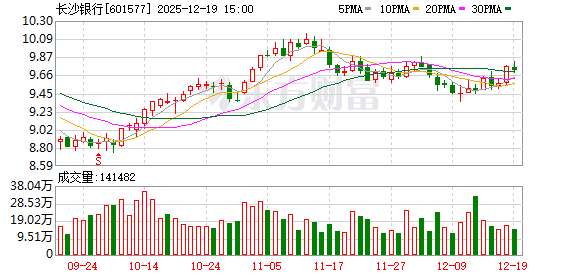
Core Viewpoint - The leadership transition at Changsha Bank, with Zhang Man taking over as chairman, is expected to maintain operational stability amid external challenges and internal structural issues [2][4]. Group 1: Leadership Transition - Zhao Xiaozhong has resigned as chairman of Changsha Bank due to age-related retirement, and Zhang Man has been elected as the new chairman, pending regulatory approval [4]. - Zhang Man, currently the president of Changsha Bank, is expected to ensure continuity in the bank's strategic direction [2][4]. - Zhang Man has extensive experience within the bank and holds a master's degree in business administration [4]. Group 2: Financial Performance - As of the end of Q3 2025, Changsha Bank's total assets are approximately 1.24 trillion yuan, with a revenue of 19.721 billion yuan, reflecting a year-on-year growth of 1.29% [2]. - The bank's net profit attributable to shareholders for the first three quarters is about 6.557 billion yuan, showing a year-on-year increase of 6% [2]. Group 3: Operational Challenges - Changsha Bank faces significant challenges, including a narrowing net interest margin, an increasing reliance on large clients, and the need to enhance the contribution of intermediary business income [6][8]. - The net interest margin for the first half of 2025 is approximately 1.87%, down by 0.24 percentage points from 2024, indicating ongoing pressure on profitability [7]. - The bank's intermediary business income has seen a growth in contribution, with fees and commissions reaching 1.164 billion yuan, a year-on-year increase of 14.6% [7]. Group 4: Client Concentration Risk - The bank's reliance on large clients has increased, with the single largest loan ratio at 7.29% and the top ten clients' loan ratio at 41.66%, both reaching record highs since the bank's listing [8]. - This rising concentration poses risks, as it may lead to increased vulnerability if any major client faces operational difficulties [8].


A股近六成上市银行上半年中间业务收入同比增长
Zheng Quan Ri Bao Zhi Sheng· 2025-09-03 16:40
Core Viewpoint - The intermediary business income of A-share listed banks in China has shown improvement in the first half of 2025, becoming a crucial area for banks to transform and develop amid narrowing net interest margins [1][4]. Group 1: Overall Performance - In the first half of 2025, the total net income from fees and commissions of 42 listed banks reached 409.53 billion yuan, an increase of 3.06% compared to the same period last year [1]. - Out of the 42 listed banks, 25 reported positive growth in net income from fees and commissions, with three banks experiencing growth rates exceeding 100% and nine banks exceeding 10% [2]. Group 2: Performance by Bank Type - Among the six major state-owned banks, Bank of China and China Construction Bank both saw their fee and commission income grow by over 4%, while Agricultural Bank of China and Postal Savings Bank of China reported growth exceeding 10% [2]. - In the joint-stock banks category, four out of nine banks reported positive growth in net income from fees and commissions, with CITIC Bank achieving 16.91 billion yuan (up 3.38%), Industrial Bank at 13.08 billion yuan (up 2.59%), Huaxia Bank at 3.10 billion yuan (up 2.55%), and Minsheng Bank at 9.69 billion yuan (up 0.41%) [2]. Group 3: Notable Performers - Some city commercial banks and rural commercial banks exhibited significant growth in their fee and commission income, with Changshu Bank reporting a remarkable increase of 637.77% to 142 million yuan, followed by Ruifeng Bank with a 274.07% increase to 54 million yuan, and Zhangjiagang Bank with a 140% increase to 61 million yuan [3]. Group 4: Future Outlook - Analysts predict that the growth trend in intermediary business income is likely to continue in the second half of 2025, driven by supportive macroeconomic policies and increasing demand for high-yield products among residents [4]. - The focus for banks will be on expanding non-interest income, particularly in wealth management and other light-capital businesses, to optimize their income structure [4][6].