银行国际化

Search documents
商业银行出海,谁在悄然发力
21世纪经济报道· 2025-12-26 09:17
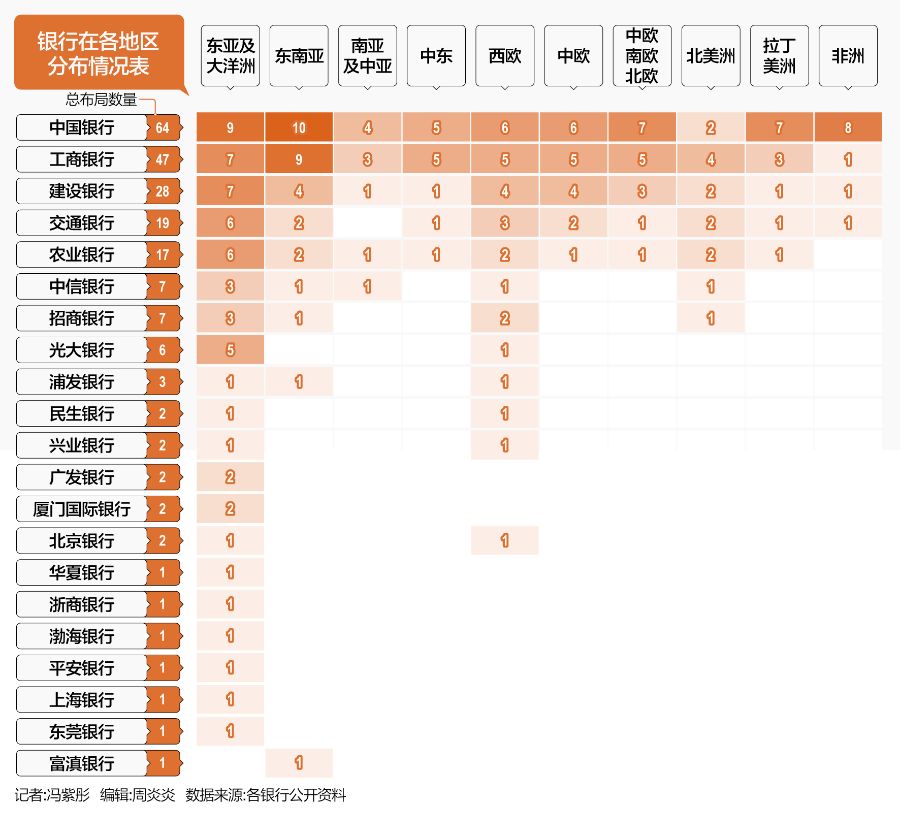
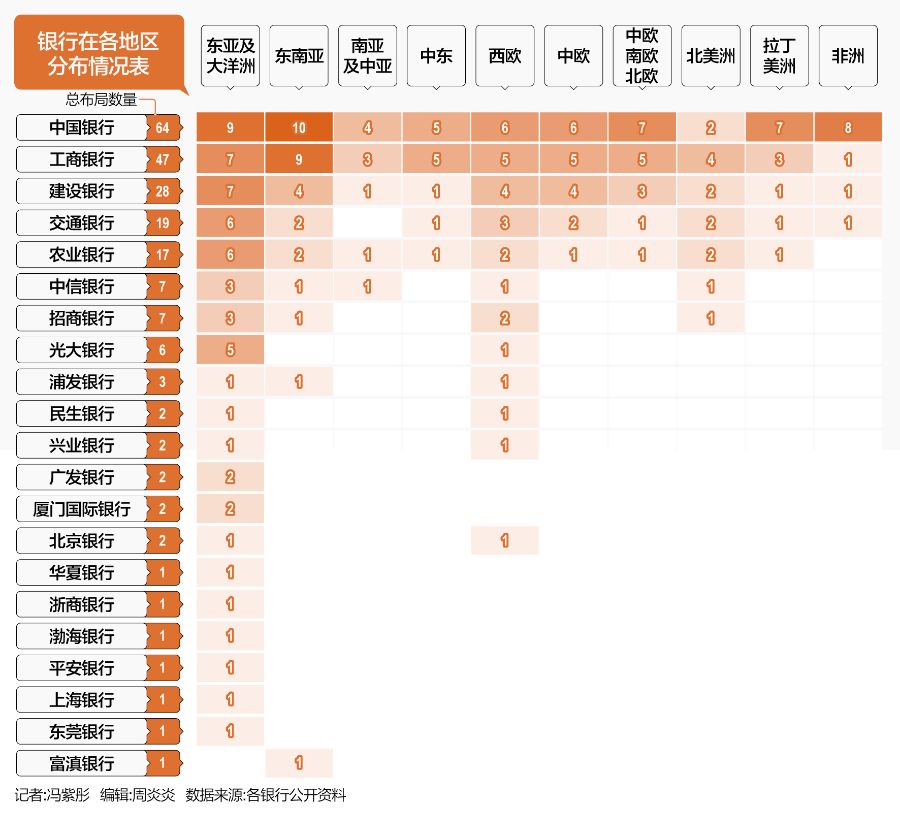
Core Viewpoint - Chinese banks are expanding their global presence, establishing a comprehensive service network that supports domestic enterprises going abroad, particularly in emerging markets along the Belt and Road Initiative [1][2]. Group 1: Global Expansion Strategy - Chinese banks are transitioning from focusing primarily on traditional markets in Europe and the US to diversifying their operations in emerging markets such as Southeast Asia, the Middle East, and Latin America [1]. - The overseas expansion strategy of Chinese banks has evolved from rapid growth through new branches and acquisitions before 2019 to a more focused approach on strategic value and risk control since 2020 [11]. Group 2: Bank Performance and Revenue - As of June 2025, Bank of China leads with 783.13 billion yuan in overseas revenue, marking a 14.4% increase from the previous year, with overseas revenue accounting for 23.77% of its total [14]. - Agricultural Bank of China reported a 21.03% increase in overseas revenue, while Construction Bank's overseas revenue grew by 40.92% [14][15]. - In contrast, Everbright Bank experienced a 12.72% decline in overseas revenue, indicating varying performance among banks [16]. Group 3: Regional Distribution and Focus - The distribution of overseas institutions varies among banks, with Bank of China having the most extensive network, followed by Industrial and Commercial Bank of China, which has a significant presence in 49 countries [4][5]. - Joint-stock banks tend to focus their internationalization efforts on key financial hubs like Hong Kong and London, aiming for niche markets in cross-border finance and wealth management [9]. Group 4: Challenges and Opportunities - Chinese banks face challenges in compliance with differing regulatory environments, cultural integration, and brand recognition in international markets [18]. - The demand for diversified financial services is increasing among Chinese enterprises going abroad, with a shift towards high-value industries and a need for localized services [19][20]. Group 5: Future Directions - To enhance competitiveness, Chinese banks must focus on global collaboration, local market adaptation, compliance risk management, and financial technology innovation [22]. - The future of internationalization for Chinese banks will hinge on their ability to create value in a complex global environment, moving from broad network expansion to deep operational excellence [22].



商业银行“出海”验成色:中行领跑,谁在悄然发力?
2 1 Shi Ji Jing Ji Bao Dao· 2025-12-25 08:34
Core Insights - Chinese banks are expanding their overseas presence, establishing a comprehensive service network that covers major financial centers globally and key regions along the Belt and Road Initiative [1][4] - The internationalization strategy of Chinese banks has shifted from focusing primarily on traditional markets in Europe and the US to emerging markets in Southeast Asia, the Middle East, Latin America, and countries involved in the Belt and Road Initiative [1][9] Group 1: Overseas Expansion Strategies - Chinese banks utilize three main forms for overseas expansion: representative offices, branches, and subsidiaries, with larger banks often establishing branches or subsidiaries in mature markets and starting with representative offices in emerging markets [2][4] - The distribution of overseas institutions varies among banks, with a notable focus on new emerging markets and developing countries [2][4] Group 2: Performance of Major Banks - Bank of China leads in global presence with 539 overseas branches in 64 countries, including 45 countries involved in the Belt and Road Initiative, and has a strong focus on enhancing its competitive edge in Southeast Asia [4][12] - Industrial and Commercial Bank of China has 413 overseas institutions in 49 countries, with a significant presence in 30 Belt and Road countries, showcasing a flexible internationalization strategy [4][12] - Agricultural Bank of China has established 13 branches and 4 representative offices, focusing on supporting high-quality Belt and Road initiatives [4][12] Group 3: Revenue Growth and Performance Metrics - In the first half of 2025, Bank of China reported overseas revenue of 783.13 billion yuan, a 14.4% increase from the previous year, with overseas revenue accounting for 23.77% of total revenue [11][12] - Agricultural Bank of China achieved a 21.03% increase in overseas revenue, while Construction Bank's overseas revenue grew by 40.92%, indicating strong expansion momentum [12][14] - Shanghai Pudong Development Bank's overseas revenue surged by 119.37%, marking a significant growth and highlighting the effectiveness of its international strategy [14] Group 4: Challenges and Market Dynamics - Chinese banks face regulatory challenges in overseas markets, including compliance with both domestic and foreign regulations, which can lead to significant penalties [15][19] - The demand from Chinese enterprises for overseas financial services is evolving, with a shift towards more complex needs such as global treasury management and cross-border mergers and acquisitions [16][17] - Small and medium-sized enterprises are becoming a key growth driver for overseas financial services, emphasizing the need for lower financing thresholds and cost-effective payment solutions [16][17] Group 5: Future Directions and Strategic Focus - The future competitiveness of Chinese banks in international markets will depend on enhancing global collaboration, improving localization capabilities, and strengthening compliance risk management [18][19] - Emphasis on financial technology innovation and the development of cross-border digital infrastructure will be crucial for expanding their international footprint [19]





深度丨商业银行“出海”验成色:中行领跑,谁在悄然发力?
2 1 Shi Ji Jing Ji Bao Dao· 2025-12-25 08:32
Core Insights - Chinese banks are expanding their overseas presence, establishing a comprehensive service network that covers major financial centers globally and key regions along the Belt and Road Initiative [1][2] - The internationalization strategy of Chinese banks has shifted from traditional markets in Europe and the US to emerging markets in Southeast Asia, the Middle East, Latin America, and countries involved in the Belt and Road Initiative [1][2] Group 1: Global Expansion Strategy - Chinese banks are utilizing representative offices, branches, and subsidiaries for overseas expansion, with larger banks often establishing branches in mature markets and starting with representative offices in emerging markets [2] - The distribution of overseas institutions shows that major state-owned banks are leading the expansion, with a focus on both traditional and emerging markets [2][4] Group 2: Performance Metrics - As of June 2025, Bank of China leads with 539 overseas branches in 64 countries, including 45 Belt and Road countries, showcasing its extensive global network [4] - Industrial and Commercial Bank of China follows with 413 overseas institutions in 49 countries, including 250 in Belt and Road countries, demonstrating a flexible international strategy [4] - Agricultural Bank of China has established 13 branches and 4 representative offices, focusing on supporting high-quality Belt and Road initiatives [4] Group 3: Revenue Growth and Market Dynamics - In the first half of 2025, Bank of China reported overseas revenue of 783.13 billion yuan, a 14.4% increase from the previous year, with overseas revenue accounting for 23.77% of total revenue [12] - Industrial and Commercial Bank of China's overseas revenue was 562.52 billion yuan, showing a slight decline of 1.88%, while Agricultural Bank of China experienced a 21.03% increase [12][11] - The growth of overseas revenue among joint-stock banks, such as Shanghai Pudong Development Bank, which saw a 119.37% increase, highlights the varying performance across banks [14] Group 4: Challenges and Future Directions - Chinese banks face regulatory challenges in overseas markets, including compliance with both domestic and foreign regulations, which can lead to significant penalties [15] - The demand for diversified financial services is evolving, with a shift from traditional trade financing to more complex needs such as global treasury management and cross-border mergers [16] - Future competitiveness will depend on enhancing global collaboration, local operational capabilities, compliance risk management, and financial technology innovation [18][19]
净息差降至1.42%“第二增长曲线”何处寻?国有大行领衔 中资银行国际化布局悄然提速
智通财经网· 2025-08-20 12:56
Core Insights - The net interest margin of commercial banks in the first half of the year was 1.42%, showing a quarter-on-quarter decline of 1.3 basis points, with all types of banks experiencing a decrease, particularly state-owned banks which saw a drop of 1.8 basis points [1] - The competitive landscape in the banking sector has shifted towards stock competition and homogenization, leading banks to rely on relationships and interest rates, which is deemed an unhealthy long-term development model [1] - Major state-owned banks are accelerating their international business and exploring overseas markets to find new growth points amid intense domestic competition [1][2] International Business Development - Major banks, including China Bank, Construction Bank, and Industrial and Commercial Bank, have been actively promoting cross-border financial services and supporting enterprises going abroad [3] - Construction Bank reported serving nearly 110,000 foreign trade clients and achieving an international settlement volume exceeding $800 billion in the first half of the year, with cross-border RMB settlements surpassing 3 trillion yuan [4] - The focus on international business is becoming a key priority for major banks, with plans to enhance global competitiveness and service capabilities in line with national strategies [4][5] Small and Medium Banks' Internationalization - Smaller banks are also entering the international business arena, with several local banks holding meetings to promote trade financing and foreign exchange risk management products [6] - Dongguan Bank has established a wholly-owned subsidiary in Hong Kong, marking a significant step in the internationalization of local banks [7] - Analysts suggest that the international business landscape is dominated by large state-owned banks, while smaller banks primarily rely on their networks in Hong Kong and Macau [5][6] Growth in Overseas Business - Chinese listed companies achieved overseas business revenue of 3.83 trillion yuan in the first half of 2024, reflecting a year-on-year growth of 12.84% [8] - The international business and cross-border services are not yet the main revenue sources for banks, but there is potential for growth in retail and wholesale business development in overseas markets [8][9] - Commercial banks are increasingly focusing on cross-border retail business, with institutions like China Merchants Bank aiming to integrate into the global wealth management market [9]
香港子行开业,东莞银行“国际化”落子的图谋
Bei Jing Shang Bao· 2025-08-12 15:02
Core Viewpoint - Dongguan Bank has officially opened its wholly-owned subsidiary, Dongguan Bank (International) Limited, in Hong Kong, marking a significant step in its internationalization strategy and making it the first city commercial bank to establish both a branch and a subsidiary in Hong Kong [1][4][8]. Group 1: Internationalization Progress - The establishment of the Hong Kong subsidiary is a culmination of a five-year preparation process, initiated in September 2020 with regulatory approval from the Guangdong Banking and Insurance Regulatory Commission [3][4]. - The subsidiary will focus on retail and corporate banking, serving local SMEs and residents while facilitating their expansion into the Greater Bay Area [3][4]. - Dongguan Bank's internationalization is seen as a milestone for regional banks in China, enhancing brand influence and diversifying income sources [4][5][8]. Group 2: Financial Performance - In 2024, Dongguan Bank reported a revenue of 10.197 billion yuan, a decrease of 3.69% year-on-year, and a net profit of 3.738 billion yuan, down 8.10% from the previous year [6][7]. - The bank's non-performing loan ratio slightly increased to 1.01%, with a decline in the provision coverage ratio to 212.01%, indicating pressure on risk management capabilities [7]. - The bank's IPO process has faced multiple delays since its initiation in 2008, with the latest status being "accepted" after a three-month suspension [7][8]. Group 3: Future Outlook and Challenges - The opening of the Hong Kong subsidiary is expected to provide new revenue growth opportunities and enhance the bank's competitive edge through local retail and wealth management initiatives [5][8]. - However, the bank faces intense competition in the Hong Kong market, with established domestic and international banks posing significant challenges [8]. - Operational costs and the need for skilled international talent are highlighted as critical challenges for the bank's future success in the international arena [8].