
企业银行服务

Search documents
City Holding Company (NASDAQ:CHCO) Sees Insider Buying Amidst Varied Investor Sentiment
Financial Modeling Prep· 2026-03-09 23:11
Core Viewpoint - City Holding Company (CHCO) is a financial institution providing various banking services in the United States, competing with major players like Citigroup and Royal Bank of Canada [1] Shareholder Activity - Director Robert D. Fisher purchased 213 shares of CHCO at $115.88 each, increasing his total ownership to approximately 46,978 shares, indicating confidence in the company's future despite a recent stock price decrease of about 1.75% or $2.06 [2][6] - Citigroup Inc. reduced its stake in CHCO by 23.2%, selling 4,638 shares, leaving it with 15,379 shares valued at approximately $1.9 million, contrasting with Fisher's optimistic view [3][6] - The Royal Bank of Canada increased its stake by 5.6%, acquiring an additional 821 shares, bringing its total to 15,586 shares valued at around $1.8 million [4] - AQR Capital Management LLC expanded its holdings by 34.5%, purchasing 2,305 more shares to own a total of 8,977 shares worth about $1.1 million [4] Stock Performance - CHCO's current stock price is approximately $115.93, with a market capitalization of around $1.67 billion, showing fluctuations between a low of $113.52 and a high of $116.47 during the trading day [5] - Over the past year, the stock has reached a high of $133.59 and a low of $102.22, indicating market volatility [5]



Banco Santander's Strong Financial Performance and Strategic Initiatives
Financial Modeling Prep· 2026-02-04 14:05
Core Insights - Banco Santander reported earnings per share of $0.28, exceeding estimates of $0.25, and revenue of approximately $19 billion, surpassing expectations of $15.7 billion [1][6] - Santander UK, a subsidiary of Banco Santander, achieved a 14% increase in annual pretax profit, driven by higher net interest income and reduced costs [2][6] - The bank has approved a €5 billion share-buyback program, reflecting strong financial performance and a commitment to enhancing shareholder value [3][6] Financial Performance - Banco Santander's parent company reported a 15% increase in net profit for the final quarter of 2025 [2] - The price-to-earnings (P/E) ratio is approximately 11.3, while the price-to-sales ratio is about 2.01, indicating market valuation of earnings and sales [3] - The enterprise value to sales ratio is around 2.48, and the enterprise value to operating cash flow ratio is approximately 7.35, providing insights into valuation relative to sales and cash flow generation [4] Financial Ratios - The earnings yield is about 8.85%, offering a perspective on return on investment [4] - The debt-to-equity ratio is notably high at approximately 3.13, indicating reliance on debt financing [5] - The current ratio is around 0.32, which may suggest potential liquidity concerns in meeting short-term obligations [5]


蒙特利尔银(BMO)深耕中国市场:以跨境优势搭建中加融桥梁
Cai Fu Zai Xian· 2026-01-16 09:22
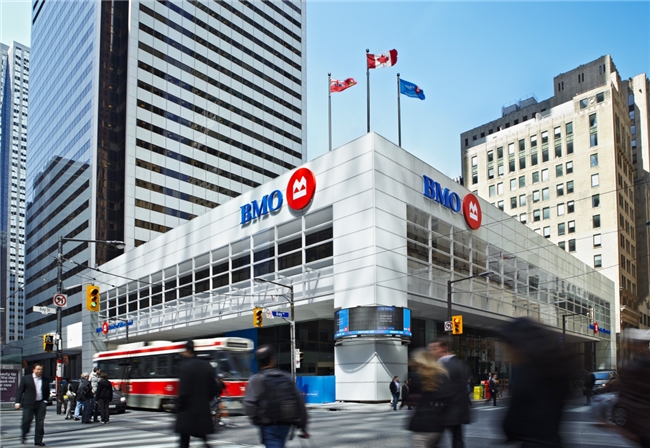
Core Insights - BMO is enhancing its role as a key financial bridge between China and North America, aiming to support bilateral trade cooperation [1][4] - The bank has a long history in cross-border transactions, having conducted its first foreign exchange transaction related to China-Canada trade shortly after its establishment in 1817 [2] - BMO has established a significant presence in China, being the first Canadian bank to set up a legal entity in the country, with operations in Beijing, Shanghai, and Guangzhou [2] Company Overview - Founded in 1817, BMO is the oldest bank in Canada and ranks as the seventh largest financial institution in North America, offering diversified financial services [1] - The bank serves millions of customers globally, with a focus on personal and commercial banking, wealth management, and capital markets [1] Cross-Border Operations - BMO provides various financial services to corporate clients, including loans and cash management, to support Chinese manufacturing companies in their international expansion [4] - For individual clients, BMO offers a "one-stop banking experience" with services tailored for high-net-worth individuals and new immigrants, including Mandarin-speaking support [4] Strategic Investments - BMO has made strategic equity investments in the Chinese market, holding approximately 28% of Shanghai Fuguo Fund Management Co. and about 16% of COFCO Trust [2] - These investments reflect BMO's long-term strategy to expand its presence in China's asset management and trust sectors [2] Trade Relations - According to data from the General Administration of Customs of China, the bilateral trade volume between China and Canada reached $61.74 billion from January to August 2025, marking a 7.1% year-on-year increase [4] - China is Canada's second-largest trading partner, with total goods trade expected to reach 117.44 billion CAD in 2024 [4] Future Vision - BMO aims to continue leveraging its connectivity to assist Chinese companies in expanding overseas and to support North American businesses entering the Chinese market [4] - The bank is committed to a vision of "daring to explore and achieving great success" while maintaining prudent operations and a long-term perspective in the Chinese market [4]

邮储银行12月23日获融资买入7194.81万元,融资余额10.75亿元
Xin Lang Cai Jing· 2025-12-24 04:51
Core Viewpoint - Postal Savings Bank of China (PSBC) shows a mixed performance in trading and financing activities, with low financing balance and high securities lending balance, indicating potential investment opportunities and risks in the banking sector. Group 1: Trading Performance - On December 23, PSBC's stock increased by 0.37% with a trading volume of 739 million yuan [1] - The financing buy-in amount for PSBC on the same day was 71.95 million yuan, while the financing repayment was 72.23 million yuan, resulting in a net financing buy of -0.2829 million yuan [1] - As of December 23, the total financing and securities lending balance for PSBC was 1.081 billion yuan [1] Group 2: Financing Activities - The current financing balance for PSBC is 1.075 billion yuan, which accounts for 0.29% of its market capitalization, indicating a low financing level compared to the past year [1] - On December 23, PSBC repaid 8,300 shares in securities lending and sold 10,100 shares, with a selling amount of 55,000 yuan based on the closing price [1] - The remaining securities lending balance is 1.0317 million shares, with a total balance of 5.6228 million yuan, which is above the 70th percentile of the past year, indicating a high level [1] Group 3: Company Overview - PSBC, established on March 6, 2007, and listed on December 10, 2019, provides banking and financial services in China [2] - The bank's main business segments include personal banking (65.15% of revenue), corporate banking (22.71%), and funding operations (12.10%) [2] - As of September 30, PSBC had 142,600 shareholders, a decrease of 13.09% from the previous period, with an average of 478,570 circulating shares per shareholder, an increase of 15.29% [3] Group 4: Financial Performance - For the period from January to September 2025, PSBC achieved an operating income of 265.08 billion yuan, a year-on-year increase of 1.82% [3] - The net profit attributable to shareholders for the same period was 76.562 billion yuan, reflecting a year-on-year growth of 0.98% [3] - Since its A-share listing, PSBC has distributed a total of 137.796 billion yuan in dividends, with 77.395 billion yuan distributed in the last three years [4]

邮储银行涨1.12%,成交额6.79亿元,今日主力净流入-2877.88万
Xin Lang Cai Jing· 2025-12-18 08:18
Core Viewpoint - Postal Savings Bank of China (PSBC) shows a stable performance with a recent stock price increase and consistent dividend payouts, indicating potential investment opportunities in the banking sector [1][2]. Financial Performance - PSBC's revenue for the period from January to September 2025 reached 265.08 billion yuan, reflecting a year-on-year growth of 1.82% [7]. - The net profit attributable to shareholders for the same period was 76.56 billion yuan, with a year-on-year increase of 0.98% [7]. - The bank has distributed a total of 137.80 billion yuan in dividends since its A-share listing, with 77.40 billion yuan paid out over the last three years [8]. Dividend and Shareholder Information - The bank's dividend yields over the past three years were 5.58%, 6.00%, and 4.61% respectively, showcasing its commitment to returning value to shareholders [2]. - As of September 30, 2025, the number of shareholders decreased by 13.09% to 142,600, while the average number of shares held per shareholder increased by 15.29% to 478,570 shares [7]. Market Activity - On December 18, PSBC's stock rose by 1.12%, with a trading volume of 679 million yuan and a turnover rate of 0.19%, leading to a total market capitalization of 653.32 billion yuan [1]. - The stock has experienced a net outflow of 28.78 million yuan from major investors today, ranking 6th in its industry, with a total net inflow of 5.09 billion yuan across the sector [3][4]. Technical Analysis - The average trading cost of PSBC shares is 5.19 yuan, with the current stock price fluctuating between resistance at 5.53 yuan and support at 5.31 yuan, suggesting potential for short-term trading strategies [5]. Company Overview - PSBC, established on March 6, 2007, and listed on December 10, 2019, primarily offers banking and financial services in China, with personal banking contributing 65.15% to its revenue, corporate banking 22.71%, and fund operations 12.10% [6]. - The bank is classified under the category of state-owned large banks and is ultimately controlled by China Post Group [2][6].
邮储银行12月11日获融资买入6384.92万元,融资余额10.97亿元
Xin Lang Cai Jing· 2025-12-12 01:44
Group 1 - Postal Savings Bank of China (PSBC) experienced a stock price increase of 0.55% on December 11, with a trading volume of 649 million yuan [1] - On the same day, PSBC recorded a financing buy amount of 63.84 million yuan and a financing repayment of 61.26 million yuan, resulting in a net financing purchase of 2.59 million yuan [1] - As of December 11, the total balance of margin trading for PSBC reached 1.103 billion yuan, with the financing balance accounting for 0.30% of the circulating market value, indicating a high level compared to the past year [1] Group 2 - PSBC was established on March 6, 2007, and listed on December 10, 2019, providing a range of banking and financial services in China [2] - The bank's main business segments include personal banking (65.15% of revenue), corporate banking (22.71%), and funding operations (12.10%) [2] - As of September 30, PSBC had 142,600 shareholders, a decrease of 13.09% from the previous period, with an average of 478,570 circulating shares per shareholder, an increase of 15.29% [3] Group 3 - PSBC has distributed a total of 137.80 billion yuan in dividends since its A-share listing, with 77.40 billion yuan distributed over the past three years [4] - As of September 30, 2025, major shareholders included Hong Kong Central Clearing Limited, which held 520 million shares, a decrease of 422 million shares from the previous period [4] - Other significant shareholders include Huaxia SSE 50 ETF and Huatai-PineBridge CSI 300 ETF, both of which also saw reductions in their holdings [4]
邮储银行跌0.54%,成交额7.25亿元,近5日主力净流入-3.32亿
Xin Lang Cai Jing· 2025-12-09 07:57
Core Viewpoint - Postal Savings Bank of China (PSBC) has shown a slight decline in stock price, with a market capitalization of 665.33 billion yuan and a trading volume of 725 million yuan on December 9 [1] Group 1: Dividend and Corporate Structure - PSBC's dividend yields over the past three years were 5.58%, 6.00%, and 4.61% respectively, indicating a strong commitment to returning value to shareholders [2] - The bank is a state-owned enterprise, ultimately controlled by China Post Group [2] Group 2: Financial Performance - As of September 30, 2025, PSBC reported a net profit of 76.56 billion yuan, reflecting a year-on-year growth of 0.98% [7] - The bank's cumulative cash distribution since its A-share listing amounts to 137.80 billion yuan, with 77.39 billion yuan distributed over the last three years [8] Group 3: Shareholder and Market Activity - The number of shareholders decreased by 13.09% to 142,600, while the average number of circulating shares per person increased by 15.29% to 478,570 shares [7] - Major shareholders have reduced their holdings, with Hong Kong Central Clearing Limited holding 520 million shares, down by 422 million shares from the previous period [8][9] Group 4: Business Overview - PSBC primarily operates in personal banking (65.15% of revenue), corporate banking (22.71%), and funding operations (12.10%) [6] - The bank provides a range of financial services, including loans, deposits, and investment banking [6]
Absa Group (OTCPK:AGRP.Y) Update / Briefing Transcript
2025-12-08 10:02
Absa Group (OTCPK:AGRP.Y) Update Summary Company Overview - **Company**: Absa Group - **Date of Call**: December 08, 2025 - **Context**: Pre-close call for 2025 financial guidance and medium-term targets Key Points Industry and Market Context - **Geographical Focus**: Over-concentration in South Africa, Ghana, and Kenya, with plans to diversify into other African markets [3][4] - **Economic Conditions**: Slightly improved GDP growth in South Africa, with lower inflation and interest rates than previously forecasted [10] - **Loan Growth**: Mid-to-high single-digit growth expected, driven by wholesale lending, with retail activity remaining subdued [10][36] Financial Guidance and Performance - **Revenue Growth**: Expected mid-single-digit revenue growth for 2025, with stronger growth in non-interest income than net interest income [11][12] - **Credit Loss Ratio**: Anticipated improvement to the upper half of the target range of 75-100 basis points, down from 103 basis points in 2024 [12] - **Cost-to-Income Ratio**: Targeting a reduction to closer to 50% as quickly as possible, with a current ratio of 53.2% [4][12] - **Return on Equity (ROE)**: Expected ROE of around 15% for 2025, with a target of 16%-19% for 2027-2030 [13][16] Strategic Pillars 1. **Customer-Led Growth**: Shift from product-led to customer-focused strategies, emphasizing customer experience and understanding client needs [2][5] 2. **Diversification**: Geographical and business line diversification to reduce dependency on South Africa, Ghana, and Kenya [3][4] 3. **Efficiency Improvement**: Focus on cost efficiency and capital allocation, targeting wasteful expenditures and reducing outsourcing [5][12] 4. **New Growth Opportunities**: Investment in digitization, wealth offerings, and value-added services, including insurance [5][6] Management and Cultural Shift - **Leadership Changes**: New appointments in senior management, including the Chief Executive of Corporate and Investment Banking (CIB) and Personal and Private Banking [8][72] - **Cultural Transformation**: Emphasis on shifting from an inward-focused culture to a customer-centric approach, with support from staff [7][8] Challenges and Risks - **Market Competition**: Increased competition in fee income and challenges in maintaining growth in personal and private banking [24][59] - **Economic Headwinds**: Potential impacts from currency fluctuations and economic conditions in various African markets [13][49] Future Outlook - **2026 Projections**: Anticipated stronger GDP growth across key markets, with a focus on improving loan growth and non-interest income [14][15] - **Long-Term Goals**: Commitment to achieving a cost-to-income ratio of approximately 50% by 2028 and improving ROE through strategic execution [16][18] Additional Insights - **Client Coverage**: Need for improved client coverage and understanding of client segments to enhance market share and revenue growth [29][59] - **Investment in Technology**: Plans to reduce technology costs while focusing on impactful investments in digital capabilities [42][43] This summary encapsulates the key insights and strategic directions discussed during the Absa Group's pre-close call, highlighting the company's focus on customer-centric growth, diversification, and efficiency improvements while navigating market challenges.
邮储银行跌1.23%,成交额9.67亿元,近5日主力净流入-4.07亿
Xin Lang Cai Jing· 2025-12-03 11:16
Core Viewpoint - Postal Savings Bank of China (PSBC) has experienced a decline in stock price and trading volume, indicating potential investor concerns and market dynamics [1][3]. Financial Performance - For the first nine months of 2025, PSBC reported a net profit of 765.62 billion yuan, reflecting a year-on-year growth of 0.98% [6]. - The bank's cumulative cash dividends since its A-share listing amount to 1,377.96 billion yuan, with 773.95 billion yuan distributed over the past three years [7]. Dividend and Shareholder Information - PSBC's dividend yields over the past three years were 5.58%, 6.00%, and 4.61% respectively, indicating a strong commitment to returning value to shareholders [2]. - As of September 30, 2025, the number of shareholders decreased by 13.09% to 142,600, while the average circulating shares per person increased by 15.29% to 478,570 shares [6]. Market Activity - On December 3, PSBC's stock fell by 1.23%, with a trading volume of 9.67 billion yuan and a turnover rate of 0.26%, leading to a total market capitalization of 6,725.32 billion yuan [1]. - The main capital flow showed a net outflow of 1.59 billion yuan today, with a continuous reduction in main capital over the past three days [3]. Technical Analysis - The average trading cost of PSBC shares is 5.18 yuan, with the current stock price fluctuating between resistance at 5.61 yuan and support at 5.59 yuan, suggesting potential for short-term trading strategies [4]. Company Overview - PSBC, established on March 6, 2007, and listed on December 10, 2019, primarily offers banking and financial services in China, with personal banking contributing 65.15% to its revenue, corporate banking 22.71%, and funding operations 12.10% [5].
邮储银行12月2日获融资买入6630.83万元,融资余额10.31亿元
Xin Lang Cai Jing· 2025-12-03 03:05
Core Viewpoint - Postal Savings Bank of China (PSBC) shows a mixed performance in trading and financing activities, with a notable increase in financing net purchases but a high level of short selling activity. Group 1: Trading Performance - On December 2, PSBC's stock price decreased by 0.53%, with a trading volume of 646 million yuan [1] - The financing buy amount for PSBC on the same day was 66.31 million yuan, while the financing repayment was 57.67 million yuan, resulting in a net financing purchase of 8.63 million yuan [1] - As of December 2, the total financing and securities lending balance for PSBC was 1.036 billion yuan [1] Group 2: Financing Activities - The current financing balance for PSBC is 1.031 billion yuan, which accounts for 0.27% of its market capitalization, indicating a low level compared to the past year [1] - On December 2, PSBC had a securities lending repayment of 14,100 shares and a securities lending sale of 22,700 shares, with the sale amounting to 128,700 yuan at the closing price [1] - The securities lending balance stood at 5.56 million yuan, which is above the 70th percentile level over the past year, indicating a high level of short selling activity [1] Group 3: Company Overview - PSBC, established on March 6, 2007, and listed on December 10, 2019, provides banking and related financial services in China [2] - The bank's main business segments include personal banking (65.15% of revenue), corporate banking (22.71%), and funding operations (12.10%) [2] - As of September 30, 2025, PSBC reported a net profit of 76.56 billion yuan, reflecting a year-on-year growth of 0.98% [2] Group 4: Shareholder Information - Since its A-share listing, PSBC has distributed a total of 137.80 billion yuan in dividends, with 77.39 billion yuan distributed in the last three years [3] - As of September 30, 2025, the number of shareholders decreased by 13.09% to 142,600, while the average circulating shares per person increased by 15.29% to 478,570 shares [2]