
银行监管放松

Search documents
放松银行监管,有哪些动作?
Huafu Securities· 2026-03-26 13:27
Group 1: Reasons for Regulatory Easing - The Trump administration initiated regulatory easing in the banking sector, aiming to balance safety and growth[3] - The proposed Basel III final rules in July 2023 tightened capital requirements for large banks by 16%, prompting discussions on the need for regulatory relief[20] - The current regulatory framework is perceived as overly strict compared to European counterparts, particularly in capital requirements[4] Group 2: Methods of Regulatory Easing - Four major revisions were proposed to reduce regulatory burdens on banks: adjusting stress test parameters, lowering the Supplementary Leverage Ratio (SLR), revising Basel III capital requirements, and correcting G-SIB surcharge calculations[5] - The SLR requirement for major banks is expected to decrease from 5%-6% to between 3.5%-4.25%, potentially freeing up $200 billion in capital for the top six U.S. banks[5] - The new rules aim to simplify capital calculations and reduce risk weights for real estate loans, potentially releasing $1 trillion in credit space for smaller banks[5] Group 3: Impacts of the Reforms - Overall capital requirements for banks are projected to decrease significantly: small banks' core Tier 1 capital will drop by 7.8%, medium banks by 5.2%, and large banks by 4.8%[41] - The easing of capital requirements is expected to stimulate bank lending and enhance profitability, reversing the trend of credit flowing to non-bank institutions[47] - The reforms may allow $3 trillion to flow into U.S. Treasury and repurchase markets, equating to approximately 9% of the current market for U.S. Treasuries[48]
美参议院批准乔纳森·古尔德担任货币监理署署长
news flash· 2025-07-10 21:20
Core Viewpoint - The U.S. Senate confirmed Jonathan Gould as the head of the Office of the Comptroller of the Currency, indicating a shift towards less regulatory oversight for national lending institutions and support for cryptocurrency assets [1] Summary by Relevant Sections - **Senate Confirmation** - The Senate approved Gould's position with a vote of 50 in favor and 45 against [1] - **Regulatory Philosophy** - Gould has expressed that since 2008, banking regulators have sometimes aimed to eliminate risks rather than manage them, which has hindered banks' ability to perform their functions [1] - **Policy Changes** - Earlier this year, the Office of the Comptroller of the Currency announced it would no longer review the risks associated with banks conducting business with controversial clients [1]
今晚,整个华尔街将紧盯鲍威尔
凤凰网财经· 2025-06-24 13:14
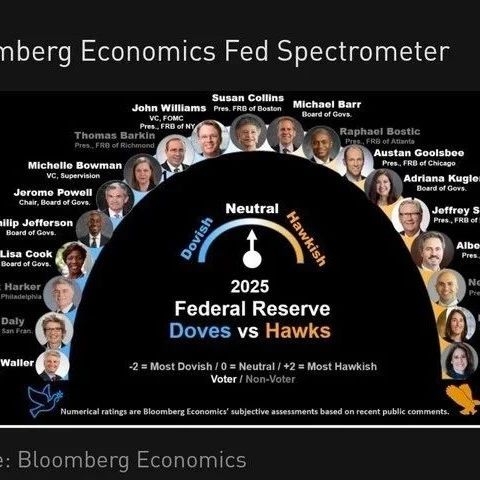
Core Viewpoint - The article discusses the increasing pressure on Federal Reserve Chairman Jerome Powell to lower interest rates, highlighting internal and external divisions within the Federal Reserve regarding monetary policy direction [2][4][6]. Group 1: Federal Reserve's Internal Dynamics - Recent weeks have seen significant pressure from President Trump and White House officials urging Powell to restart the rate-cutting process [2]. - The June dot plot revealed a notable division among Federal Reserve officials, with seven out of nineteen supporting no rate cuts this year, indicating a split between hawkish and dovish factions [2][4]. - Deutsche Bank's chief U.S. economist noted that the level of disagreement among officials is at a ten-year high, reflecting fundamental differences in balancing inflation control and economic growth [4]. Group 2: Powell's Upcoming Testimony - Powell is expected to maintain a cautious stance during his upcoming testimony, likely reiterating the Fed's position to wait for more economic data before making any rate adjustments [6][11]. - Analysts predict that Powell will emphasize the current economic stability and the need for patience, despite calls for immediate action from some officials [6][11]. - The core PCE price index is anticipated to show a modest increase of only 0.1% month-over-month, indicating low inflationary pressures [6]. Group 3: Political Influences and Market Reactions - The political influence on the Federal Open Market Committee (FOMC) is becoming more pronounced, with two Republican-leaning officials suggesting a rate cut in July, which has altered market expectations [6][9]. - Market traders have raised the probability of a July rate cut to approximately 23%, while the likelihood of a September cut stands at 82% [9]. Group 4: Geopolitical Concerns - Powell is likely to address the potential economic impacts of the ongoing conflict between Israel and Iran, which has seen fluctuations in oil prices but is not expected to have a lasting effect on inflation [11][14]. - Analysts warn that prolonged conflict could push oil prices to $120 per barrel, potentially raising U.S. inflation to around 5% [14]. Group 5: Regulatory and Policy Discussions - Powell may face questions regarding the current push for regulatory reforms, including the relaxation of certain banking regulations, which the White House is advocating [16]. - The proposal to eliminate interest payments on bank reserves, aimed at reducing government spending, is also expected to be a topic of discussion, though analysts caution it could disrupt monetary policy [17].

今晚,整个华尔街将紧盯鲍威尔
财联社· 2025-06-24 12:29
Core Viewpoint - The article discusses the increasing pressure on Federal Reserve Chairman Jerome Powell to lower interest rates, highlighting internal and external divisions within the Federal Reserve regarding monetary policy direction [1][4][8]. Group 1: Federal Reserve's Internal Dynamics - Recent weeks have seen significant pressure from President Trump and White House officials urging Powell to restart the rate-cutting process, reflecting a growing divide among Federal Reserve officials [1][4]. - The June dot plot revealed a record level of disagreement among Federal Reserve officials, indicating fundamental divisions on balancing inflation control and economic growth [3]. - At least two Federal Reserve governors, Waller and Bowman, have expressed potential support for an immediate rate cut next month, with Bowman being a surprising voice given her previous stance [4][5]. Group 2: Market Reactions and Economic Indicators - Market expectations for a July rate cut have risen to approximately 23%, while the probability for a September cut stands at 82% [9]. - Economic indicators suggest that inflation remains subdued, with the core PCE price index showing only a 0.1% month-over-month increase in May, marking the lowest inflation growth in three months [9]. Group 3: Political Influences and Congressional Hearings - Powell is expected to face pressure from Republican lawmakers during his congressional testimony, with some members echoing Trump's calls for a clearer rationale behind his cautious stance on interest rates [12]. - The article notes that some Democratic lawmakers may express support for Powell, warning against political interference in the Federal Reserve's independence [12]. Group 4: Regulatory Changes and Proposals - The White House is pushing for regulatory reforms, including a review of key capital buffer measures, which some believe restrict banks' trading activities in the U.S. Treasury market [13]. - Powell may also be questioned about a proposal to eliminate interest payments on bank reserves, which could impact the Federal Reserve's ability to control short-term interest rates [14][15].
美国准备取消2008年金融危机后实施的银行监管规定
news flash· 2025-05-15 04:16
Core Viewpoint - The U.S. authorities are preparing to announce significant measures to lower bank capital requirements, marking a continuation of the Trump administration's deregulation agenda following the 2008 financial crisis [1] Group 1: Regulatory Changes - Regulatory agencies are expected to reduce the supplementary leverage ratio in the coming months, which mandates large banks to hold a predetermined amount of high-quality capital against their total leverage, including loans and off-balance-sheet risks [1] - This rule was established in 2014 as part of comprehensive reforms following the 2008-09 financial crisis [1] Group 2: Industry Response - Banking lobbyists have opposed the supplementary leverage ratio for years, arguing that it penalizes banks even when holding low-risk assets like U.S. Treasury securities [1] - The current regulations are seen as hindering banks' ability to facilitate trading in the $29 trillion government bond market and impairing their capacity to extend credit [1]