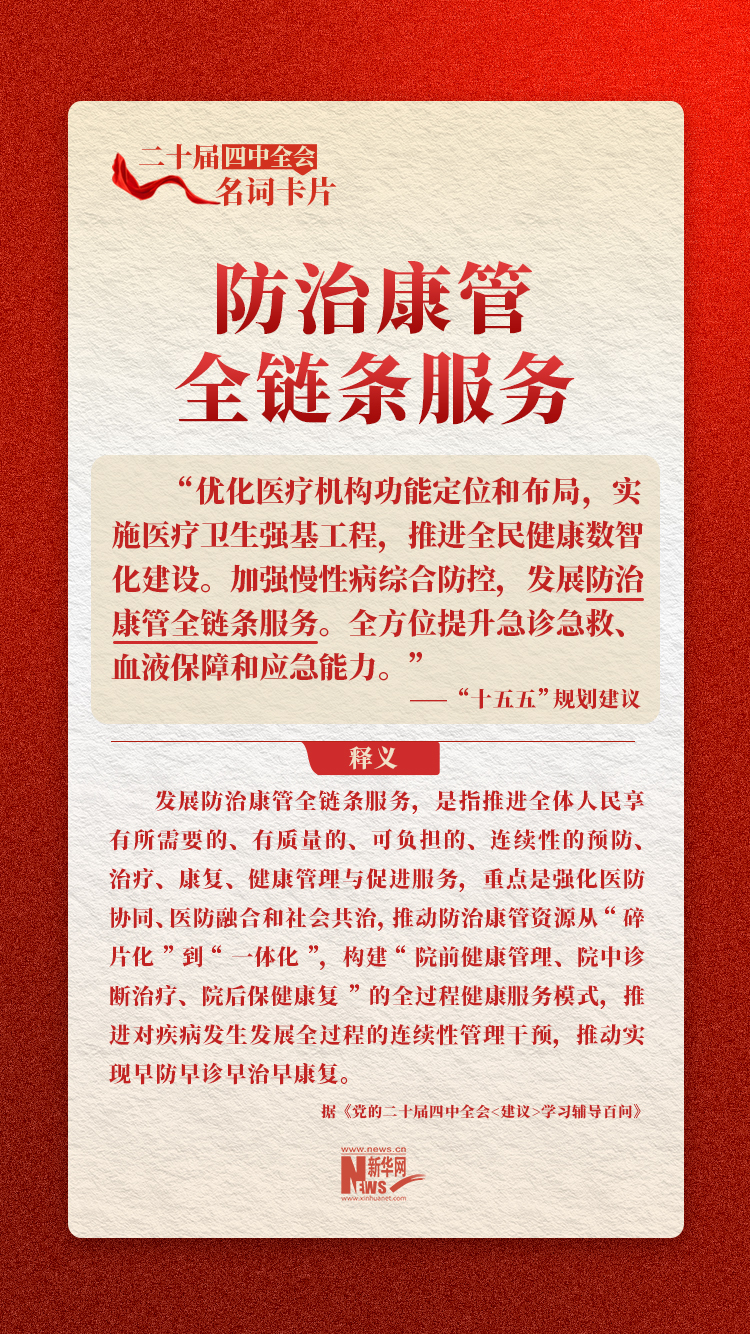
防治康管全链条服务

Search documents
学习规划建议每日问答 | 如何理解发展防治康管全链条服务
Xin Hua She· 2026-01-27 06:54
Core Viewpoint - The development of a comprehensive prevention, treatment, rehabilitation, and health management service chain is essential to meet the healthcare needs of the population and improve health outcomes [1][2]. Group 1: Current Health Challenges - The number of cardiovascular disease patients in China has reached 330 million, with chronic disease deaths accounting for over 80% of total deaths [1] - The prevalence of chronic diseases among individuals aged 60 and above exceeds 78%, with major chronic diseases like cancer and cardiovascular diseases posing significant health threats [1] - The early mortality rate for major chronic diseases among individuals aged 30-70 is projected to reach 14.3% by 2024 [1] Group 2: Service Integration and Improvement - There is a need to integrate prevention, treatment, rehabilitation, and health management services to address chronic diseases effectively [2][3] - The focus should be on enhancing collaboration between medical and preventive services, transitioning from fragmented to integrated health resources [2] - Establishing a health service model that encompasses pre-hospital management, in-hospital diagnosis and treatment, and post-hospital rehabilitation is crucial [2] Group 3: Actionable Strategies - Implementing health lifestyle initiatives and managing healthy weight to reduce obesity rates among children and adults is necessary [3] - Strengthening information sharing across different healthcare institutions and departments will facilitate better disease management [3] - Developing health management centers and disease management centers within medical institutions can enhance preventive interventions and continuous care [3] Group 4: Systematic Integration of Healthcare Services - Improving continuity of care among acute treatment hospitals, rehabilitation institutions, and primary healthcare facilities is essential [4] - Establishing a seamless referral system and integrated service platforms will enhance patient experience and reduce the burden of seeking care [4] - Engaging community healthcare providers and family doctors in ongoing health management and follow-up care is vital for comprehensive service delivery [4]
健康中国 有你有我
Huan Qiu Wang· 2026-01-09 03:04
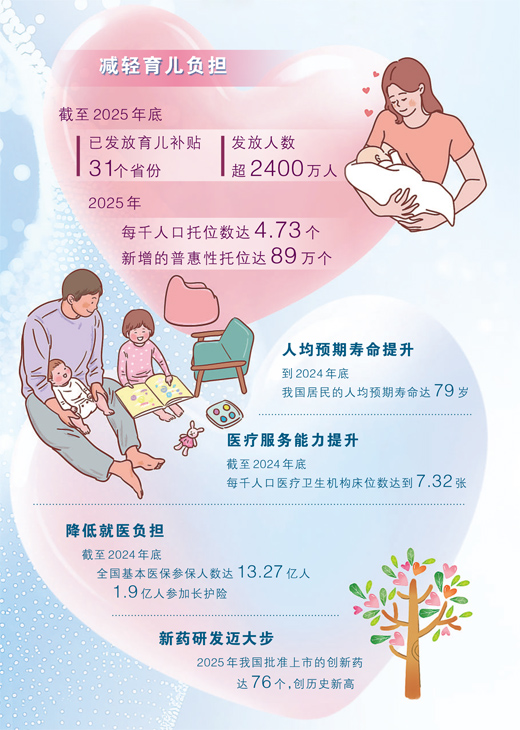
Group 1: Health Policy and Initiatives - The core viewpoint emphasizes the importance of health as a key indicator of socialist modernization and the collective aspiration of the people [1] - The "14th Five-Year Plan" suggests implementing a health-first development strategy to enhance health promotion policies and improve life expectancy and health levels [1] - The establishment of a comprehensive medical service system, disease prevention control system, and medical security system has led to an average life expectancy of 79 years in China [1] Group 2: Childcare Support and Subsidies - The introduction of the childcare subsidy policy aims to alleviate the burden of child-rearing and promote population growth, with a subsidy of 3,600 yuan per child per year for children under three years old [4][5] - As of now, over 24 million people have received childcare subsidies across 31 provinces, with an expected issuance rate of around 80% for the 2025 fiscal year [5] - Local governments are actively facilitating the application process for these subsidies through online platforms and community outreach [2][3] Group 3: Healthcare Innovations and Services - The integration of AI technology in healthcare, particularly in rural areas, has improved diagnostic efficiency and patient management, especially for chronic conditions [6] - The establishment of a three-tiered healthcare service system in urban areas aims to provide seamless medical care from community hospitals to specialized institutions [9][10] - The focus on preventive care and chronic disease management is becoming a priority, with initiatives to create health records and provide personalized health assessments [10] Group 4: Pharmaceutical Innovations - The company has successfully integrated AI into drug development, resulting in significant efficiency gains and the introduction of innovative drugs into the national healthcare system [11][12] - In 2025, seven innovative drugs were added to the national insurance directory, including a groundbreaking treatment for thyroid eye disease that significantly reduces costs [11] - The company is committed to long-term innovation despite challenges, supported by favorable policies and collaborative platforms for clinical trials [12][13]
健康中国 有你有我(新年谈“新”·五位健康工作者和群众谈健康中国建设)
Ren Min Ri Bao· 2026-01-09 01:22
Group 1 - The core viewpoint emphasizes the importance of health in achieving socialist modernization and the collective pursuit of health by the people [1] - The "14th Five-Year Plan" suggests implementing a health-first development strategy and improving health promotion policies to enhance life expectancy and health levels [1] - The construction of a health-oriented society in China is entering a new phase, requiring increased efforts in areas such as childcare, healthcare, health management, and disability care [1] Group 2 - The implementation of the childcare subsidy policy aims to alleviate the burden of child-rearing and promote population development, with a subsidy of 3,600 yuan per child per year [6] - As of now, over 24 million people have received the childcare subsidy across 31 provinces, with an expected issuance rate of around 80% for the 2025 fiscal year [6] - The policy is a significant initiative to provide direct cash support to families, helping to create a more family-friendly environment for raising children [6] Group 3 - The integration of AI technology in healthcare, particularly in rural areas, has improved diagnostic efficiency and patient care for tea farmers, addressing health risks associated with their labor [9] - The establishment of a comprehensive health service system in urban areas focuses on preventive care and chronic disease management, enhancing the overall health of the population [12][13] - The pharmaceutical industry is experiencing growth through innovation, with significant advancements in drug development, particularly in oncology and autoimmune diseases, supported by government policies [14][15]

二十届四中全会名词卡片:防治康管全链条服务
Xin Hua Wang· 2025-11-20 03:24
Core Viewpoint - The article emphasizes the importance of developing a comprehensive prevention, treatment, rehabilitation, and health management service system, focusing on chronic disease management and enhancing the integration of healthcare services [4][7]. Group 1: Development of Comprehensive Health Services - The initiative aims to provide accessible, quality, and continuous health services to all citizens, emphasizing the integration of prevention, treatment, rehabilitation, and health management [4][7]. - Key chronic diseases targeted include cardiovascular diseases, cancer, diabetes, and chronic respiratory diseases, with a focus on promoting healthy lifestyles and managing obesity rates [7]. - The article advocates for improved information sharing among different healthcare institutions and departments to enhance service continuity and efficiency [7][8]. Group 2: Integration of Healthcare Institutions - There is a need for systematic integration of acute treatment hospitals, rehabilitation centers, and primary healthcare institutions to ensure seamless service delivery [8]. - The establishment of a tightly-knit medical alliance is proposed to facilitate smooth transitions between different healthcare services and improve patient management [8][9]. - The article suggests enhancing the role of primary healthcare institutions and family doctors in daily health management and post-discharge follow-ups to provide comprehensive care [9].