阿尔茨海默病新药研发

Search documents
万邦德AD新药FN12临床进展顺利 核心成分可显著改善患者认知功能
Zheng Quan Shi Bao Wang· 2025-11-28 06:44
Core Insights - The company Wanbangde is making significant progress in the development of new drugs for Alzheimer's disease, particularly with its controlled-release tablet of Huperzine A (FN12), which is currently in the II/III phase of clinical trials [1][2] - The drug has shown promising safety and efficacy results, with the potential to improve cognitive function in patients [1] - Wanbangde is also expanding its product portfolio in the peptide drug sector, focusing on new compounds that target various mechanisms, including those related to Alzheimer's disease [3] Group 1: Alzheimer's Disease Drug Development - Wanbangde has been dedicated to Alzheimer's disease drug research for many years, aiming to develop new treatment options for patients globally [1] - The controlled-release tablet of Huperzine A is part of the largest known Alzheimer's disease registration study in China, with collaboration from over 50 research institutions [2] - Preliminary studies indicate that Huperzine A can significantly enhance cognitive function and has multiple beneficial effects, including anti-inflammatory and neuroprotective properties [1][2] Group 2: Peptide Drug Research - The company is developing a new class of peptide drugs that have shown excellent results in preclinical animal studies, including weight loss and improvements in diabetes-related metrics [3] - The peptide drugs have received orphan drug designation from the FDA, indicating their potential for treating rare diseases [3] - Wanbangde is also exploring new targets and mechanisms for Alzheimer's disease treatment through its peptide drug research, aiming to establish a strong position in the global Alzheimer's drug development landscape [3]

万邦德:公司阿尔茨海默病新药的临床试验进展顺利
Quan Jing Wang· 2025-11-28 03:07
Core Insights - The company is deeply engaged in the research and development of new drugs for Alzheimer's disease (AD), aiming to create new treatment options for global AD patients [1][2] - The key registration clinical trial for the company's controlled-release donepezil tablets (FN12) is progressing smoothly, being the largest known AD registration study in China [1] - Preliminary data indicates that the controlled-release donepezil tablets have good safety profiles and can significantly improve cognitive function in patients [1] - The company is also developing a new class of peptide drugs targeting different mechanisms, showing promising results in preclinical studies for weight loss and other metabolic benefits [1][2] Alzheimer's Disease Research - The company has been conducting extensive research on Alzheimer's disease, with a focus on the controlled-release donepezil tablets, which are currently in Phase II/III clinical trials [1] - Collaboration with CROs is emphasized to expedite the acquisition of effective data to validate the drug's efficacy and safety [1] - The controlled-release donepezil tablets are believed to offer differentiated clinical benefits due to their multifaceted actions, including anti-inflammatory and neuroprotective effects [1] New Drug Development - The company is advancing its peptide drug project, which is a new compound targeting melanocortin receptors, showing excellent weight loss effects in preclinical animal studies [1] - The peptide drug also demonstrates potential in lowering blood sugar levels and improving indicators related to diabetic complications [1] - The company has received orphan drug designation from the FDA for this peptide drug, indicating its potential significance in treating rare diseases [1]
海南大学科研团队在阿尔茨海默病新药研发上取得突破
Hai Nan Ri Bao· 2025-10-25 00:40
Core Insights - Hainan University’s pharmaceutical research team has made significant progress in developing new drugs for Alzheimer’s disease (AD) through multi-target drug design and AI-assisted screening [1][2] - The research focuses on butyrylcholinesterase (BuChE) as a critical compensatory target, which may provide a new direction for AD drug development [1] Group 1 - The traditional drugs targeting acetylcholinesterase (AChE) only provide short-term symptom relief, while BuChE levels significantly increase as the disease progresses, making it a more critical target [1] - The research team successfully identified a candidate compound, 8e, which significantly improved cognitive behavioral impairments in both zebrafish and transgenic mouse models of AD [1] - Compared to traditional AChE-targeting drugs, BuChE inhibitors are expected to more effectively alleviate the disease progression [1] Group 2 - A library of 156 natural compounds with anti-AD activity was constructed, and an AI-enhanced virtual library was created, leading to the rapid identification of lead compounds from 389 molecules [2] - The multi-target compound "3c" was developed, which not only effectively inhibits BuChE but also possesses multiple functions such as anti-Aβ protein aggregation, anti-inflammatory, and neuroprotective effects [2] - The research team plans to continue targeting BuChE, integrating AI technology and pharmacological validation to explore safer and more effective candidate drugs for Alzheimer’s disease [2]
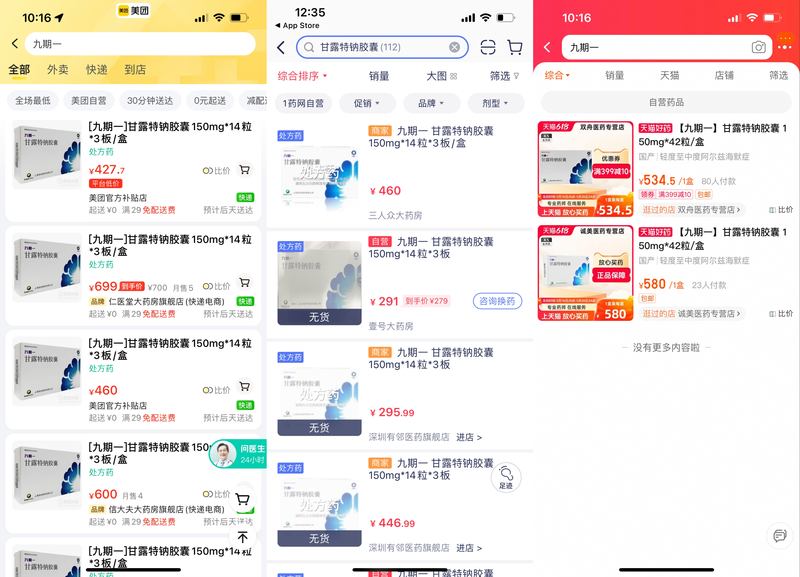
甘露特钠胶囊多地断供,网购涨价,绿谷:全力处理供货问题
Xin Jing Bao· 2025-05-23 11:30
Core Viewpoint - The recent supply shortage and price increase of the Alzheimer's drug Ganluo Sodium (Jiuqi Yi) have raised concerns among patients and the public, prompting discussions about its availability and pricing [1][2][5]. Group 1: Supply Issues - Multiple regions, including Beijing, Shanghai, Guangdong, Shandong, and Heilongjiang, are experiencing shortages of Ganluo Sodium, with patients reporting difficulties in obtaining the medication [2][3]. - The manufacturer, Green Valley (Shanghai) Pharmaceutical Technology Co., has acknowledged the supply issues and is in communication with relevant authorities to address the situation [1][5]. - Over 6,000 patients have registered their demand for the drug amid the supply crisis [5]. Group 2: Price Increases - Online prices for Ganluo Sodium have surged significantly, with reports indicating a rise from approximately 300 yuan to over 540 yuan per box within a month [2][3]. - Various online platforms, including Taobao and JD.com, show prices ranging from 425 yuan to 699 yuan per box, reflecting the impact of the supply shortage on pricing [3][5]. - The company has stated that it is aware of the rapid price increases in some self-paid purchasing channels and is working to mitigate this issue [5]. Group 3: Drug Background and Controversy - Ganluo Sodium was conditionally approved for marketing in November 2019, becoming the first new drug for Alzheimer's disease approved globally since 2003 [6][9]. - The drug has been included in the national medical insurance directory and has benefited over 500,000 patients since its launch [6]. - Despite its approval, the drug has faced criticism regarding its efficacy, with ongoing clinical trials required to confirm its long-term safety and effectiveness [6][7]. Group 4: Clinical Research and Development - Green Valley has reported positive mid-term results from post-marketing clinical studies, showing cognitive and daily living improvements in patients after one year of treatment [7]. - The international multi-center Phase III clinical trial for Ganluo Sodium was prematurely terminated in 2022 due to funding issues and the impact of the pandemic, with plans to restart when conditions allow [8][9]. - The pharmaceutical industry faces significant challenges in Alzheimer's drug development, with a high failure rate and substantial investment required, highlighting the ongoing need for effective treatments [9][10].