
院士经济

Search documents
一座城的改革基因:从“一包三改”到创新大生态
Xin Lang Cai Jing· 2026-02-11 12:33
Core Insights - The article discusses the historical significance and ongoing evolution of China's economic reforms, particularly focusing on the "One Package, Three Reforms" initiative that originated in Wuxi, Jiangsu Province, which has played a crucial role in the modernization of China's rural economy and industrialization [2][3][7]. Group 1: Historical Context and Reforms - The "One Package, Three Reforms" initiative was introduced in 1983 in Wuxi, which included implementing an economic responsibility system in enterprises, changing the appointment system for cadres to a selection system, transitioning from fixed to floating wage systems, and establishing contracts for workers [7][8]. - The reforms led to a significant increase in agricultural and industrial output, with a reported 74% year-on-year growth in total agricultural and industrial output in 1983 [8]. - The initiative served as a model for extending rural reforms to urban areas, contributing to the rise of the "Southern Jiangsu Model" and the emergence of township enterprises across China [8][10]. Group 2: Industrial Evolution - Wuxi's township enterprises have transformed from small workshops into leading companies in innovative and technology-intensive sectors, such as new energy and aerospace [12][16]. - Companies like Tianqi Co., which started as a small mold factory, have evolved into leaders in automotive intelligent equipment, while others like Shangen Electric have made significant advancements in photovoltaic inverter technology [12][16]. - The region has developed a robust industrial cluster worth over 260 billion, focusing on emerging industries like electronic information, new energy, and biomedicine, alongside traditional sectors [17][19]. Group 3: Innovation and Research Collaboration - The establishment of research institutes, such as the Huazhong University of Science and Technology Wuxi Research Institute, has facilitated collaboration between academia and industry, addressing technological needs and fostering innovation [26][28]. - The region has seen the emergence of numerous high-tech enterprises, with over 1,100 high-tech companies now operating in Wuxi, supported by a network of specialized research institutions [23][28]. - The local government has implemented a "one town, one institute, one industry" model to enhance research and development capabilities, leading to significant advancements in various technological fields [28][30]. Group 4: Future Development and Urban Transformation - Wuxi is undergoing a transformation into a hub for high-end elements, innovation, and quality living, with significant infrastructure projects enhancing connectivity and urban functionality [32][34]. - The region is focusing on creating a balanced ecosystem that integrates economic development with social management, ensuring a coordinated approach to growth and resource allocation [30][31]. - The ongoing reforms aim to position Wuxi as a leading area for innovation and entrepreneurship, with a vision for sustainable and inclusive development [31][36].

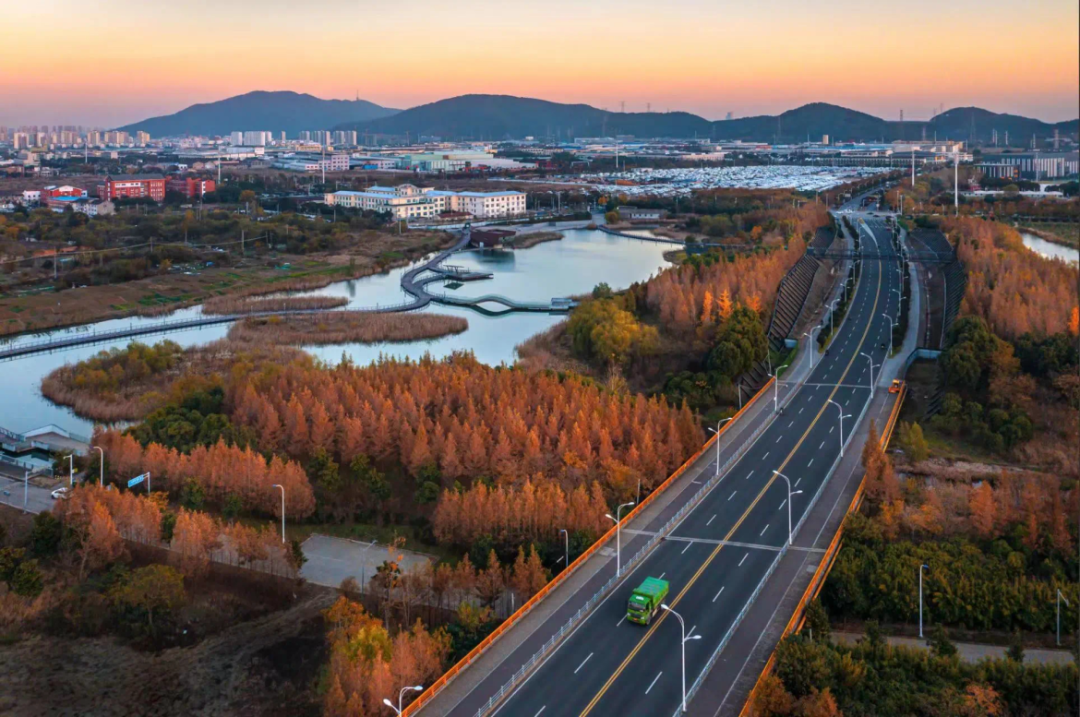
让“院士经济”提升更多县域能级
Xin Hua Ri Bao· 2025-12-22 22:32
Core Viewpoint - The development of "Academician Economy" in county areas is essential for enhancing local economic quality and efficiency through the integration of top-tier intellectual resources with industrial practices [1][2][3] Group 1: Development of Academician Economy - A company in Yixing has successfully launched a low-GI food product that combines tea and traditional Eight Treasures Cake, showcasing the potential of local innovation [1] - Yixing has established 9 provincial academicians' workstations and 28 collaborative projects, creating a chain effect that drives industrial growth [1] - The "Academician Economy" aims to leverage academic expertise to overcome local economic challenges such as talent shortages and funding limitations [2] Group 2: Collaborative Mechanisms - A flexible talent introduction model, focusing on "not seeking all, but seeking what is needed," is recommended for counties to effectively develop the "Academician Economy" [2] - Establishing academicians' workstations and utilizing remote technical support can facilitate the flow of intellectual resources across regions [2] - The need for specialized platforms to bridge the gap between research outcomes and practical applications is emphasized, focusing on key industries [2] Group 3: Policy and Support Mechanisms - A dedicated "Academician Economy" fund is proposed to share R&D risks and provide targeted support for industrialization projects [3] - Simplifying project approval and funding processes is crucial for fostering collaboration between academicians and local enterprises [3] - A clear revenue distribution mechanism is necessary to ensure that the benefits of industrial upgrades are shared among academicians, local businesses, and farmers [3]
城市变“型”记①丨“三链”里添加了啥秘方? ——从传统农区驻马店农业向新求变的实践说开去
He Nan Ri Bao· 2025-07-15 23:55
Core Insights - The central urban work conference emphasized the need for cities to transform their development model, focusing on distinctive growth and high-quality development [1] - The transformation of cities is increasingly seen as a key variable in regional competition, with a focus on accelerating the conversion of old and new growth drivers [1] - The report highlights the importance of agricultural cities like Zhumadian in overcoming challenges related to resource dependence and innovation shortfalls to achieve high-quality development [1][3] Agricultural Industry - Zhumadian is recognized for its significant agricultural output, maintaining a grain production of over 16 billion jin, and leading the province in meat and milk production [3] - The city has developed a robust agricultural processing sector, with 1,750 processing enterprises and an output value exceeding 238 billion yuan, positioning it as a key player in Henan's food industry cluster [4] - The local government is actively promoting deep processing of agricultural products to enhance value, with initiatives aimed at increasing the output value of the agricultural processing industry to over 250 billion yuan by 2025 [8] Value Chain and Innovation - The report discusses the need to reshape the value chain in agriculture, highlighting successful examples such as the transformation of wheat into various high-value products [5][6] - Zhumadian is leveraging modern technology and research partnerships to enhance agricultural productivity and innovation, exemplified by the establishment of a fungal research institute [9][10] - The introduction of "academician economy" is seen as a strategy to attract talent and boost local industries, with 32 academicians brought in to support agricultural development [11] Biopharmaceutical Industry - Zhumadian is positioning itself as a hub for biopharmaceuticals, with plans to integrate agricultural processing, livestock, and biomedicine into a cohesive development strategy [12][14] - The city has a rich resource base for traditional Chinese medicine, with over 2,000 varieties of medicinal herbs, supporting its goal to become a major player in the biopharmaceutical sector [14][15] - The local government aims to build a "Chinese Medicine Valley," targeting a modern pharmaceutical industry cluster worth over 100 billion yuan [15] Regional Development - Other cities in Henan, such as Zhoukou and Luohe, are also exploring similar strategies to enhance their agricultural processing capabilities and contribute to the province's economic growth [16] - The report illustrates a broader trend across agricultural provinces in China, where cities are innovating to achieve high-quality development through value chain enhancement and industry integration [16]
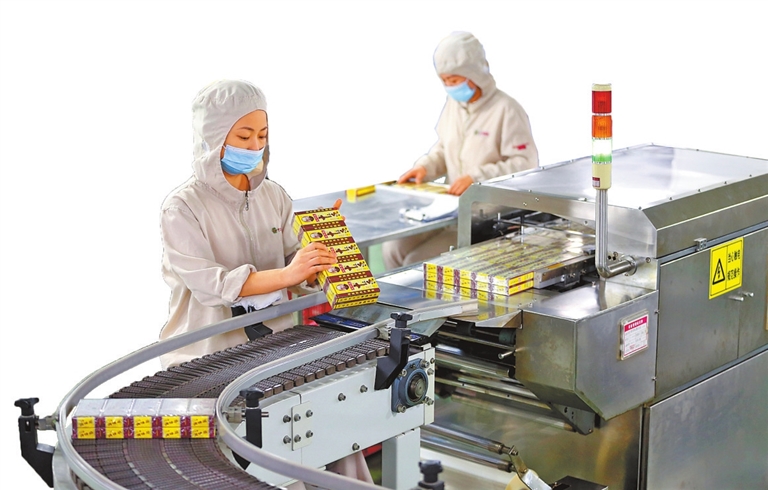
江苏宜兴: 院士天团“抢滩”食品生物制造业
Zhong Guo Chan Ye Jing Ji Xin Xi Wang· 2025-06-18 22:19
Group 1 - Universities are a major source of technological breakthroughs and have maintained a 70% share of national science and technology awards [1] - Despite improvements in technology transfer rates, many research outcomes remain unutilized in the market [1] - Jiangsu Province's Yixing City has implemented various support plans to facilitate the transformation of scientific research into industrial applications, particularly in synthetic biology [2][3] Group 2 - The Yixing Food and Biotechnology Research Institute, established with the help of Jiangnan University, aims to bridge the gap between laboratory results and market applications [2][3] - The research institute has successfully engaged 14 academicians as scientific advisors and 19 as discipline leaders within three years [2] - The institute's laboratories focus on integrating biotechnology with food technology, enhancing the local food biotechnology industry [2][3] Group 3 - Jiangnan University has collaborated with local enterprises to transition from traditional energy to biotechnology, leading to advancements in biomanufacturing technologies [3] - The research institute has provided over 20 technical services to local companies, generating a total contract value exceeding 16 million yuan [3] - The institute has also facilitated the establishment of eight biotechnology and food technology companies in Yixing [3] Group 4 - The favorable business environment in Yixing has attracted companies like Wuxi Licheng Medical Nutrition Co., which has achieved over 100 million yuan in annual sales [4] - The local government is promoting "alumni economy" and enhancing industry-academia-research collaboration to strengthen high-end talent aggregation [4] - Yixing's life and health industry is rapidly developing, with 50 large-scale enterprises reported in the sector [4]