
集体商标

Search documents
用好“小商标”,撬动“大产业”
Xin Hua Ri Bao· 2026-01-02 19:57
Core Viewpoint - The Nantong home textile industry is transitioning from a focus on quantity to quality, as evidenced by the recent authorization of a collective trademark for 25 companies, signaling a shift towards high-quality development in this billion-level industry cluster [1] Group 1: Industry Transformation - The release of the collective trademark for Nantong home textiles serves as a reference for overcoming challenges faced by industry clusters, which often struggle with being "large but weak" and "diverse but not distinctive" [1] - The collective trademark initiative aims to unify brand identity and standards among enterprises, helping to combat low-price competition and enhance regional brand strength [2] Group 2: Quality and Standards - Quality is emphasized as the lifeline of regional brands, with a rigorous management system in place that includes product testing, credit reports, and a "red-black list" supervision system to ensure the integrity of the collective trademark [2] - The mechanism of "selecting the best among the best" ensures the high value of the collective trademark, highlighting the importance of quality in brand development [2] Group 3: Innovation and Digital Empowerment - The transition from traditional manufacturing to digital empowerment is crucial for brand elevation, requiring a dual approach that focuses on both offline quality and online digital economy [3] - Embracing new technologies and business models is essential for industry clusters to enhance product value and expand sales channels [3] Group 4: Collaborative Governance - The promotion of collective trademarks relies on effective interaction among government, associations, and enterprises, with each playing a vital role in creating a supportive business environment [3] - A governance model based on "co-construction, co-governance, and sharing" is key to sustainable development, rewarding quality-focused enterprises and encouraging more participation in brand-building efforts [3] Group 5: Strategic Insights - The experience of Nantong home textiles provides valuable insights for cultivating and developing industry clusters, emphasizing the need to leverage brand, quality, and innovation to remain competitive in the market [4]
25家企业共用“南通家纺”集体商标
Xin Hua Ri Bao· 2025-12-15 07:09
Core Viewpoint - The article highlights the granting of the "Nantong Home Textile" collective trademark to 25 outstanding home textile enterprises, aiming to enhance brand recognition and quality in the industry [1] Industry Overview - Home textiles are a distinctive and leading industry in Nantong, with an annual market transaction volume exceeding 250 billion yuan, maintaining over 50% market share nationally [1] - The products are exported to over 150 countries and regions, earning Nantong the reputation of "the world looks to China for home textiles, and China looks to Nantong" [1] Trademark Registration - The "Nantong Home Textile" collective trademark was approved for registration by the National Intellectual Property Administration in September [1] - To use the trademark, enterprises must submit an application form along with relevant product testing reports, credit reports, and a commitment letter, followed by signing a trademark authorization contract upon approval [1] Commitment to Quality - The collective trademark represents a commitment to quality and consumer trust, as stated by the Nantong Home Textile Industry Association [1]
25家企业首批获得“南通家纺”集体商标授权
Xin Hua Ri Bao· 2025-12-15 05:39
Core Viewpoint - The establishment of the "Nantong Home Textile" collective trademark aims to enhance the quality and brand recognition of the home textile industry in Nantong, which is a significant sector for the local economy and has a substantial market presence in China and internationally [1] Group 1: Industry Overview - The home textile industry is a distinctive and leading sector in Nantong, with an annual market transaction volume exceeding 250 billion yuan [1] - Nantong holds over 50% of the national market share in home textiles, exporting products to more than 150 countries and regions [1] - The industry has earned the reputation of "the world looks to China for home textiles, and China looks to Nantong" [1] Group 2: Trademark Authorization - 25 outstanding home textile enterprises have been granted the first batch of "Nantong Home Textile" collective trademark authorization, allowing them to use this regional brand [1] - The application process for using the "Nantong Home Textile" collective trademark requires companies to submit an application form along with relevant product testing reports, credit reports, and a commitment letter [1] - The collective trademark is seen as a symbol of credibility and a solemn promise to consumers [1]
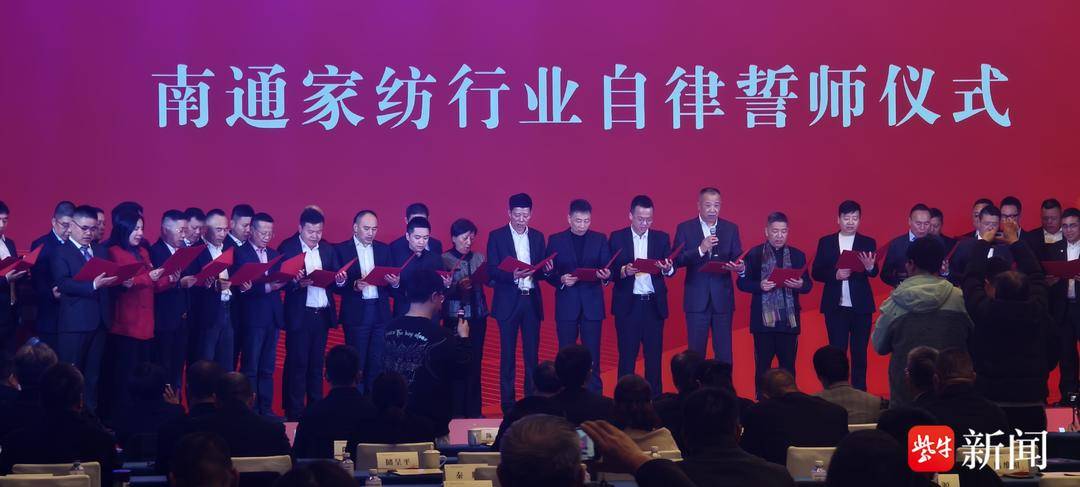
向精品发出誓言,25家企业获得“南通家纺”集体商标使用授权
Yang Zi Wan Bao Wang· 2025-12-14 14:56
Core Viewpoint - The South Tong textile industry is committed to high-quality development, emphasizing integrity, brand quality, and industry self-discipline through a collective trademark initiative and strategic partnerships [2][4][6]. Group 1: Industry Commitment and Initiatives - A high-quality development oath was taken by representatives of the South Tong textile industry, highlighting their commitment to integrity and quality [2]. - The "South Tong Textile" collective trademark management and usage authorization signing ceremony took place, with 25 companies submitting commitment letters [2][4]. - The South Tong textile industry is transitioning from scale expansion to quality and efficiency improvement, focusing on innovation-driven growth and system competition [6]. Group 2: Industry Background and Growth - South Tong is recognized as a significant hub for the textile industry in China, with a complete industrial chain and strong market influence [4]. - The growth of South Tong's textile industry reflects the region's entrepreneurial spirit and the transformation of its manufacturing sector [4][6]. - Over the past five years, the South Tong textile industry has participated in major domestic and international exhibitions, enhancing its industry influence and level [6]. Group 3: Awards and Collaborations - Nine companies received the third batch of "South Tong Quality Textile" awards during the event [8]. - Strategic cooperation agreements were signed between the South Tong textile industry association and various local organizations to foster industry development [8].

守护地方小吃“地道味”
Jing Ji Ri Bao· 2025-08-31 01:42
Core Insights - The collective trademark for "Huainan Beef Soup" has been officially registered, marking a new phase for this traditional local delicacy from decentralized operations to a unified brand and from low-level homogenized competition to high-quality industrial development [1] Group 1: Trademark Registration and Impact - The registration of the collective trademark signifies a shift towards brand strategy implementation for local snacks, enhancing intellectual property protection and maintaining product standards [1] - Other local specialties, such as "Shaxian Snacks," have successfully registered collective trademarks, which have significantly contributed to their growth and development [1] Group 2: Consumer and Industry Benefits - For consumers, collective trademarks represent a commitment to quality and trust, ensuring a consistent taste and quality across authorized outlets [1] - The use of a unified graphic trademark in authorized stores guarantees standardized production and food quality, enhancing consumer confidence in their dining experience [1] Group 3: Management and Future Development - The effective management and use of collective trademarks are crucial for achieving high-quality industrial development and ensuring that consumers can enjoy authentic flavors at any authorized outlet [1] - Balancing standardization with flexibility is essential for industry associations to maintain brand reputation while accommodating the needs of small and micro businesses [2] - The modernization of local snacks should not abandon tradition but rather rejuvenate it through contemporary management practices and technology [2]