
零售模式转型

Search documents
亚洲最大的宜家关门,什么信号?
Sou Hu Cai Jing· 2026-01-18 16:08
Core Viewpoint - The closure of IKEA's stores in China, including the largest store in Asia, signals a significant shift in consumer behavior and market dynamics, reflecting the challenges faced by foreign brands in adapting to local preferences and competition from domestic brands [3][14]. Group 1: Store Closures and Market Impact - In February, IKEA will close its largest store in Shanghai along with six other locations, marking the largest closure wave since its entry into China in 1998 [2][3]. - The closures highlight a broader trend of foreign home furnishing brands struggling in the Chinese market, with similar challenges faced by brands like Muji and Nitori [15][14]. - The closures are attributed to changing consumer preferences, with younger generations moving away from IKEA's standardized offerings towards more personalized and practical solutions [6][7][11]. Group 2: Changing Consumer Behavior - The shift in consumer behavior is characterized by a transition from "symbolic experience" to "rational pragmatism," with younger consumers preferring online shopping and quick comparisons over lengthy in-store experiences [9][11]. - The rise of instant retail has diminished the appeal of large stores, as consumers are less willing to travel long distances for a single purchase [11][10]. - The new generation of consumers, particularly Gen Z, finds IKEA's traditional aesthetic and shopping experience less appealing, leading to a disconnect between the brand and its target audience [8][7]. Group 3: Competitive Landscape - Domestic brands are rapidly gaining market share, with projections indicating that by 2025, local brands will hold over 60% of the market, compared to IKEA's declining presence [13][11]. - IKEA's slower response to local market trends and consumer demands has allowed domestic competitors to capitalize on their agility and localized offerings [13][12]. - The competitive landscape is shifting as foreign brands struggle to adapt to the fast-paced changes in consumer preferences and market conditions in China [14][16]. Group 4: Strategic Responses - In response to the challenges, IKEA is adopting a "reverse expansion" strategy, closing large stores and focusing on smaller community stores and online retail [16][18]. - The company plans to open over 10 small community stores in major cities, reducing store sizes and focusing on high-frequency product categories [16][18]. - This shift reflects a broader trend in the retail industry, where major players are moving from large-scale operations to more localized and efficient service models [17][18].


百年零售巨头,宣布破产
Sou Hu Cai Jing· 2025-12-13 03:43
Core Insights - American Signature Inc. (ASI) has filed for Chapter 11 bankruptcy protection, marking a significant event in the retail market and signaling the end of an era for a company that has served American families for generations [3][10] - The downfall of ASI is attributed to a series of strategic missteps during the pandemic, where management mistook temporary consumer demand spikes for a permanent shift, leading to unsustainable long-term commitments [4][15] - The company's struggles reflect broader trends in the retail industry, including the impact of high interest rates, changing consumer behavior, and the rise of e-commerce competitors [6][14] Company Overview - ASI, headquartered in Columbus, Ohio, has a rich history dating back to 1917, originally starting as a general merchandise store before evolving into a furniture retail giant [10][11] - At its peak, ASI operated nearly 300 stores and surpassed $1 billion in annual revenue, becoming a significant player in the discount furniture market [12] Strategic Missteps - During the pandemic, ASI experienced a surge in sales, prompting management to sign long-term, high-cost warehouse leases and aggressively expand, believing the demand would last [4][15] - The turning point came in late 2022 when rising interest rates led to a cooling real estate market, significantly impacting furniture sales, which are closely tied to home purchases [5][14] Financial Challenges - ASI's core customer base, primarily first-time homebuyers, vanished as consumer confidence plummeted due to rising prices of essential goods, leading to a decline in discretionary spending on furniture [5][7] - The company faced a "death spiral" of cash flow issues, unable to purchase new inventory, resulting in empty store shelves and further declining sales [8][9] E-commerce Competition - The rise of online retailers like Wayfair and Amazon, which offer flexible supply chains and lower operational costs, severely impacted ASI's market position [6][14] - ASI's attempts to adapt to e-commerce were hampered by its reliance on a large physical store network and outdated IT systems, making it difficult to compete effectively [6][13] Lessons Learned - The case of ASI serves as a cautionary tale for traditional retailers, emphasizing the importance of not mistaking temporary market conditions for permanent trends [15] - Speed and flexibility in supply chain management and digital transformation are critical in the current retail landscape, where consumer preferences are rapidly changing [16] - Companies must be willing to innovate and adapt to new market realities, as clinging to outdated business models can lead to significant risks [17]

大润发母公司高鑫零售中期业绩亏损1.23亿元
Zheng Quan Shi Bao· 2025-11-12 18:40
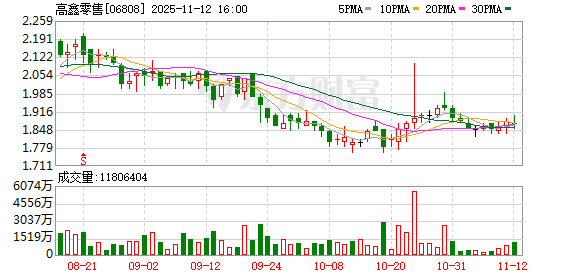
Core Viewpoint - Gao Xin Retail, the parent company of RT-Mart, reported a significant loss for the first half of the fiscal year, indicating challenges in the retail sector due to increased competition and consumer fatigue [2][3]. Financial Performance - Gao Xin Retail's revenue for the six months ending September 30, 2025, was RMB 30.502 billion, a decrease of 12.12% year-on-year [2]. - The company reported a loss attributable to equity shareholders of RMB 123 million, compared to a profit of RMB 206 million in the same period last year [2]. - Revenue from merchandise sales was RMB 29.081 billion, down 12.4% from RMB 33.186 billion year-on-year, attributed to lower average transaction sizes and prices due to market competition and consumer behavior [2]. Revenue Breakdown - Membership fee income increased to RMB 18 million, up 28.6% from RMB 14 million year-on-year [3]. - Rental income decreased to RMB 1.403 billion, down 7.0% from RMB 1.508 billion year-on-year, primarily due to rental reductions and tenant restructuring [3]. Future Development Plans - Gao Xin Retail plans to focus on a retail model that emphasizes "healthy products + enjoyable experiences + attentive service" over the next three years, targeting family and young consumer needs [3].
大润发母公司高鑫零售 中期业绩亏损1.23亿元
Zheng Quan Shi Bao· 2025-11-12 18:31
Core Viewpoint - Gao Xin Retail, the parent company of RT-Mart, reported a significant loss for the first half of the fiscal year, indicating challenges in the retail sector due to increased competition and consumer fatigue [1][2] Financial Performance - Gao Xin Retail's revenue for the six months ending September 30, 2025, was RMB 30.502 billion, a decrease of 12.12% year-on-year [1] - The company reported a loss attributable to equity shareholders of RMB 123 million, compared to a profit of RMB 206 million in the same period last year [1] - Revenue from merchandise sales was RMB 29.081 billion, down 12.4% from RMB 33.186 billion in the previous year, reflecting a decline in average transaction size and product prices [1] Revenue Breakdown - Membership fee income increased to RMB 18 million, up 28.6% from RMB 14 million year-on-year [2] - Rental income decreased to RMB 1.403 billion, down 7.0% from RMB 1.508 billion, attributed to rent reductions and ongoing tenant structure optimization [2] Future Development Plans - Gao Xin Retail plans to focus on a retail model that emphasizes "healthy products + enjoyable experiences + attentive service" over the next three years, aiming to cater to families and younger consumers [2]