供应链管理

Search documents
在上海,“三年再造拼多多”走出第一步
远川研究所· 2026-03-31 08:32
Core Viewpoint - Pinduoduo has evolved from a light-asset "traffic distributor" to a heavy-asset self-operated model, aiming to integrate supply chain resources and foster brand development globally through its new initiative "New Pinduoduo" [2][9]. Group 1: Business Evolution - Pinduoduo started by focusing on agricultural products and building foundational supply chain links, gradually expanding its model to include C2M (Customer to Manufacturer) strategies and global supply chain layouts [5]. - The company has invested 15 billion in the "New Pinduoduo" project, with plans to invest a total of 100 billion over the next three years to enhance brand self-operation and supply chain integration [2][10]. Group 2: Supply Chain Strategy - Pinduoduo's strategy involves deep engagement with the supply chain, transitioning from a focus on distribution to a comprehensive self-operated model that emphasizes high-quality manufacturing and brand incubation [3][9]. - The "New Pinduoduo" initiative aims to establish a specialized company that will cover domestic industrial belts and offer customized manufacturing solutions, fostering a variety of self-operated brands [10]. Group 3: Global Market Expansion - The company has successfully expanded its international presence through Temu, which has reached over 90 countries, leveraging a full-service model that connects supply and demand while minimizing costs [7][12]. - Pinduoduo's focus on brand development is supported by its extensive supply chain capabilities and consumer data, positioning it for higher quality brand growth [9][11]. Group 4: Strategic Location - Shanghai is identified as a strategic hub for the "New Pinduoduo" initiative due to its unparalleled import-export infrastructure, which is crucial for high-frequency and high-volume product turnover [12][15]. - The region's unique customs policies and logistics capabilities allow for efficient cross-border operations, significantly reducing costs and enhancing operational efficiency [15][16]. Group 5: Competitive Advantage - The shift from a pure e-commerce model to a supply chain-centric approach reflects a broader industry trend, where the focus is on providing certainty in production and sales through efficient supply chain management [16].



蜜雪冰城进入下半场
远川研究所· 2026-03-27 13:06
Core Viewpoint - After years of growth, Mixue Ice City is entering a new development phase, focusing on product and operational insights rather than pure store expansion [3][5]. Group 1: Financial Performance - In 2025, Mixue Group reported a revenue of 33.56 billion yuan, a year-on-year increase of 35.2%, and a net profit of nearly 6 billion yuan, with a growth rate of 33.1% [2]. - The company has maintained stable growth during a challenging period for the restaurant industry, particularly from 2020 to 2023 [7]. Group 2: Business Model and Supply Chain - Mixue Ice City operates under a franchise model, with nearly all stores being franchisee-owned, which is common in the restaurant industry [7]. - The company has a highly streamlined product structure and supply chain, allowing for significant cost control and scalability [11][14]. - Mixue's supply chain management is crucial, as even minor cost reductions can lead to substantial profit elasticity [10][15]. Group 3: Market Expansion and Strategy - Mixue has over 44,000 stores in China, with a significant presence in lower-tier cities, accounting for 58% of its total stores [20]. - The company added 8,261 stores in lower-tier markets in 2025 alone [20]. - Mixue's franchise model has attracted a strong interest from franchisees, with 6,474 new franchisees added in 2025 [22]. Group 4: Operational Efficiency - The company focuses on improving single-store efficiency rather than merely expanding the number of stores [26]. - Mixue has implemented digital tools for better inventory and supply chain management, significantly reducing losses from long supply chains [25]. Group 5: Future Directions - Mixue is diversifying its offerings with new brands like "Lucky Coffee" and "Fresh Beer," aiming to leverage its supply chain for rapid market entry [27][28]. - The company plans to invest 1.4 billion yuan in domestic supply chain upgrades, emphasizing fresh ingredients [31]. - Mixue aims to enhance product quality while maintaining affordability, representing a significant shift in consumer experience in the restaurant industry [34].


Fuller(FUL) - 2026 Q1 - Earnings Call Transcript
2026-03-26 15:32
Financial Data and Key Metrics Changes - Organic revenue decreased by 6.6% year-on-year, with pricing up 0.6% and volume down 7.2% [14] - Adjusted EBITDA for the quarter was $119 million, up 4% year-on-year, with an EBITDA margin of 15.4%, an increase of 90 basis points [5][15] - Adjusted gross profit margin was 31.3%, up 170 basis points year-on-year [14] Business Segment Performance - Engineering Adhesives (EA) organic revenue increased approximately 3% year-on-year, with EBITDA margin rising to 19.9% [6] - Health and Hygiene (HHC) organic revenue declined 10% year-on-year, with EBITDA margins at 13.9%, up 120 basis points [7] - Building and Construction (BAS) organic sales decreased 5.1% year-on-year, with EBITDA margins remaining flat [8] Market Performance - Americas organic revenue was down 4% year-on-year, with EA achieving 8% organic revenue growth [8] - EIMEA organic revenue decreased 11% year-on-year, primarily due to tighter customer inventory management [8] - Asia Pacific organic revenue was up 2% excluding solar, lower than trend due to the timing of Chinese New Year [8] Company Strategy and Industry Competition - The company is leveraging global sourcing strength and maintaining a focused approach to cost and portfolio management [4] - A minimum 10% price increase across all product lines globally was announced to offset supply shock inflation [11] - The current supply chain disruption presents a unique opportunity for the company to gain market share [11] Management's Comments on Operating Environment and Future Outlook - Management highlighted significant constraints on raw material availability due to the conflict in the Middle East, leading to inflationary pressures [9] - The company expects organic revenue growth to be up low single digits for fiscal 2026, reflecting updated pricing actions and anticipated market share gains [16] - Management remains focused on controlling operational aspects and ensuring supply chain resilience [18] Other Important Information - The company has received over 40 force majeure letters from suppliers, indicating major disruptions in the supply chain [9] - Cash flow from operations improved by $49 million year-on-year, with expectations for operating cash flow to be weighted to the second half of the year [15] Q&A Session Summary Question: Impact of the 10% price hike on guidance - Management indicated that additional price and raw material benefits are factored in, but negative volume impacts are also expected [24][30] Question: Inventory management in HHC - Management noted that inventory control is real, with consumers shifting away from premium products, impacting adhesive usage [33] Question: Lunar New Year impact on volume - The company experienced a $15 million-$20 million revenue impact from Chinese New Year, with expectations for a bounce back in Q2 [40] Question: Raw material supply concerns - Management anticipates potential impacts on customers' ability to procure substrates, which may affect adhesive demand [95] Question: Medical grade adhesive performance - The medical business in Europe saw nearly 20% organic growth, indicating strong performance despite overall market challenges [102]

Fuller(FUL) - 2026 Q1 - Earnings Call Transcript
2026-03-26 15:30
Financial Data and Key Metrics Changes - Organic revenue decreased by 6.6% year-on-year, with pricing up 0.6% and volume down 7.2% [11] - Adjusted EBITDA for the quarter was $119 million, up 4% year-on-year, with an EBITDA margin of 15.4%, an increase of 90 basis points [4][12] - Adjusted earnings per share (EPS) increased by 6% year-on-year to $0.57, driven by higher operating income and lower shares outstanding [12] Business Segment Performance - Electronics and Aerospace (EA) organic revenue increased approximately 3% year-on-year, with EBITDA up 9% and EBITDA margin at 19.9% [4] - Health and Hygiene (HHC) organic revenue declined 10% year-on-year, with EBITDA margins at 13.9%, up 120 basis points [5] - Building and Construction (BAS) organic sales decreased by 5.1% year-on-year, with EBITDA flat year-on-year [6] Market Performance - Americas organic revenue was down 4% year-on-year, with EA achieving organic revenue growth of 8% [6] - EIMEA organic revenue decreased by 11% year-on-year, primarily due to tighter customer inventory management [6] - Asia Pacific organic revenue was up 2% excluding solar, lower than trend due to the timing of Chinese New Year [6] Company Strategy and Industry Competition - The company is taking decisive actions to navigate supply chain disruptions caused by the conflict in the Middle East, including a minimum 10% price increase across all product lines [9] - The adhesive industry is experiencing supply uncertainty, creating opportunities for the company to gain market share [9] - Project Quantum Leap is progressing well, aimed at strengthening long-term competitiveness and profitability [15] Management's Comments on Operating Environment and Future Outlook - Management highlighted the importance of a resilient supply chain and manufacturing network in light of current disruptions [15] - The company expects significant inflationary pressure and raw material shortages to persist throughout the year [7] - Updated guidance for fiscal 2026 includes net revenue growth in the mid-single digits and organic revenue growth in the low single digits [13] Other Important Information - The company received over 40 force majeure letters from suppliers, indicating significant raw material availability constraints [7] - Cash flow from operations improved by $49 million year-on-year, with net debt to adjusted EBITDA at 3.1 times [12] Q&A Session Summary Question: Impact of the 10% price hike on guidance - Management confirmed that additional pricing and raw material benefits are factored in, alongside negative volume impacts [21][27] Question: Inventory management trends in HHC - Management noted pressure on consumers leading to tighter inventory management and a shift towards lower-cost products [30][31] Question: Lunar New Year impact on volume - The company experienced a $15 million-$20 million revenue impact from Chinese New Year, with expectations for a bounce back in Q2 [36][38] Question: Raw material supply concerns - Management indicated that over 40 force majeure notices have been received, primarily from the Asia Pacific region, affecting various material categories [41] Question: Opportunities for share gains - Management emphasized the potential for durable share gains through long-term agreements with customers during supply shortages [61][62]
Designer Brands(DBI) - 2026 Q4 - Earnings Call Transcript
2026-03-26 13:32
Financial Data and Key Metrics Changes - Net sales for Q4 2025 were flat year-over-year at $713.6 million, while full-year net sales decreased by 3.9% to $2.9 billion [23][24] - Consolidated comparable sales improved sequentially by 50 basis points in Q4, but were down 4.3% for the full year [5][23] - Adjusted operating income for the full year was $65 million, exceeding guidance of $50 million to $55 million, driven by improved sales trends and expense management [5][26] - Consolidated gross margin in Q4 was 42.4%, a 280 basis point improvement year-over-year, while full-year gross margin improved by 90 basis points to 43.6% [24][26] Business Line Data and Key Metrics Changes - Retail segment sales were flat year-over-year in Q4, with comparable sales down 1.7%, an improvement from a decline of 2.1% in the previous year [9][23] - Brand portfolio segment sales increased by 5.3% in Q4, driven by strong performances from Topo and Jessica Simpson [11][23] - For the full year, total sales in the brand portfolio segment decreased by 9%, but Topo saw a significant growth of 46% [11][26] Market Data and Key Metrics Changes - The DSW brand generated 79 billion total impressions in 2025, up 10% year-over-year, indicating strong customer interest [7] - The company opened 13 new stores and remodeled four stores in 2025, with positive customer feedback and improved store performance [10][12] Company Strategy and Development Direction - The company is focused on enhancing its merchandise strategy, expanding the DSW brand positioning, and improving in-store customer experiences [12][16] - Plans for 2026 include a renewed focus on exclusive brands and adjacent categories such as beauty and wellness [13][17] - The company aims to leverage partnerships with emerging consumer brands to introduce new products and enhance customer engagement [14][15] Management's Comments on Operating Environment and Future Outlook - Management acknowledged the volatile macroeconomic environment, including tariff dynamics and geopolitical tensions, which may impact consumer sentiment [20][30] - For 2026, the company anticipates total sales to range from a decline of 1% to an increase of 1%, with expectations of double-digit growth in the brand portfolio segment [20][30] - Management expressed confidence in building on the momentum from the latter half of 2025, despite potential challenges in the back half of 2026 [21][36] Other Important Information - The company ended Q4 with total inventories down 6% year-over-year and reduced total debt by nearly $60 million [28][29] - Adjusted net loss for Q4 was $15.6 million, an improvement from a loss of $21.3 million in the prior year [27][26] Q&A Session Summary Question: Performance of top national brands and revenue guidance - Management noted that the focus will shift to the top ten brands for 2026, which includes three exclusive brands, and that these brands drove a comp increase in 2025 [35] - The revenue guidance reflects a cautious outlook for the back half of the year due to stronger comparisons from 2025 [36] Question: Impact of tariffs and inventory management - Management indicated that the tariff environment remains evolving, with potential upside if new tariffs do not replace existing ones [47] - The company is seeing broad-based growth across categories, particularly in dress and affordable luxury [48] Question: Share count increase and interest expenses - The increase in share count is due to the inclusion of potentially dilutive shares as the company anticipates a return to profitability [40] - Interest expenses are expected to be around $40 million for the year, reflecting reduced debt levels [41]

海底捞20260318
2026-03-19 02:39
Summary of Haidilao Conference Call Company Overview - **Company**: Haidilao - **Industry**: Restaurant, specifically Hot Pot segment Key Points Industry and Market Position - The restaurant industry is currently valued at approximately 5.4 trillion yuan, with Chinese cuisine accounting for about 77% of this market, translating to nearly 4 trillion yuan. The hot pot segment represents around 15% of this, equating to a market size of about 600 billion yuan [4][10]. - Haidilao holds a leading market share of approximately 7% in the hot pot sector, significantly ahead of competitors like Xiaobuxiang and Banlu, which have market shares below 0.5% [6][10]. Financial Performance and Projections - Haidilao's revenue for 2024 is projected to be around 42.8 billion yuan, with a compound annual growth rate (CAGR) of about 3% from 2021 to 2024, aligning with the overall growth of the hot pot industry [13]. - Revenue growth is expected to improve in 2026, with estimates of a 6% increase in revenue and an 11% increase in profit, indicating that profit growth will outpace revenue growth [3][18]. - The company anticipates a profit growth rate of 11% in 2026 and 19% in 2027, driven by the main brand's stability and the rapid expansion of new brands [18]. Competitive Advantages - Haidilao's core competitive advantages include: - **Unique Management System**: The "Master-Apprentice" system ties the interests of store managers to the company's performance, incentivizing them to train new staff and expand operations [6][7]. - **Differentiated Service Experience**: The company offers unique customer experiences, such as free services during wait times and interactive dining experiences [9]. - **Strong Supply Chain Management**: Haidilao's supply chain, particularly through its subsidiary Yihai International, allows for lower costs and higher quality control, with a gross margin of only 14% compared to 39% for third-party suppliers [2][10]. Growth Strategies - Haidilao is implementing the "Pomegranate Plan," which aims to explore new growth avenues through the establishment of multiple new brands. In 2024, 11 new brands were launched, including successful concepts like "Banquet BBQ" and "High Rotation Hot Pot" [17][19]. - The company is also optimizing its delivery business, with a 60% revenue increase in the first half of 2025, where non-hot pot dishes account for over 55% of delivery sales [2][16]. Market Trends and Consumer Behavior - The hot pot industry is expected to maintain a high single-digit growth rate, driven by increasing disposable income and a growing trend of dining out, with the dining out penetration rate projected to reach 28% by 2029 [5]. - The company is focusing on expanding in lower-tier cities, where over 70% of franchise applications are coming from, as these markets show higher growth potential compared to first and second-tier cities [14][15]. Employee Management and Retention - Haidilao employs a piece-rate wage system that incentivizes employees based on performance, contributing to higher employee efficiency and retention rates [8][9]. - The company provides comprehensive training and benefits, including housing subsidies and educational support for employees' children, enhancing employee loyalty and satisfaction [8]. Conclusion - Haidilao is well-positioned in the hot pot market with a strong competitive edge through its unique management practices, differentiated customer service, and robust supply chain. The company's strategic focus on new brand development and expansion into lower-tier cities is expected to drive future growth and profitability.

中国电商出海进入“重资产时代”
美股研究社· 2026-03-17 11:22
Core Viewpoint - The article discusses the evolution of Chinese e-commerce going global, transitioning from a price-driven model to one focused on infrastructure and logistics efficiency [1][3]. Group 1: Transition in E-commerce Strategy - The first phase of Chinese e-commerce overseas was characterized by low prices and direct shipping from China, leveraging cost advantages [5][6]. - As the low-price advantage diminishes, the focus shifts to user experience, efficiency, and service quality [1][6]. - JD.com is taking a different approach by launching its European platform Joybuy, emphasizing logistics and supply chain rather than just pricing [3][7]. Group 2: Logistics and Supply Chain as Competitive Edge - Joybuy employs a heavy asset model, establishing local warehouses and logistics networks in Europe to achieve same-day delivery in certain areas [7][8]. - This logistics efficiency is comparable to or even surpasses local competitors, marking a shift from price competition to infrastructure competition [8][10]. - JD.com’s strategy focuses on supply chain management, allowing for better control over product quality, inventory, and delivery times [10][11]. Group 3: Market Dynamics and Challenges - The European e-commerce market is complex, with a size nearing $800 billion and characterized by diverse languages, cultures, and regulations [13][14]. - Chinese companies are adopting different strategies: low-price platforms like Temu, brand export through platforms like Amazon, and JD.com's supply chain export model [15][16]. - JD.com’s approach requires significant local operational capabilities to navigate compliance, tax, and labor issues [15][17]. Group 4: Future Implications and Investment Perspective - The competition is shifting from a focus on traffic and pricing to logistics and supply chain infrastructure, which is crucial for long-term market share [16][19]. - If JD.com succeeds in Europe, it could validate the heavy asset model and provide a framework for expansion into other developed markets [17][18]. - The ultimate competition may not be about who is cheaper, but who can build a comprehensive logistics and service infrastructure akin to Amazon [18][19].


AI芯片荒:当算力成为比电力更稀缺的资源
傅里叶的猫· 2026-03-14 02:04
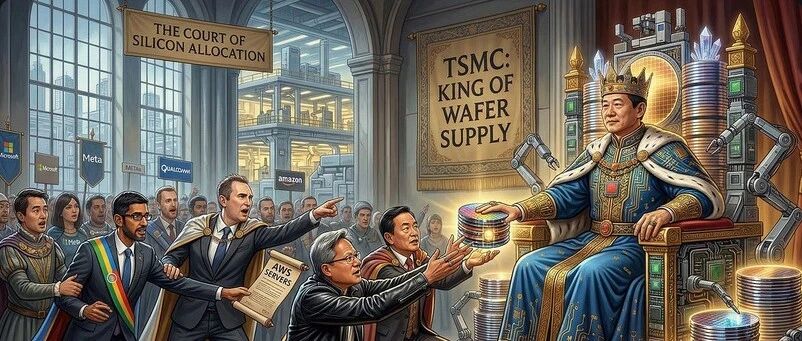
Core Viewpoint - The AI industry is entering a "chip shortage era," which is expected to last until at least 2027, highlighting the importance of supply chain management alongside technological capabilities [37]. Group 1: AI Chip Demand and Supply - Anthropic generated an additional $6 billion in annual recurring revenue in just one month, primarily through its AI programming tool, Claude Code [4]. - The demand for AI chips, particularly those using TSMC's 3nm process, is expected to consume nearly 60% of TSMC's 3nm capacity this year, rising to 86% next year, squeezing out traditional mobile chip customers [11][12]. - TSMC's 3nm capacity is under pressure as major AI chip manufacturers like NVIDIA, AMD, Google, and AWS are all vying for this advanced process technology [8][9]. Group 2: Supply Chain Dynamics - NVIDIA has strategically locked in supplies of logic wafers and memory components, positioning itself as a major beneficiary in the ongoing supply chain competition [33][34]. - The shift in focus from power supply to silicon wafer availability indicates that while data centers and power supply have expanded, the chip supply has not kept pace [28][32]. - The production of high-bandwidth memory (HBM) is also facing challenges, as HBM consumes 3 to 4 times the wafer capacity compared to standard DDR memory, exacerbating the supply constraints [17][22]. Group 3: Market Implications - The competition for chip resources is leading to a "reallocation of bits," where AI applications are prioritized over consumer electronics, potentially resulting in higher prices and slower product cycles for smartphones and PCs [23][38]. - The pricing dynamics for HBM are shifting, with DDR memory prices rising, which may reduce the incentive for manufacturers to shift production capacity from DDR to HBM [22]. - The AI industry's rapid growth is outpacing hardware supply capabilities, leading to a scenario where access to chips becomes a critical factor for success in AI deployment [38]. Group 4: Future Outlook - TSMC's role has become increasingly pivotal, as its capacity allocation decisions directly impact the competitiveness of major players like NVIDIA, Google, and AMD [38]. - The ongoing competition for silicon resources may lead to a significant transformation in the AI landscape, where the ability to secure chips becomes more crucial than algorithmic advancements [38]. - The consumer electronics sector may face significant challenges as AI demand continues to dominate chip production, potentially leading to a decline in smartphone demand and increased costs for consumers [38].


理想汽车20260312
2026-03-13 04:46
Summary of Li Auto Conference Call Company Overview - **Company**: Li Auto - **Industry**: Electric Vehicles (EVs) Key Points Sales Growth and Product Launches - Li Auto targets over 20% year-on-year sales growth in 2026, driven by the new L-series, ramp-up of BEV models (I6, I8, Mega, I9), and overseas expansion [3][7] - The all-new L9 is set to launch in Q2 2026, featuring the in-house Mach 100 chip, 800V active suspension, and a full drive-by-wire system [3][5][6] - Daily orders for the L8 surged 180% in March 2026 compared to January, while the L6 production has stabilized with a monthly sales target of 20,000 units [3][12] Channel Optimization and Store Partner Program - The rumor about closing 100 stores is false; the company is optimizing by phasing out underperforming stores [3] - The new store partner program, launched in March 2026, focuses on store-level profitability and operational autonomy, shifting from volume-only metrics [4] - Store managers will have autonomy in customer acquisition and operations, with performance measured on overall operating results [4] R&D and Technological Advancements - The R&D budget for 2026 is set at RMB 12 billion, with 50% allocated to AI infrastructure, in-house chips, and autonomous driving [3][11] - The Mach 100 chip has started mass production, providing significant compute improvements and cost savings, with a reduction of over RMB 1,000 per vehicle [14] - The integration of AI technologies is a priority, with a focus on vertical integration across devices, models, and operating systems [16] Supply Chain and Cost Management - The company is addressing cost pressures from raw materials through long-term agreements with suppliers and end-to-end cost optimization [9] - A balanced pricing strategy for 2026 models will consider raw material volatility and R&D investments to ensure sustainable profitability [9] Market Competition and Strategy - The competitive landscape is intensifying, with more models launching in the RMB 200,000 and above segment [7] - Li Auto's strategy includes effective management of the direct sales system, successful launch of the new L series, and steady ramp-up of BEV models [8] Organizational Restructuring - A major restructuring of the R&D organization was completed in January 2026, focusing on creating a "silicon-based digital human" [17] - The new structure has improved efficiency, with the autonomous driving team's model iteration cycle reduced from every two weeks to once per day [18] Future Outlook - The company sees significant long-term growth opportunities in overseas markets and aims to leverage multi-year investments in AI for a differentiated user experience [8][11] Additional Notes - The company is considering share buyback options as part of its financial strategy [10] - The L8 has improved its Net Promoter Score by over 20% since launch, indicating strong customer satisfaction [12]

Omdia:2025年,拉美地区智能手机出货量创历史新高,第四季度同比增长12%
Canalys· 2026-03-13 03:17
Core Insights - The Latin American smartphone market is projected to grow by 12% year-on-year in Q4 2025, with an annual growth of 3%, reaching a record shipment of 140.5 million units [2] - Samsung maintains its leading position with a 9% year-on-year increase in shipments to 46.9 million units, driven by a 32% growth in entry-level models [6] - Xiaomi rises to the second position with a shipment of 24.6 million units, an 8% increase, supported by strong entry-level models and successful mid-range market penetration [6] - Honor experiences the fastest growth among the top five manufacturers, with a 48% increase in shipments to 11.8 million units [6] - The overall market dynamics are influenced by economic uncertainties and competitive strategies among brands, particularly in Brazil, Central America, and Ecuador [8] Market Dynamics - The first half of 2025 saw a slowdown in demand due to economic uncertainties and potential tariff increases, but the second half experienced a rebound in consumer confidence [8] - Brazil's market vitality is driven by new entrants like Honor, OPPO, and vivo, while traditional brands like Samsung and Motorola regained market share in Central America [8] - Mexico, the second-largest market in the region, saw a 4% year-on-year decline despite a 27% rebound in Q4 [8] Future Outlook - The market environment in 2026 is expected to be more challenging due to rising component costs and inventory surplus from early 2025, leading to cautious channel management [11] - Manufacturers will need to focus on maintaining market share while ensuring profitability, emphasizing inventory discipline and precise supply chain execution [13] - Competition in the mid-range market will intensify, with a focus on differentiating features such as camera performance, battery life, display quality, 5G capabilities, and fast charging at acceptable price levels [13]