霍曼转轨

Search documents
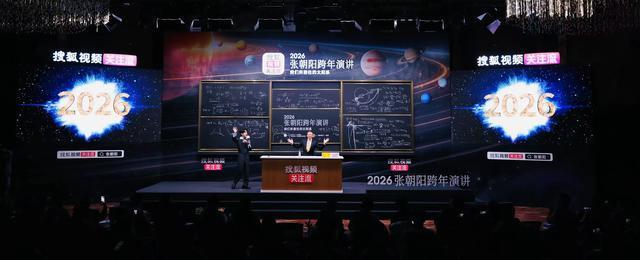
开普勒三定律、潮汐力、轨道方程:张朝阳跨年演讲解析太阳系的内在秩序
Bei Jing Shang Bao· 2026-01-02 06:03
Core Viewpoint - The keynote speech by Zhang Chaoyang focuses on understanding the solar system and its significance for humanity's future, particularly in the context of advancing AI and space technology towards a multi-planetary civilization [1][3]. Group 1: Understanding the Solar System - The solar system operates under specific laws, with Newton's laws providing a framework for understanding planetary motion [3][4]. - Zhang emphasizes that the solar system is not distant and unknown but rather a familiar home that requires understanding [3][6]. - The exploration of celestial bodies has led to significant advancements in physics, with historical figures like Tycho Brahe and Kepler contributing to our understanding of planetary motion [3][4]. Group 2: The Role of Tidal Forces - Tidal forces play a crucial role in the behavior of moons and planets, affecting their orbits and physical characteristics [6][8]. - Zhang explains how tidal forces can lead to phenomena such as the synchronous rotation of the Moon and the volcanic activity on Io, one of Jupiter's moons [8][9]. Group 3: Human Exploration of Space - The speech outlines three key stages for human exploration beyond Earth, starting with Lagrange points, which are stable locations for deploying spacecraft [9][11]. - Mars is highlighted as a potential destination for human exploration due to its similarities to Earth, with a detailed explanation of the Hohmann transfer orbit for efficient travel [9][11]. - The Voyager missions are noted as significant milestones in humanity's exploration of the outer solar system, utilizing gravitational assists to increase speed [11][12]. Group 4: Scientific Foundation for Speculation - Zhang stresses the importance of grounding speculative ideas in solid scientific principles, particularly in discussions about future space colonization [12][14]. - The audience is encouraged to engage with scientific concepts before delving into speculative scenarios, ensuring a robust understanding of physics [14][15]. Group 5: Educational Impact and Engagement - The integration of traditional teaching with new media has proven effective, with Zhang's physics classes reaching a wide audience and contributing to public knowledge [15][17]. - The emphasis on rigorous mathematical foundations in science education is highlighted as essential for fostering a deeper understanding of complex topics [15][17].