多行星文明

Search documents
SpaceX﹒多行星文明:“运、连、算、光”四位一体太空基建
GF SECURITIES· 2026-02-25 04:05
Investment Rating - The report provides a "Buy" rating for several companies involved in the SpaceX ecosystem, including companies like Ruichuang Micro-Nano, Minshida, and others, indicating a positive outlook on their growth potential in the defense and aerospace sector [4]. Core Insights - SpaceX aims to reduce space transportation costs and achieve Mars colonization, with a focus on three transformative areas: the internet, sustainable energy, and the ability to live beyond Earth. The company has developed a series of rockets and spacecraft, including the Falcon, Dragon, and Starship, to facilitate low-cost access to space [3][11]. - The business model of SpaceX is centered around vertical integration, encompassing the entire supply chain from rockets to satellites, launches, terminals, and applications. This approach allows for self-sustaining growth and continuous iteration of its services [3][11]. - Government support is crucial for SpaceX, with the U.S. government providing funding, contracts, and technology support to maintain its competitive edge in the space industry. This collaboration has enabled SpaceX to innovate and expand its capabilities [3][11]. Summary by Sections Section 1: SpaceX Overview - SpaceX is recognized as a global leader in commercial spaceflight, having achieved numerous milestones, including the first privately funded liquid-fueled rocket to reach orbit and the first private company to send astronauts to the International Space Station [12][11]. Section 2: Business Model - The company has created a self-sustaining ecosystem through a series of commercial concepts, including Mars colonization and satellite internet services, which continuously generate demand and market opportunities [3][11]. Section 3: Cost Efficiency - SpaceX emphasizes reusability and cost reduction as core principles, utilizing mature technologies and a vertically integrated supply chain to minimize outsourcing and production costs [3][11]. Section 4: Government Collaboration - The report highlights the importance of NASA and U.S. military support in SpaceX's growth, showcasing how government contracts and technology sharing have facilitated the company's advancements in space technology [3][11]. Section 5: Investment Recommendations - The report suggests potential investment opportunities in various companies linked to SpaceX's operations, including those involved in satellite technology, AI, and materials for aerospace applications [3][4].
昨夜,马斯克确认旗下SpaceX与xAI合并!
Sou Hu Cai Jing· 2026-02-03 09:09
Core Insights - SpaceX has officially confirmed the acquisition of xAI, creating a tech giant valued at $1.25 trillion, which aims to reshape the space and AI industries [2][3] - The merger is seen as a strategic move to integrate SpaceX's space exploration capabilities with xAI's artificial intelligence technology, enhancing both companies' growth potential [2][5] Company Overview - SpaceX, founded in 2002, has become the world's most active rocket launch company and operates the largest satellite internet system, Starlink, with unique advantages in low-cost and high-density space deployment [3] - xAI, established in 2023, focuses on developing general artificial intelligence that aligns with human long-term interests and has quickly risen to the forefront of AI development with its Grok chatbot integrated into the X social platform [5] Strategic Rationale - The merger aims to create a "space AI data center," leveraging space-based resources to meet the growing energy demands of AI, which currently relies heavily on terrestrial data centers [6] - SpaceX's strong cash flow from its Starlink and rocket launch businesses will provide financial support to xAI, allowing it to focus on technological breakthroughs without funding constraints [6][7] Technological Synergy - The integration will enable xAI to utilize SpaceX's orbital data center network, enhancing its AI model capabilities and positioning it competitively against giants like OpenAI and Google [7] - SpaceX will benefit from xAI's technology to optimize its core operations, including rocket launch control and satellite network management, facilitating deeper integration of AI in space exploration [7] Future Vision - The merger aligns with Musk's vision of utilizing space's vast energy to advance human civilization, aiming to establish a constellation of 1 million satellites to create a global orbital data center [8][11] - This ambitious plan is projected to generate significant AI computing power, potentially transforming the landscape of AI development and application [11] Market Implications - The merger is expected to enhance SpaceX's narrative ahead of its planned IPO in 2026, which aims to raise $50 billion and could become the largest IPO in history, with a projected market value exceeding $1.5 trillion [7][8] - The integration of AI into SpaceX's operations is anticipated to attract more investors by adding a critical dimension to its business model [7] Global Industry Impact - The merger is likely to reshape the global tech landscape, presenting both challenges and opportunities for China's commercial space and AI sectors, prompting a need for accelerated transformation and innovation [13][15] - China's commercial space industry, which began in 2015, is evolving but still faces significant gaps compared to SpaceX, highlighting the importance of technological breakthroughs and industry integration [15][16]

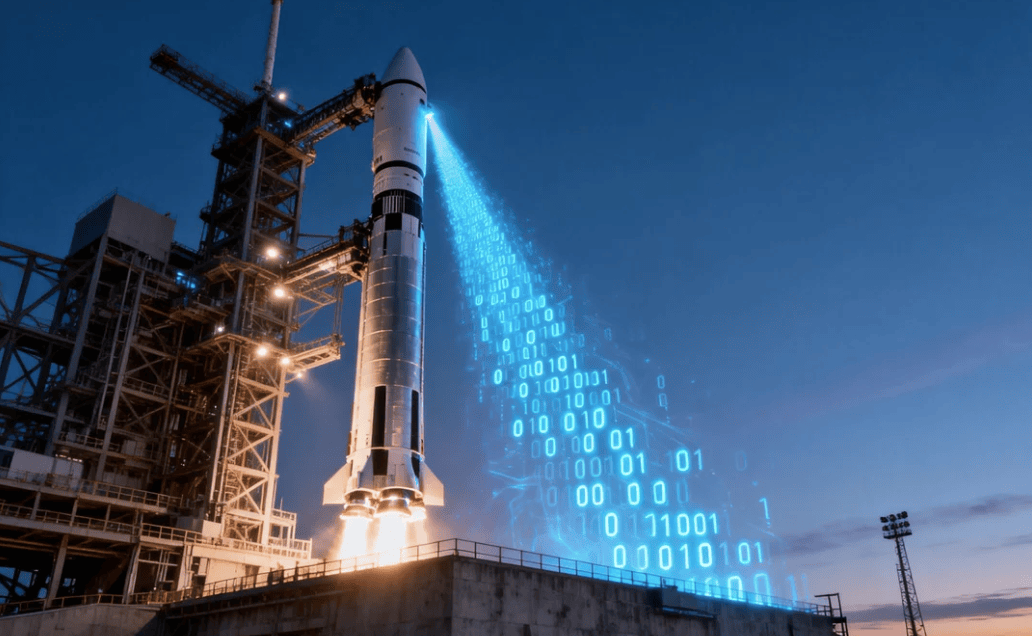
火箭回收大战背后,大航天时代已经拉开序幕
Xin Lang Cai Jing· 2026-01-04 11:30
Core Viewpoint - The article highlights the intense competition in the reusable rocket sector, particularly between Chinese companies and SpaceX, with significant advancements in technology and launch capabilities being made by both sides [1][22][41]. Group 1: Chinese Space Achievements - China achieved a record of 88 space launches in 2025, nearing the 100-launch milestone, with notable events including the successful emergency launch of Shenzhou 22 and a record of three launches in one day [1][21]. - The Long March 12甲 rocket successfully launched on December 23, becoming the first methane rocket from China's national team and the fifth globally to achieve this feat, although it did not succeed in its first-stage recovery [4][25]. Group 2: SpaceX Dominance - SpaceX continues to lead the industry with a record of 163 launches in 2025, including a monthly record of 15 launches in October and a successful launch of 29 satellites in one go on December 9 [1][21]. - The Falcon 9 rocket has achieved a record of 32 reuses, showcasing the effectiveness of its recovery technology [1][21]. Group 3: Reusable Rocket Developments - Blue Origin's New Glenn rocket successfully completed its second launch with first-stage recovery, marking it as the third rocket globally to achieve vertical landing after Falcon 9 and Falcon Heavy [2][23]. - The Blue Arrow Zhuque-3 rocket, despite a landing failure, is significant as China's first attempt at orbital rocket landing and the world's second stainless steel rocket [2][23]. Group 4: Market Dynamics and Future Prospects - The emergence of multiple Chinese reusable rockets, including Zhuque-3, Long March 12甲, and Tianlong-3, indicates a strategic move to compete directly with SpaceX's Falcon 9, targeting the high-demand market segment [9][30][31]. - The article emphasizes that the 10-20 ton rocket class is becoming the market's mainstay due to its ability to efficiently deploy multiple satellites and meet the growing demand for low Earth orbit satellite constellations [11][32][34]. Group 5: Strategic Implications - The competition in the reusable rocket sector is seen as a precursor to broader geopolitical and technological rivalries, with the potential for China to surpass the U.S. in space capabilities [20][41]. - The article suggests that the ongoing developments in reusable rockets are not just about technology but also about establishing a sustainable space economy and infrastructure for future advancements [19][40].

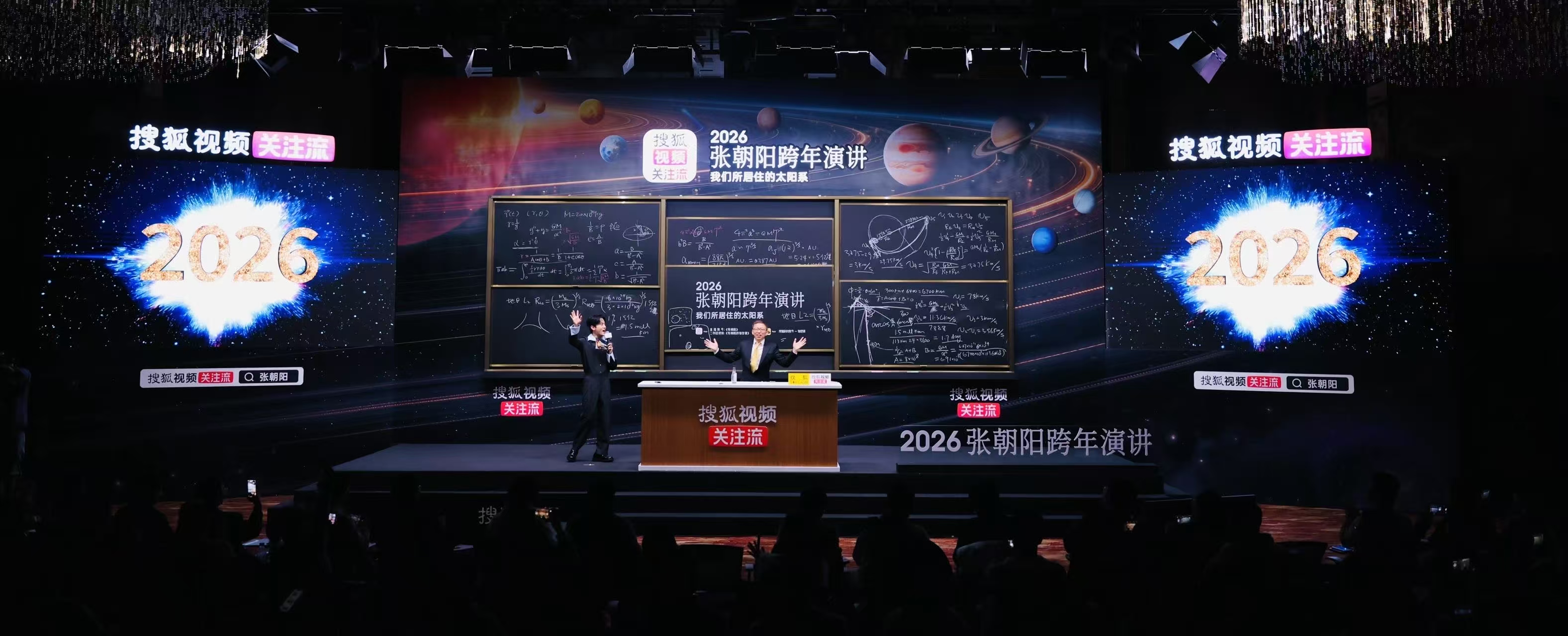
张朝阳2026跨年演讲:解码太阳系奥秘,用数理公式演算宇宙谜题
Jing Ji Wang· 2026-01-04 08:12
Core Viewpoint - The keynote speech by Zhang Chaoyang, founder and CEO of Sohu, focuses on the exploration of the solar system and its implications for human civilization, emphasizing the importance of understanding the laws governing the solar system as a key to understanding humanity's past and future [3][4]. Group 1: Solar System Exploration - The solar system operates under specific laws, and understanding these laws is crucial for humanity [4]. - Zhang Chaoyang describes the solar system as a "home" that is both distant and close, highlighting the need for exploration and understanding [4]. - The speech is characterized as a "archaeology" of the solar system, using Newton's laws as foundational principles to explore celestial mechanics [4][5]. Group 2: Human Advancement in Space - The development of AI and aerospace technology is propelling humanity towards a "multi-planet civilization" [3]. - Zhang outlines three key stages for human exploration beyond Earth: the escape phase dominated by Earth's gravity, the Hohmann transfer phase dominated by the Sun's gravity, and the capture phase dominated by Mars' gravity [6]. - The concept of Lagrange points is introduced as stable locations for deploying scientific instruments, such as the Webb Telescope [6]. Group 3: Educational Impact and Media Strategy - Zhang emphasizes the value of learning physics, which aids in understanding both macro phenomena like global warming and everyday experiences [9]. - The physics course has conducted 270 live sessions over four years, accumulating over 26,000 minutes of online content, contributing significantly to the knowledge base [9]. - The integration of traditional teaching with new media is seen as a meaningful approach to disseminating knowledge in the current digital age [9].
科技周报|国内最大DRAM存储芯片厂商冲刺科创板;智能眼镜首次进入国补范围
Di Yi Cai Jing· 2026-01-04 03:39
Group 1: Fire Engine as AI Cloud Partner - Fire Engine has officially become the exclusive AI cloud partner for the 2026 Spring Festival Gala of the Central Radio and Television Station [2] - The partnership will leverage cutting-edge multimodal large models and cloud computing technology to enhance the Gala's programs, online interactions, and video live streaming [2] - Fire Engine has provided technical support for Douyin's Spring Festival Gala live broadcasts over the past five years, demonstrating high concurrency capacity and stability [2] Group 2: Changxin Technology's IPO - Changxin Technology's IPO application has been accepted, aiming to raise 29.5 billion yuan [3] - The company has experienced continuous revenue growth over the past three years, but it is projected to incur significant losses exceeding 30 billion yuan from 2022 to 2024 [3] - As the largest DRAM manufacturer in China, Changxin holds a 3.97% global market share, but it still lags behind major international competitors [3] Group 3: Blue Arrow Aerospace's IPO - Blue Arrow Aerospace's IPO application has been accepted, with plans to raise 7.5 billion yuan [4] - The funds will be allocated for enhancing reusable rocket capacity and technology [4] - The company has reported increasing revenues but also significant net losses from 2022 to 2025 [4] Group 4: National Subsidy Policy for Smart Glasses - The 2026 national subsidy policy includes smart glasses for the first time, aiming to promote product innovation and market growth [7] - The subsidy for digital and smart products is set at 15% of the product price, with a cap of 500 yuan per item [7] - The inclusion of smart glasses is expected to lower consumer barriers and stimulate short-term sales, with projected significant growth in AR and AI glasses sales by 2025 [8] Group 5: Launch of 2026 National Subsidy - The 2026 national subsidy program officially commenced on January 1, with the first order successfully placed by a consumer in Guangzhou [9] - The program aims to enhance consumption convenience in rural areas and promote economic growth [9] - JD.com has committed to investing nearly 30 billion yuan to support the national subsidy initiative in rural areas [9]
开普勒三定律、潮汐力、轨道方程:张朝阳跨年演讲解析太阳系的内在秩序
Bei Jing Shang Bao· 2026-01-02 06:03
Core Viewpoint - The keynote speech by Zhang Chaoyang focuses on understanding the solar system and its significance for humanity's future, particularly in the context of advancing AI and space technology towards a multi-planetary civilization [1][3]. Group 1: Understanding the Solar System - The solar system operates under specific laws, with Newton's laws providing a framework for understanding planetary motion [3][4]. - Zhang emphasizes that the solar system is not distant and unknown but rather a familiar home that requires understanding [3][6]. - The exploration of celestial bodies has led to significant advancements in physics, with historical figures like Tycho Brahe and Kepler contributing to our understanding of planetary motion [3][4]. Group 2: The Role of Tidal Forces - Tidal forces play a crucial role in the behavior of moons and planets, affecting their orbits and physical characteristics [6][8]. - Zhang explains how tidal forces can lead to phenomena such as the synchronous rotation of the Moon and the volcanic activity on Io, one of Jupiter's moons [8][9]. Group 3: Human Exploration of Space - The speech outlines three key stages for human exploration beyond Earth, starting with Lagrange points, which are stable locations for deploying spacecraft [9][11]. - Mars is highlighted as a potential destination for human exploration due to its similarities to Earth, with a detailed explanation of the Hohmann transfer orbit for efficient travel [9][11]. - The Voyager missions are noted as significant milestones in humanity's exploration of the outer solar system, utilizing gravitational assists to increase speed [11][12]. Group 4: Scientific Foundation for Speculation - Zhang stresses the importance of grounding speculative ideas in solid scientific principles, particularly in discussions about future space colonization [12][14]. - The audience is encouraged to engage with scientific concepts before delving into speculative scenarios, ensuring a robust understanding of physics [14][15]. Group 5: Educational Impact and Engagement - The integration of traditional teaching with new media has proven effective, with Zhang's physics classes reaching a wide audience and contributing to public knowledge [15][17]. - The emphasis on rigorous mathematical foundations in science education is highlighted as essential for fostering a deeper understanding of complex topics [15][17].
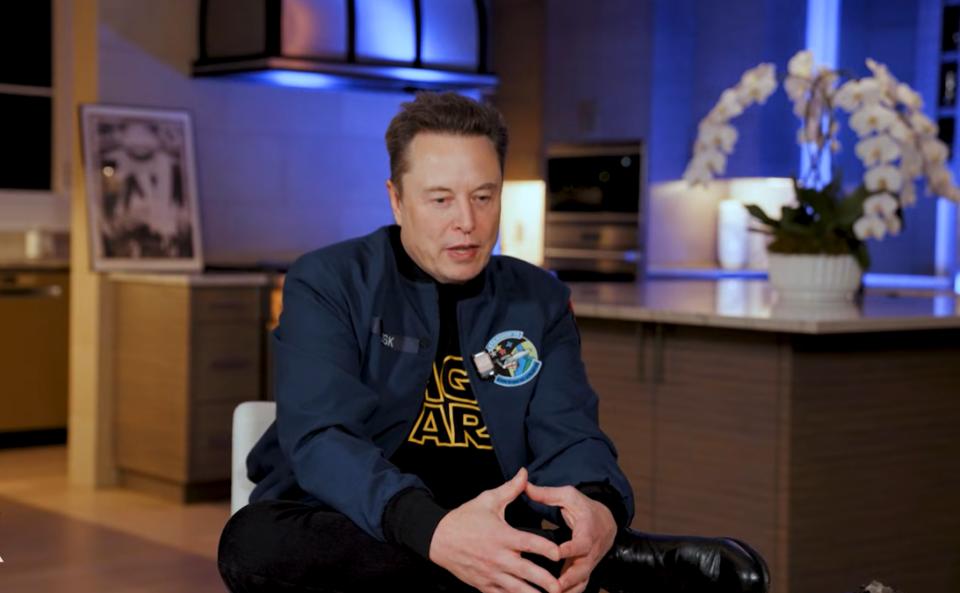
马斯克警告:AI将让我们集体“退休”,在火星上生活要比想象中更残酷
3 6 Ke· 2025-12-11 10:05
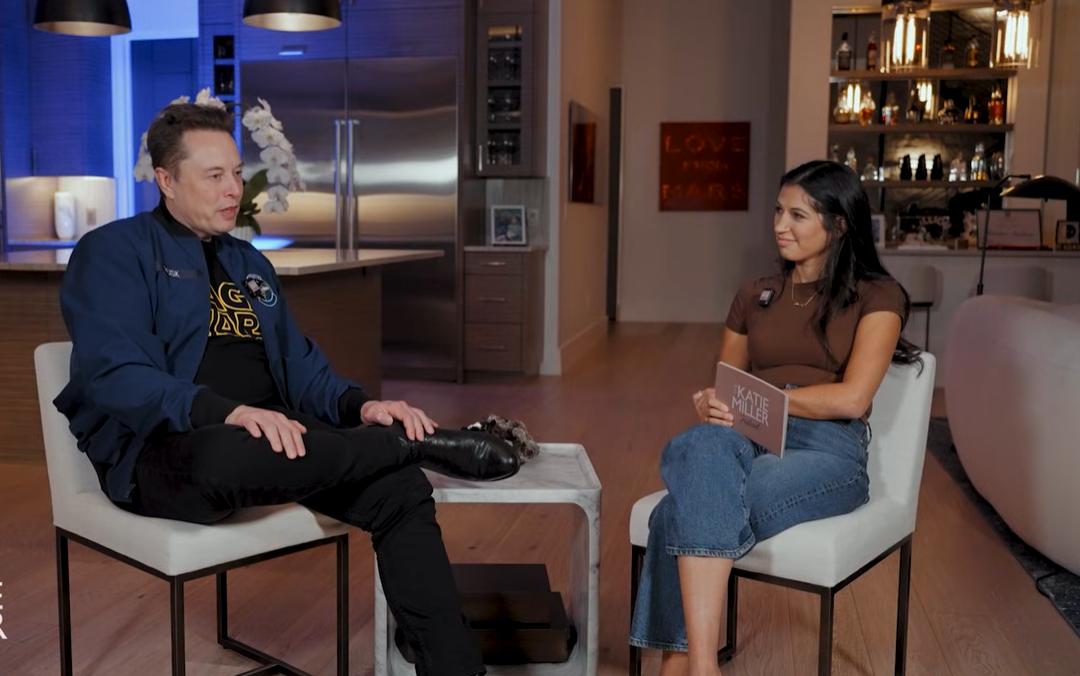
Group 1: AI and Work - Elon Musk predicts that advancements in AI and robotics may lead to a future where humans do not need to work for survival, making work a personal choice rather than a necessity [3][4] - He emphasizes that if current technological trends continue, AI and robots will be capable of fulfilling all production and service tasks, thus meeting societal needs without requiring human labor [3][4] Group 2: Daily Life and Information Management - Musk reveals that he averages about six hours of sleep per night and spends most of his time filtering information and prioritizing tasks [5][6] - He describes his daily routine as a continuous process of information selection and prioritization, which he manages through time-blocking techniques to minimize cognitive load [6] Group 3: Space Exploration and Mars Colonization - Musk clarifies that Mars is not a luxury escape for the wealthy but a high-risk, challenging "hardcore testing ground" for humanity [9][11] - He discusses the significance of the Starship project, which aims to create a fully reusable spacecraft, marking a potential turning point in human civilization [9][10] Group 4: Fashion and Cultural Stagnation - Musk expresses dissatisfaction with the stagnation in the fashion industry, noting that styles have not significantly evolved over the past decade [13][15] - He argues that the lack of innovation in fashion contrasts sharply with the distinct style waves of the 20th century [14] Group 5: Technology as a Double-Edged Sword - Musk identifies short videos as a potential threat to deep thinking, suggesting that they may erode cognitive abilities [24] - He warns against the development of technologies that could lead to the extinction of human consciousness, emphasizing the need for balance between danger and wonder in civilization's progress [26]
马斯克最新访谈:从AI、火星到短视频,思考“反常识”生存法则
3 6 Ke· 2025-12-10 11:16
Group 1: AI and Work - Elon Musk predicts that advancements in AI and robotics may lead to a future where humans do not need to work for survival, making work a choice rather than a necessity [4][5] - Musk emphasizes that while this is a potential outcome based on current trends, he personally wishes for a slower pace of technological development [4] Group 2: Daily Life and Information Management - Musk averages about six hours of sleep per night, with his daily routine focused on processing vast amounts of information and prioritizing tasks [7][8] - He notes that frequent context switching between different responsibilities can significantly impair cognitive efficiency [8] Group 3: Mars Colonization - Musk describes Mars not as a luxury escape for the wealthy but as a high-risk, challenging environment for human survival [11][14] - He emphasizes that early colonization of Mars will be dangerous and that the risks involved will be higher than those on Earth [14] Group 4: Technology as a Double-Edged Sword - Musk expresses concern that certain technologies, like short videos, may erode deep thinking abilities [25] - He warns against the potential emergence of technologies that could threaten human existence, such as a virus capable of wiping out all life [26] Group 5: Fashion and Cultural Stagnation - Musk critiques the fashion industry for its stagnation, noting a lack of significant evolution in styles over the past decade [15][17] - He calls for the creation of genuinely new design forms to revitalize the fashion landscape [16] Group 6: SpaceX and Starship Developments - Musk highlights the revolutionary potential of the Starship, which aims to be the first fully reusable spacecraft, marking a significant milestone in human space exploration [11][13] - He believes that the success of Starship could be viewed as a pivotal moment in human civilization's history [13] Group 7: Social Media and Reality - Musk discusses the dual nature of social media, which amplifies performative behavior while also revealing previously hidden truths [28]
马斯克新演讲:生命的意义是42!星舰必然有42台引擎!
Sou Hu Cai Jing· 2025-05-30 16:14
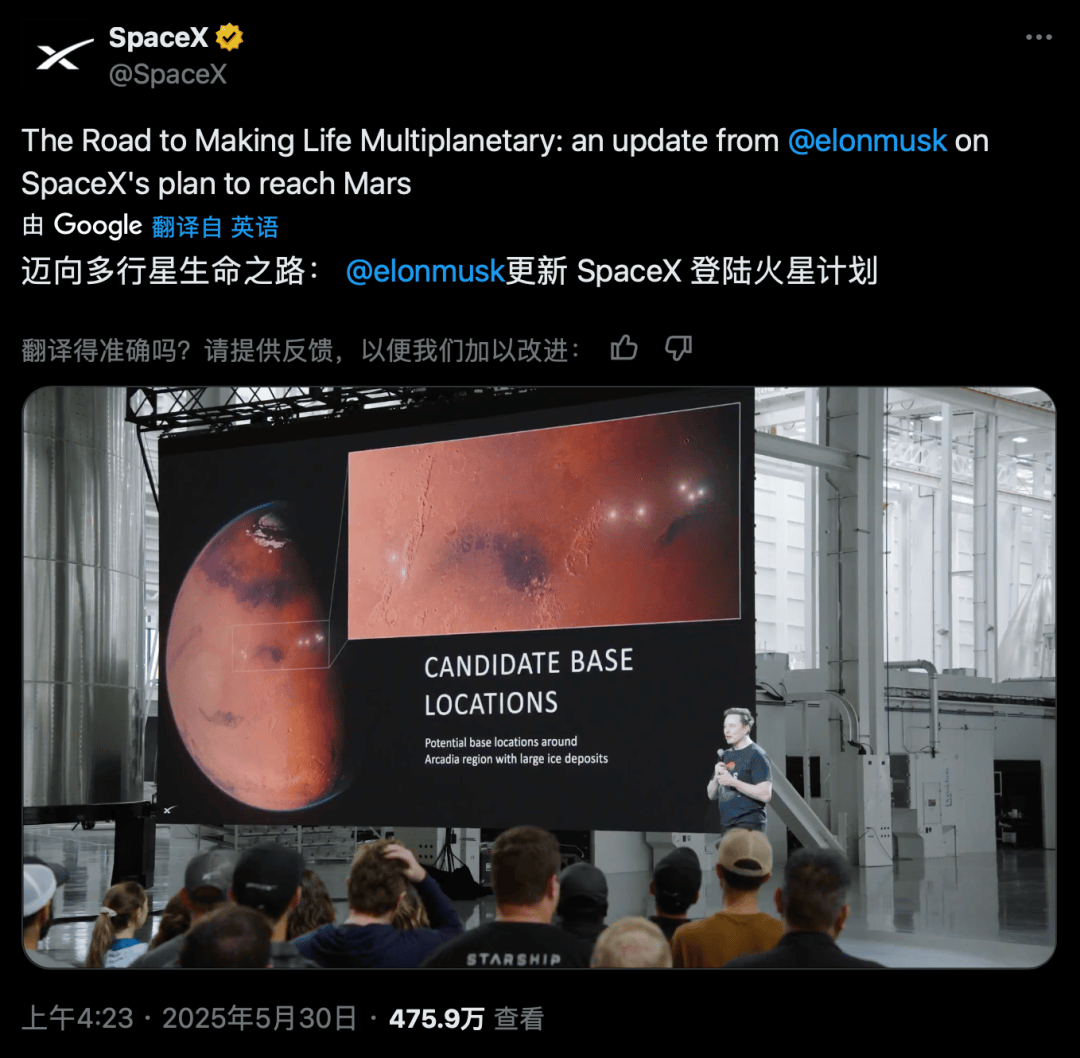
Core Viewpoint - SpaceX's vision for making life multiplanetary is outlined in Elon Musk's recent speech, emphasizing advancements in technology and ambitious plans for Mars colonization by 2045 [3][5][18]. Group 1: Starbase Development - Starbase, located in Texas, has transformed from a barren land into a significant aerospace city with two large launch pads and a massive rocket factory [7][10]. - The production goal at Starbase is to manufacture approximately 1,000 Starships annually, equating to about three Starships per day [10][14]. - SpaceX is also constructing a second "super factory" in Florida to support its production capabilities [14]. Group 2: Technological Innovations - The next-generation Raptor 3 engine is designed to be lighter and more reliable, eliminating the need for traditional heat shields [26]. - Orbital refueling technology is being developed, allowing one Starship to transfer fuel to another in orbit, which is crucial for long-distance missions [28]. - A reusable heat shield is under development, aiming to withstand the extreme conditions of re-entry, which has historically been a significant challenge [30]. Group 3: Mars Colonization Plans - The timeline for Mars colonization includes sending the first unmanned Starship to Mars by late 2026, with a goal of establishing a self-sustaining civilization on Mars [43][48]. - Approximately 100,000 tons of supplies are estimated to be needed to establish a sustainable presence on Mars, with the Arcadia region identified as a potential landing site [48][50]. - The first human missions to Mars are planned to follow successful robotic landings, with the aim of building infrastructure for a permanent settlement [52][54]. Group 4: Future Aspirations - SpaceX envisions a future where a multi-planetary civilization can thrive, potentially surviving catastrophic events on Earth [19]. - The ultimate goal is to create a new society on Mars, allowing for a rethinking of governance and civilization [55].
马斯克最新专访:我希望留下的遗产是“帮助推动文明进步”
3 6 Ke· 2025-05-06 12:11
Group 1: Tesla Developments - Tesla plans to release an unsupervised version of its Full Self-Driving (FSD) feature within a few months, with testing starting in Austin in June and rapid rollout across the U.S. [4] - The company aims for future manual driving to become as rare as horseback riding, indicating a significant shift in transportation norms [4] Group 2: Robotics and AI Innovations - Tesla is developing a humanoid robot named Optimus, which is expected to assist individuals in various tasks, representing a substantial market opportunity [4] - The AI system Grok has been developed to perform complex analyses accurately, emphasizing the importance of instilling a truth-seeking value in AI for safety [9] Group 3: SpaceX and Multiplanetary Goals - SpaceX focuses on rocket launches and Starlink internet operations, with ambitions to develop technologies that enable human survival on other planets, particularly Mars [6] Group 4: Neuralink's Medical Advancements - Neuralink is working on a brain-machine interface device called "Mind Reading," allowing paralyzed patients to control devices using thoughts, with current users able to communicate via the X platform [6] - A second device, "Blind Vision," aims to restore sight to blind individuals by connecting directly to the visual cortex, with initial surgeries expected within the next year [8] - The company is optimistic about enabling individuals with spinal cord injuries to regain mobility by bridging signals from the brain to damaged areas of the spine [8] Group 5: Legacy and Vision - The company aims to leave a legacy of advancing civilization, enhancing knowledge, and helping humanity understand the universe [11]