
青年美术人才培养

Search documents
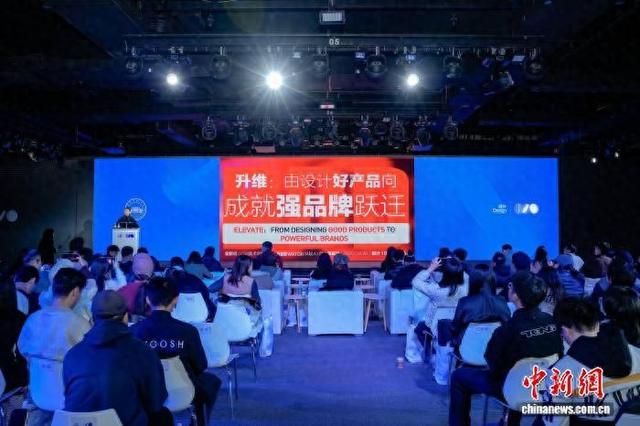
中国美术家协会青年设计人才培养计划“设计100”在穗启动
Xin Lang Cai Jing· 2025-12-27 03:17
Core Viewpoint - The "Design 100" project, initiated by the China Artists Association, aims to cultivate high-level design talents in response to national strategic needs and societal development trends [1][3]. Group 1: Project Overview - The "Design 100" project focuses on the design field and is hosted by the China Artists Association, with the China Federation of Literary and Art Circles' Art Center and Guangzhou Academy of Fine Arts as co-organizers [1][3]. - The project received 168 team applications from across the country, with a total of 623 participants, and selected 100 core members for training after a rigorous selection process [3]. Group 2: Training and Curriculum - The training program will run until December 28 and includes specialized lectures, theoretical studies, design thinking workshops, and field research to enhance participants' design thinking and industry insight [4]. - The curriculum is designed to align closely with industry demands, incorporating cutting-edge training concepts and high-quality practical platforms [3][4]. Group 3: Industry Collaboration - Guangzhou Academy of Fine Arts will leverage resources from the Guangdong-Hong Kong-Macao Greater Bay Area's quality industrial and supply chains to support the project [3]. - The project aims to transform high-quality creative ideas into viable innovative products and entrepreneurial projects [3].

培养美术英才 奋进高峰之路
Ren Min Ri Bao· 2025-05-04 21:52
Core Viewpoint - The article emphasizes the importance of cultivating young artistic talent in the context of China's cultural development and the need for high-quality growth in the art sector, particularly in the field of fine arts [1][2]. Group 1: High-Quality Development Needs - The construction of a culturally strong nation is a strategic support for the great rejuvenation of the Chinese nation, with the high-quality development of the fine arts being a crucial component [2]. - Young talents are seen as the driving force for artistic innovation, serving as both inheritors of traditional culture and shapers of contemporary spirit, thus enhancing international cultural discourse [2]. - Major art colleges play a pivotal role in transitioning from traditional skill teaching to innovative talent cultivation, with a focus on integrating traditional and emerging fields [2][3]. Group 2: Talent Training and Market Dynamics - In 2024, the proportion of applicants for emerging disciplines in the nine major art colleges reached 61.4%, an increase of 4.2% compared to previous years [3]. - The demand for digital art positions has a gap of 28%, indicating a structural contradiction in talent cultivation and industry needs [3]. - The employment distribution shows that 68.4% of graduates from the nine major art colleges are employed in the eastern region, while only 12.5% are in the western region, highlighting regional disparities [3]. Group 3: Youth Engagement and Membership Trends - The willingness of young individuals to join the China Artists Association has significantly increased, with 39.46% of new national members being young artists [4]. - The proportion of new artistic groups among national members rose from 12.08% to 19.87% over the past five years, indicating a shift towards a more vibrant and innovative artistic community [4]. Group 4: Mechanism Innovation and Support Programs - The China Federation of Literary and Art Circles and the China Artists Association have implemented various support projects to create a systematic and professional talent training mechanism [7]. - The "Youth Literary Creation Support Program" has funded over 478 projects with more than 59 million yuan, with 45% of the projects aimed at new artistic groups [7]. - The "National Youth Art Exhibition" serves as a talent incubation platform, with over 60% of participants advancing to provincial-level associations or teaching positions [8]. Group 5: Future Directions and Systematic Reform - The article calls for a systematic approach to reforming talent cultivation mechanisms, encouraging art colleges to break down barriers and adopt interdisciplinary training models [9]. - It emphasizes the need for industry organizations to improve connections and incentive mechanisms, allowing young talents to take on significant roles [9]. - A cultural ecosystem that respects artistic laws and embraces diverse innovations is essential for the integration of youth creativity with national aspirations [9].