青藏高原第三次环境转型

Search documents
“铁打”的人,在“第三极”干最“硬核”的事
Xin Lang Cai Jing· 2026-01-15 14:19
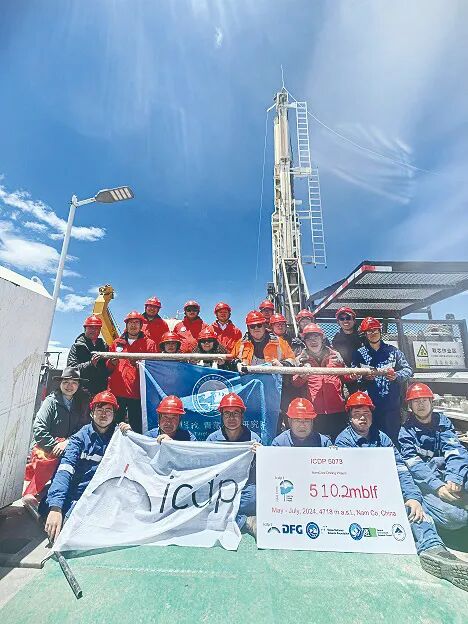
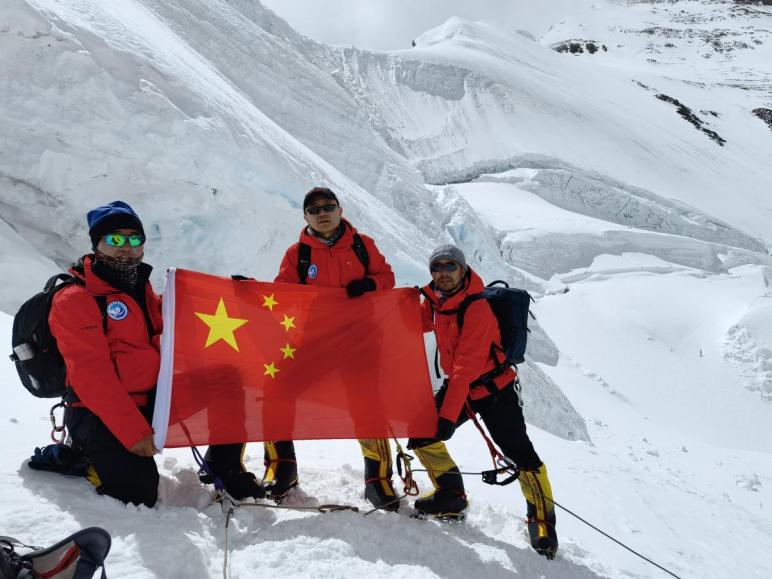
Core Insights - The second comprehensive scientific expedition to the Tibetan Plateau, initiated in 2017, has significantly advanced China's research capabilities, transitioning from a "follower" to a "leader" in this field [2][3] - The expedition has involved over 3,000 research teams and more than 7,000 researchers, focusing on ecological protection and sustainable development [2][3] - The expedition has produced groundbreaking results, including the longest mountain ice core record of 324 meters, and has established new benchmarks for scientific research in extreme environments [5][9] Group 1: Expedition Overview - The second Tibetan Plateau scientific expedition began in August 2017, led by the Chinese Academy of Sciences, and has involved collaboration among 222 research institutions and universities [3] - Over eight years, the expedition has organized more than 3,000 teams and over 30,000 personnel, achieving multiple historical records [4] - Significant achievements include the establishment of the highest automatic weather station on Mount Everest and the first high-resolution measurements of snow and ice thickness at the summit [4] Group 2: Key Findings and Innovations - The expedition has confirmed that the water storage capacity of the Asian water tower is dynamically increasing, equivalent to the total runoff of the Yellow River over 200 years [9] - More than 3,000 new species have been discovered, including rare and previously thought extinct species, filling gaps in microbial research [9] - The expedition has developed a fully domestically controlled technology system for scientific research, exemplified by the "Extreme Eye" tethered balloon, which set a world record for atmospheric observation at 9,050 meters [8] Group 3: Applications and Policy Impact - The expedition has supported the legislative process for the "Tibetan Plateau Ecological Protection Law" and has guided the construction of national parks [10] - It has provided critical data for disaster prevention and resource exploration, identifying 33 target areas for mineral exploration and 110 potential lithium brine sites [10] - The research has established a comprehensive observation and early warning platform for glacier collapse and other natural disasters [10] Group 4: Future Directions - The second expedition is viewed as a new starting point, with ongoing research needed to address the challenges posed by climate change and human activity on the Tibetan Plateau [12] - The region is experiencing significant warming, with a rate of 0.37 degrees Celsius per decade, which is double the global average [12] - Future research will focus on balancing the opportunities and risks associated with the changing environment, aiming for sustainable development in the region [13]

第二次青藏科考:青藏高原还能再养活1307万人
Guan Cha Zhe Wang· 2025-11-25 11:40
Core Insights - The second comprehensive assessment of the Qinghai-Tibet Plateau indicates a potential carrying capacity of approximately 26.2 million residents, allowing for an increase of about 13.07 million from the current population of 13.13 million, highlighting significant development potential [1] - The research focuses on addressing major national strategic needs and has produced over 140 decision-making reports to support sustainable development in the region [1][2] Group 1: Research Achievements - The second Qinghai-Tibet scientific expedition has established a comprehensive observation network covering 19 key areas, integrating "air-space-ground" monitoring to facilitate a closed-loop transformation from science to policy to practice [2] - The urbanization rate of the Qinghai-Tibet Plateau is approximately 48%, with a potential increase of 9.67%, leading to a proposed urban development model based on "small gathering and large dispersal" [4] - The expedition has identified 10 differentiated green development models to support unique urbanization in the plateau [4] Group 2: Disaster Prevention and Ecological Protection - A multi-dimensional technological support system has been established, successfully issuing six warnings for ice avalanche disasters and optimizing transportation routes to avoid over 97% of mountain hazards [5] - The expedition has assessed the carbon sink capacity of the Qinghai-Tibet Plateau, estimating an annual carbon sink of 120 to 140 million tons, significantly exceeding local carbon emissions of about 55 million tons [5] Group 3: Biodiversity and Resource Exploration - The expedition has published over 3,000 new species, including 388 plants and 205 animals, and has created the largest glacier virus and bacteria gene collection globally [6] - In resource exploration, the expedition has identified 40 solid mineral prospecting areas and 110 brine lithium prospecting areas, alleviating reliance on foreign resources [7][8] Group 4: Environmental Transformation and Future Directions - The Qinghai-Tibet Plateau is undergoing a "third environmental transformation," characterized by global warming and human activities, with an increase in temperature at a rate of 0.37 degrees Celsius every decade, double the global average [9][10] - Future research will focus on green and livable development under the new environmental transformation, addressing water-carbon-health interactions and ensuring the safety of strategic mineral and biological resources [11][13]