第二次青藏高原综合科学考察研究

Search documents
“铁打”的人,在“第三极”干最“硬核”的事
Xin Lang Cai Jing· 2026-01-15 14:19
Core Insights - The second comprehensive scientific expedition to the Tibetan Plateau, initiated in 2017, has significantly advanced China's research capabilities, transitioning from a "follower" to a "leader" in this field [2][3] - The expedition has involved over 3,000 research teams and more than 7,000 researchers, focusing on ecological protection and sustainable development [2][3] - The expedition has produced groundbreaking results, including the longest mountain ice core record of 324 meters, and has established new benchmarks for scientific research in extreme environments [5][9] Group 1: Expedition Overview - The second Tibetan Plateau scientific expedition began in August 2017, led by the Chinese Academy of Sciences, and has involved collaboration among 222 research institutions and universities [3] - Over eight years, the expedition has organized more than 3,000 teams and over 30,000 personnel, achieving multiple historical records [4] - Significant achievements include the establishment of the highest automatic weather station on Mount Everest and the first high-resolution measurements of snow and ice thickness at the summit [4] Group 2: Key Findings and Innovations - The expedition has confirmed that the water storage capacity of the Asian water tower is dynamically increasing, equivalent to the total runoff of the Yellow River over 200 years [9] - More than 3,000 new species have been discovered, including rare and previously thought extinct species, filling gaps in microbial research [9] - The expedition has developed a fully domestically controlled technology system for scientific research, exemplified by the "Extreme Eye" tethered balloon, which set a world record for atmospheric observation at 9,050 meters [8] Group 3: Applications and Policy Impact - The expedition has supported the legislative process for the "Tibetan Plateau Ecological Protection Law" and has guided the construction of national parks [10] - It has provided critical data for disaster prevention and resource exploration, identifying 33 target areas for mineral exploration and 110 potential lithium brine sites [10] - The research has established a comprehensive observation and early warning platform for glacier collapse and other natural disasters [10] Group 4: Future Directions - The second expedition is viewed as a new starting point, with ongoing research needed to address the challenges posed by climate change and human activity on the Tibetan Plateau [12] - The region is experiencing significant warming, with a rate of 0.37 degrees Celsius per decade, which is double the global average [12] - Future research will focus on balancing the opportunities and risks associated with the changing environment, aiming for sustainable development in the region [13]

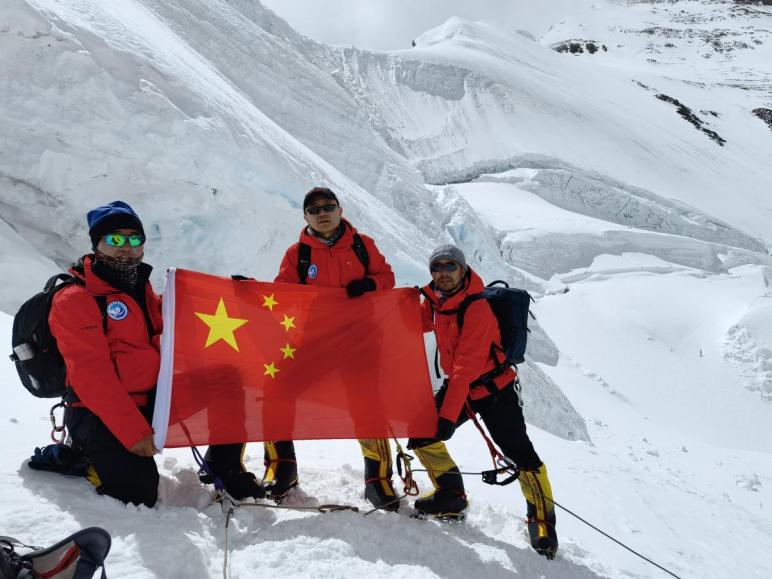
方小敏:“了解青藏高原的过去,才能预判地球的未来”
Ke Ji Ri Bao· 2025-12-25 07:05
Core Insights - The article discusses the "Three Polar Interaction" theory proposed by Fang Xiaomin, which emphasizes the interconnectedness of the Tibetan Plateau, North Pole, and South Pole in influencing global climate change [3][4][12]. Group 1: Three Polar Interaction Theory - The "Three Polar Interaction" theory posits that the Tibetan Plateau, North Pole, and South Pole form a dynamic system through atmospheric-oceanic circulation and carbon cycling, impacting the formation of mineral resources and landforms in Asia [3][4]. - The theory suggests that the continuous uplift of the Tibetan Plateau acts as a "super engine" for global climate regulation, affecting the ice caps in the polar regions [3][4]. Group 2: Mechanisms of Influence - The Tibetan Plateau influences the polar regions through two key pathways: the "Dust-Carbon Effect" and the "Chemical Weathering-Carbon Cycle" effect [4][5]. - The "Dust-Carbon Effect" involves the uplift of the Tibetan Plateau leading to increased aridity in Asia, which generates dust that promotes phytoplankton growth in the North Pacific, resulting in a decrease in atmospheric CO2 and global cooling [4]. - The "Chemical Weathering-Carbon Cycle" effect describes how increased rainfall due to the uplift enhances chemical weathering processes, converting CO2 into bicarbonate ions and facilitating long-term carbon storage in the ocean [5]. Group 3: Biodiversity and Evolution - The uplift of the Tibetan Plateau has not only reshaped the natural environment but also driven evolutionary processes, with evidence suggesting that some modern African savanna animals originated from adaptations in the Tibetan Plateau [7][8]. - The Tibetan Plateau serves as a "training camp" for species that later migrated to polar regions, equipping them with survival skills for extreme environments [8]. Group 4: Scientific Research and Applications - The second comprehensive scientific expedition to the Tibetan Plateau has shifted its focus from basic data collection to understanding changes, mechanisms, and strategies for sustainable development [9][10]. - Significant achievements include the publication of 245 high-level papers and the submission of over 110 advisory reports to government bodies, contributing to ecological protection laws and disaster risk management [10][11]. Group 5: Climate Change and Global Impact - The Tibetan Plateau is currently experiencing profound changes characterized by warming and increased humidity, leading to glacier retreat and permafrost degradation, which pose long-term challenges for water resource security [12][13]. - Addressing climate change requires a holistic approach, emphasizing the importance of protecting the Tibetan Plateau as a critical component of global climate stability [13][14].
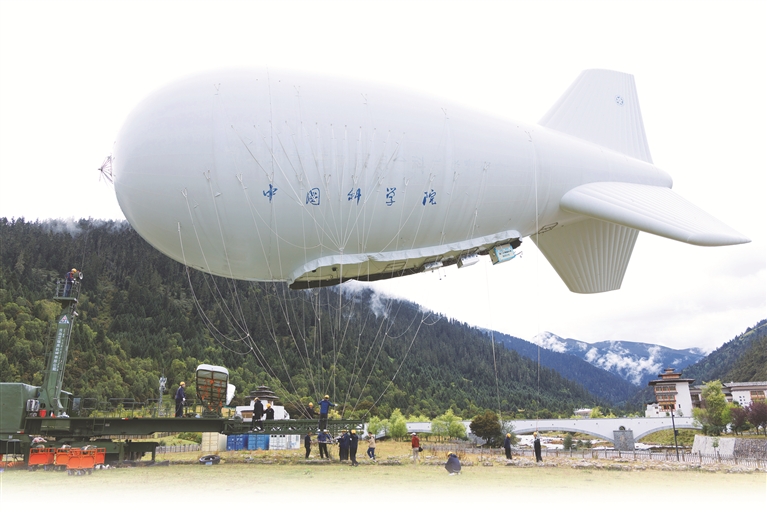
走近大国重器 | 高原云端“大白鲸”探访“极目一号”系列浮空艇
Zhong Yang Ji Wei Guo Jia Jian Wei Wang Zhan· 2025-11-24 00:17
Core Insights - The second comprehensive scientific investigation of the Qinghai-Tibet Plateau, emphasized by General Secretary Xi Jinping, aims to reveal environmental changes and optimize ecological security systems, significantly impacting sustainable development and global ecological protection [1][9]. Group 1: "极目一号" Airship Development - The "极目一号" series airships, led by the Aerospace Information Innovation Research Institute, have played a crucial role in the second scientific investigation since 2017, achieving multiple records and continuous upgrades over eight years of high-altitude testing [2][10]. - The "极目一号" airship has a length of 39 meters and a volume of 3000 cubic meters, with the smallest model used in recent atmospheric observation tests [9]. Group 2: Atmospheric Observation Tests - During the atmospheric observation tests in Lulang, the "极目一号" airship carried 16 types of observation payloads weighing approximately 200 kilograms, reaching an altitude of 5500 meters and completing 40 flight validations [5][10]. - The tests provided critical data for understanding climate change in the plateau region, supporting dynamic monitoring and sustainable development in sensitive areas [5][6]. Group 3: Technological Innovations - The airship team has developed a fully controllable technology system through iterative improvements, addressing challenges such as extreme cold, strong winds, and low pressure [11][12]. - Over the past five years, the team has applied for more than 60 patents related to airship technology, enhancing innovation and providing a solid foundation for advancements in the field [14]. Group 4: Applications and Future Prospects - The "极目一号" airship is positioned as a versatile platform for various applications, including scientific observation, emergency communication, and ecological monitoring, demonstrating significant advantages over traditional aircraft [15][16]. - The airship technology is expected to drive upgrades in related industries, with successful applications in diverse scenarios such as grassland monitoring and maritime communication [17][20].