
频谱资源

Search documents
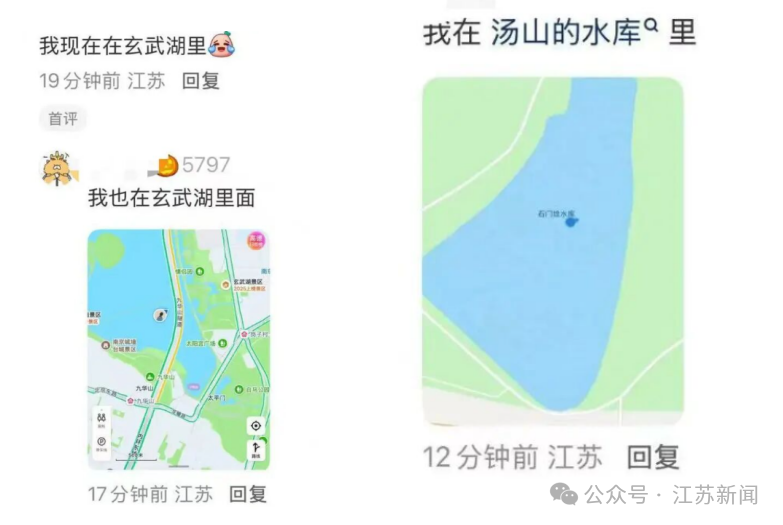
“人在家中坐,定位在玄武湖”,导航集体失灵?南京卫星协会发布说明
Xin Jing Bao· 2025-12-19 12:44
Core Viewpoint - The navigation signal anomaly in Nanjing on December 17, 2025, was caused by temporary interference affecting GNSS satellite signals, specifically targeting the civilian frequencies of Beidou and GPS, rather than a network signal interruption [2][3][4]. Group 1: Technical Analysis - Offline maps cannot resolve the navigation anomaly as the core issue is the interference of GNSS signals, which cannot be substituted by stored geographic data [2][3]. - The navigation system requires signals from at least four GNSS satellites to determine location coordinates, indicating that positioning signals and map data are independent systems [2][3]. - The interference specifically targeted the civilian frequency bands of Beidou and GPS, leading to unrecognized positioning signals, resulting in navigation failures even with offline maps [2][3]. Group 2: Strategic Significance - The simultaneous impact on both Beidou and GPS signals during the anomaly validates the strategic foresight of China's Beidou system in planning its civilian frequency bands [3][4]. - The compatibility of Beidou's civilian signal (B1C band) with GPS's civilian signal (L1C band) not only breaks the spectrum resource blockade but also creates a strategic balance where interference with Beidou also affects GPS [3][4]. - This design serves as a deterrent against malicious interference, as any disruption to Beidou's civilian signals will simultaneously impact GPS applications, thereby enhancing the security of China's civilian navigation services [3][4]. Group 3: Military Frequency Resilience - The signal anomaly only affected civilian GNSS frequencies, while Beidou's military frequencies remained unaffected due to their separation from civilian bands [4][5]. - The military system employs advanced anti-jamming technologies, ensuring robust resistance to interference and deception [4][5]. - The independence and resilience of Beidou's military frequencies provide stable and reliable time-space services for national defense and emergency support, unaffected by the civilian signal disruptions [4][5]. Group 4: Industry Response - The Nanjing Satellite Application Industry Association will continue to monitor industry developments and share professional knowledge on satellite navigation technology to enhance public understanding [4][5]. - The association encourages relevant enterprises to participate in discussions and will waive membership fees to facilitate communication between businesses and the government [5].

豪掷170亿美元收购频谱!SpaceX的天基通信野心与战略棋局
智通财经网· 2025-09-10 06:57
Core Viewpoint - SpaceX has made a significant move in the spectrum resource competition by agreeing to acquire a large amount of wireless spectrum from EchoStar for $17 billion, signaling its intent to dominate the satellite-to-mobile communication market [1] Group 1: Acquisition Details - The acquisition involves a payment structure of $8.5 billion in cash and $8.5 billion in SpaceX stock, focusing on the scarce resource of spectrum [1] - The Federal Communications Commission (FCC) oversees the allocation of spectrum, which is limited and requires coordination to avoid signal interference [1] Group 2: Regulatory Framework - In 2024, the FCC approved a new regulatory framework called "Supplemental Coverage from Space" (SCS), allowing satellite operators to collaborate with terrestrial operators to use existing mobile communication spectrum as a secondary service [2] - This framework facilitates SpaceX's acquisition by providing a compliant pathway for satellite operators to access terrestrial communication networks [2] Group 3: Market Positioning - SpaceX's core business is rocket and satellite manufacturing, and to reach millions of consumers, it will rely on partnerships with mobile hardware manufacturers and communication operators [3] - CEO Elon Musk has plans to develop a smartphone through another company, X, which may increase SpaceX's leverage in negotiations with companies like Apple [3] Group 4: Competitive Landscape - SpaceX has previously demonstrated its strength in spectrum acquisition, including a long-term negotiation with EchoStar's subsidiary Dish to secure the 12 GHz band for Starlink [4] - The company has also raised objections regarding underutilized frequency bands and has been a key player in pushing the FCC to reassess satellite spectrum sharing rules [4]