
抗干扰技术

Search documents
北斗星通(002151.SZ):公司本身具备抗干扰基数和相关产品
Ge Long Hui· 2025-12-30 01:17
Core Viewpoint - The company, Beidou Star Communication (002151.SZ), indicates that the recent navigation failure incident in Nanjing has heightened user awareness regarding anti-jamming capabilities, potentially increasing demand for its anti-jamming chips and antennas. However, the high cost of current anti-jamming technologies may limit their application to specific scenarios, with large-scale civilian use unlikely in the short term [1]. Group 1 - The company possesses anti-jamming capabilities and relevant products [1] - The navigation failure incident has led to increased user focus on anti-jamming capabilities [1] - Demand for anti-jamming chips and antennas may rise as a result of heightened awareness [1] Group 2 - Current anti-jamming technologies and products are still relatively expensive [1] - The application of these technologies may be restricted to specific use cases [1] - Large-scale civilian adoption of anti-jamming solutions is unlikely in the near term [1]

“人在家中坐,定位在玄武湖”,导航集体失灵?南京卫星协会发布说明
Xin Jing Bao· 2025-12-19 12:44
Core Viewpoint - The navigation signal anomaly in Nanjing on December 17, 2025, was caused by temporary interference affecting GNSS satellite signals, specifically targeting the civilian frequencies of Beidou and GPS, rather than a network signal interruption [2][3][4]. Group 1: Technical Analysis - Offline maps cannot resolve the navigation anomaly as the core issue is the interference of GNSS signals, which cannot be substituted by stored geographic data [2][3]. - The navigation system requires signals from at least four GNSS satellites to determine location coordinates, indicating that positioning signals and map data are independent systems [2][3]. - The interference specifically targeted the civilian frequency bands of Beidou and GPS, leading to unrecognized positioning signals, resulting in navigation failures even with offline maps [2][3]. Group 2: Strategic Significance - The simultaneous impact on both Beidou and GPS signals during the anomaly validates the strategic foresight of China's Beidou system in planning its civilian frequency bands [3][4]. - The compatibility of Beidou's civilian signal (B1C band) with GPS's civilian signal (L1C band) not only breaks the spectrum resource blockade but also creates a strategic balance where interference with Beidou also affects GPS [3][4]. - This design serves as a deterrent against malicious interference, as any disruption to Beidou's civilian signals will simultaneously impact GPS applications, thereby enhancing the security of China's civilian navigation services [3][4]. Group 3: Military Frequency Resilience - The signal anomaly only affected civilian GNSS frequencies, while Beidou's military frequencies remained unaffected due to their separation from civilian bands [4][5]. - The military system employs advanced anti-jamming technologies, ensuring robust resistance to interference and deception [4][5]. - The independence and resilience of Beidou's military frequencies provide stable and reliable time-space services for national defense and emergency support, unaffected by the civilian signal disruptions [4][5]. Group 4: Industry Response - The Nanjing Satellite Application Industry Association will continue to monitor industry developments and share professional knowledge on satellite navigation technology to enhance public understanding [4][5]. - The association encourages relevant enterprises to participate in discussions and will waive membership fees to facilitate communication between businesses and the government [5].

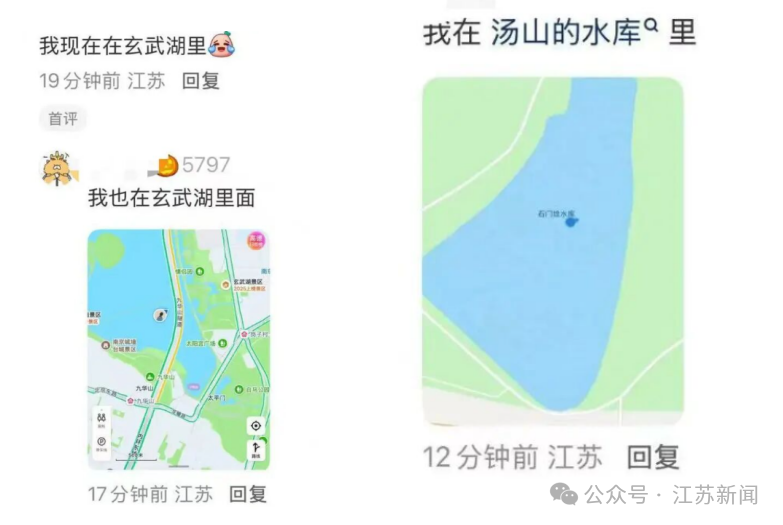
南京导航集体失灵,原因公布
证券时报· 2025-12-19 12:39
Core Viewpoint - The article discusses the navigation signal anomalies in Nanjing on December 17, 2025, clarifying the technical reasons behind the issue and emphasizing the strategic significance of the Beidou and GPS systems' compatibility [2][5]. Technical Analysis - Offline maps cannot resolve the navigation anomaly as the core issue is the temporary interference of GNSS satellite signals (including Beidou and GPS), not a network signal interruption [3]. - The core function of offline maps is to store geographic data, which only addresses the "map display" issue and cannot replace the positioning signal source [4]. - Mobile navigation relies on GNSS satellite signals (at least 4 satellites) to calculate position coordinates, and the positioning signal and map data are independent systems [4]. - The interference specifically targeted the civilian frequency bands of Beidou and GPS, preventing the positioning signal from being recognized by receivers, leading to issues like positioning drift and lack of data feedback, making effective navigation impossible [4]. Strategic Significance - The simultaneous impact on Beidou and GPS signals during the anomaly validates the forward-looking strategic vision of China's Beidou system's civilian frequency band planning [5]. - The international satellite navigation spectrum resources follow a "first come, first served" rule, with GPS having occupied core L-band resources early on, leaving limited quality spectrum for Beidou [6]. - Under the framework of the International Telecommunication Union, the compatibility of Beidou's civilian signal (B1C band) with GPS's civilian signal (L1C band) breaks the spectrum resource blockade and creates a strategic balance where interference with Beidou also affects GPS [6]. - Given the military ties of the U.S. and EU, NATO systems also rely on GPS signals, making this frequency compatibility a significant strategic deterrent against malicious interference [6]. Military Frequency Resilience - The signal anomaly only affected civilian GNSS frequency bands, while Beidou's military frequency remains unaffected [7]. - Beidou employs a military-civilian frequency separation design, with military frequencies being exclusive and confidential, physically isolated from civilian bands [7]. - The military system incorporates full digital anti-jamming technology and adaptive intelligent filtering algorithms, enabling precise identification and filtering of interference signals, thus possessing strong anti-jamming and anti-deception capabilities [7]. - The independence and anti-jamming capabilities of Beidou's military frequency provide stable and reliable time-space services for national defense security and emergency support in critical areas, unaffected by the civilian signal interference [7].

南京导航集体失灵,“本次干扰精准针对北斗、GPS民用频段”
Xin Lang Cai Jing· 2025-12-19 12:14
Core Viewpoint - The navigation signal anomaly in Nanjing on December 17, 2025, was caused by temporary interference with GNSS satellite signals, not by a network signal interruption, highlighting the limitations of offline maps in resolving such issues [1][2]. Technical Analysis - Offline maps only store geographic data and cannot replace the source of positioning signals, which rely on GNSS satellite signals from at least four satellites [2] - The interference specifically targeted the civilian frequency bands of Beidou and GPS, preventing the reception of positioning signals, leading to issues like position drift and lack of data feedback even with offline maps [2] - Offline maps are more suitable for areas with satellite positioning signals but without communication network signals, such as oceans or remote mountains [2] Strategic Significance of Beidou and GPS Compatibility - The simultaneous impact on both Beidou and GPS signals during the anomaly validates the strategic foresight of China's Beidou system in planning its civilian frequency bands [3] - The international satellite navigation spectrum follows a "first come, first served" rule, with GPS having occupied core L-band resources early on, leaving limited quality spectrum for Beidou [3] - The compatibility of Beidou's civilian signal (B1C band) with GPS's civilian signal (L1C band) breaks the spectrum resource blockade and creates a strategic balance, where interference with Beidou also affects GPS applications [3] Military Frequency Resilience - The signal anomaly only affected civilian GNSS frequency bands, while Beidou's military frequencies remained unaffected [4] - Beidou employs a military-civilian frequency separation design, with military frequencies being exclusive and physically isolated from civilian bands [4] - The military system incorporates advanced anti-jamming technologies, ensuring strong resilience against interference and deception, providing stable and reliable time-space services for national defense and emergency response [4] Industry Response - The Nanjing Satellite Application Industry Association will continue to monitor industry dynamics and share professional knowledge on satellite navigation technology to enhance public understanding [5] - The association aims to facilitate communication between enterprises and the government, encouraging participation from relevant companies without membership fees [5]
南京区域导航失灵,原因公布
Huan Qiu Wang· 2025-12-19 12:13
Core Viewpoint - The navigation signal anomaly in Nanjing on December 17, 2025, was caused by temporary interference affecting GNSS satellite signals, not by network signal disruption [1] Technical Analysis - Offline maps cannot resolve the navigation anomaly as they only store geographic data and do not replace the need for positioning signals [2] - Mobile navigation relies on GNSS satellite signals (at least 4 satellites) to calculate position coordinates, making positioning signals and map data independent systems [2] - The interference specifically targeted the civilian frequency bands of Beidou and GPS, preventing the receiver from recognizing the positioning signals, leading to issues like position drift and lack of data feedback [2] Strategic Significance of Beidou and GPS Compatibility - The simultaneous impact on Beidou and GPS signals during the anomaly validates the strategic foresight of China's Beidou system in planning civilian frequency bands [3] - The international satellite navigation spectrum follows a "first come, first served" rule, with GPS having occupied core L-band resources early on, leaving limited quality spectrum for Beidou [3] - The compatibility of Beidou's civilian signal (B1C band) with GPS's civilian signal (L1C band) breaks the spectrum resource blockade and creates a strategic balance where interference with Beidou also affects GPS [3] Military Frequency Resilience - The signal anomaly only affected civilian GNSS frequency bands, while Beidou's military frequencies remained unaffected [4] - Beidou employs a military-civilian frequency separation design, with military frequencies being exclusive and physically isolated from civilian bands [4] - The military system incorporates advanced anti-jamming technologies, ensuring strong resilience against interference and deception [4] Industry Engagement - The Nanjing Satellite Application Industry Association will continue to build communication bridges between enterprises and the government, encouraging active participation from relevant companies [5]
七一二(603712):研发坚定投入,静待需求复苏
Changjiang Securities· 2025-09-12 08:15
Investment Rating - The investment rating for the company is "Buy" and is maintained [8]. Core Views - The company is experiencing a temporary decline in performance due to fluctuations in industry customer demand, leading to lower-than-expected order deliveries. The absolute amount of R&D expenses remains high, and prudent impairment loss provisions have resulted in a net loss [2][6]. - In the first half of 2025, the company achieved operating revenue of 631 million yuan, a year-on-year decrease of 47.49%, and a net profit loss attributable to the parent company of 114 million yuan, a year-on-year decrease of 270.67% [6][13]. - The company continues to invest in R&D to maintain its technological leadership, with R&D expenses in the first half of 2025 amounting to 212 million yuan, a decrease of 8.31% year-on-year, but the R&D expense ratio reached a historical high of 33.58% due to declining revenue [13]. Summary by Sections Financial Performance - The company reported a significant decline in revenue and net profit in the first half of 2025, with Q2 revenue at 415 million yuan, down 41.73% year-on-year, and a net profit loss of 60 million yuan, down 217.94% year-on-year [6][13]. - The company’s R&D expenses are projected to be 454 million yuan in 2025, with a decreasing trend in the following years, while the net profit is expected to recover to 88 million yuan in 2026 and 198 million yuan in 2027 [18]. R&D and Innovation - The company emphasizes innovation as a top priority, focusing on the development of basic product components and key technologies. It has made significant progress in military communication projects, including winning bids for helicopter and swarm projects, marking a breakthrough in swarm data link applications [13]. - The company is also advancing in ground communication projects, collaborating with domestic universities to enhance anti-jamming technology, which is crucial for communication security in complex electromagnetic environments [13]. Earnings Forecast and Valuation - The company is expected to achieve net profits of 88 million yuan, 198 million yuan, and 314 million yuan for the years 2025, 2026, and 2027, respectively, with corresponding PE ratios of 191, 85, and 53 times [13].
