
风光火热储一体化

Search documents
我国首个“沙戈荒”新能源外送基地进入全容量并网发电冲刺阶段
Ren Min Ri Bao· 2025-12-03 07:57
Core Viewpoint - The "Shagohuang" renewable energy export base in Hami, Xinjiang, is entering the final stage of full-capacity grid-connected power generation, with over 70% of its installed capacity coming from renewable sources [1][3]. Group 1: Project Overview - The "Shagohuang" renewable energy base covers an area of approximately 1,651 square kilometers and has a total installed capacity of 14.2 million kilowatts [3]. - The project employs a "wind-solar-thermal-storage integrated" model, allowing various energy and storage technologies to work together, ensuring stable energy supply [3][4]. - Once fully operational, the base is expected to deliver 36 billion kilowatt-hours of green electricity annually through the Hami-Chongqing ±800 kV UHV project [3]. Group 2: Resource Utilization - Hami has abundant land and renewable resources, with 66.57% of its 142,100 square kilometers being Gobi desert, providing ample space for large-scale renewable energy development [2]. - The region experiences nearly 200 days of wind speeds above level 8 and has annual sunshine hours ranging from 3,100 to 3,300, making it one of the sunniest areas in China [2]. Group 3: Energy Stability and Technology - The base features the largest "Shagohuang" grid-type energy storage system in the country, addressing challenges posed by extreme weather and the intermittent nature of renewable energy [4][5]. - The innovative grid-type energy storage system enhances the stability of the power grid by actively adjusting output in response to fluctuations, unlike traditional storage systems [5]. Group 4: Economic Efficiency - The project focuses on optimizing technology to improve power generation efficiency and reduce transmission losses, ultimately providing low-cost electricity [7]. - The integrated control system allows for real-time monitoring and optimal dispatch of both renewable and coal power, potentially increasing renewable energy absorption capacity by 3% [8][9]. - The construction of a medium-voltage direct current system reduces conversion losses and enhances stability, allowing for more efficient transmission of generated electricity [10]. Group 5: Water Resource Management - The project has implemented a centralized cooling tower system, significantly reducing water consumption by over 60% compared to traditional coal power plants [13].
我国首个"沙戈荒"新能源外送基地进入全容量并网发电冲刺阶段 戈壁崛起"能源绿洲"
Ren Min Ri Bao· 2025-12-03 01:54
Core Viewpoint - The establishment of the "Shagohuang" renewable energy base in Hami, Xinjiang, aims to leverage abundant wind and solar resources to enhance energy supply stability and promote clean energy transition in China [1][3]. Group 1: Project Overview - The "Shagohuang" renewable energy base is China's first renewable energy export base located in a desert area, with over 70% of its installed capacity coming from renewable sources [1][3]. - The project covers an area of approximately 1,651 square kilometers and has a total installed capacity of 14.2 million kilowatts [3]. - Upon completion, the project is expected to generate 14.2 billion kilowatt-hours of green electricity annually, saving 4.27 million tons of standard coal and reducing carbon dioxide emissions by 11.72 million tons [3]. Group 2: Resource Utilization - Hami has a vast land area of 142,100 square kilometers, with 94,600 square kilometers of desert, providing ample space for large-scale renewable energy development [2]. - The region experiences nearly 200 days of strong winds (over level 8) and has an annual sunshine duration of 3,100 to 3,300 hours, making it one of the sunniest areas in the country [2]. Group 3: Energy Integration and Stability - The project employs a "wind-solar-fire-storage integrated" model, allowing different energy sources to complement each other and ensure stable energy supply [3][5]. - The base features the largest "Shagohuang" grid-type energy storage system in the country, which enhances the stability of the power system by actively adjusting output in response to fluctuations [4][5]. Group 4: Economic Efficiency - The project focuses on optimizing technology to enhance power generation efficiency and reduce transmission losses, ultimately providing low-cost electricity [8]. - The integrated control room for coal and renewable energy projects allows for real-time optimization of energy dispatch, potentially increasing renewable energy absorption capacity by 3% [9][10]. - The implementation of a medium-voltage direct current system for solar power reduces conversion losses and enhances stability [11]. Group 5: Water Resource Management - The project has integrated cooling systems to reduce water consumption, achieving a water usage rate of 0.13 cubic meters per megawatt-hour, which is over 60% more efficient than traditional methods [13]. Group 6: Future Implications - The continuous optimization of technology at the base not only supports the "Jiangdian into Yu" initiative but also provides a replicable model for future "Shagohuang" renewable energy projects and the construction of new power systems in China [14].
戈壁崛起“能源绿洲”
Ren Min Ri Bao· 2025-12-03 00:45
Core Viewpoint - The establishment of the "Shagohuang" renewable energy base in Hami, Xinjiang, aims to leverage abundant wind and solar resources in desert and Gobi areas, contributing significantly to China's clean energy transition and enhancing energy supply stability [1][2][3]. Group 1: Project Overview - The "Shagohuang" renewable energy base covers an area of approximately 1,651 square kilometers with a total installed capacity of 14.2 million kilowatts [3]. - The project employs a "wind-solar-fire-storage integrated" model, allowing for the complementary operation of various energy sources and storage technologies [3][5]. - Once fully operational, the base is expected to deliver 36 billion kilowatt-hours of green electricity annually through the Hami-Chongqing ±800 kV UHV project [3]. Group 2: Resource Utilization - Hami has a land area of 142,100 square kilometers, with Gobi desert covering 94,600 square kilometers, providing ample underutilized land for large-scale renewable energy development [2]. - The region experiences nearly 200 days of wind speeds exceeding level 8 annually and boasts 3,100 to 3,300 hours of sunshine per year, making it one of the sunniest areas in the country [2]. Group 3: Energy Stability and Storage - The base features the largest "Shagohuang" grid-type energy storage system in the country, designed to ensure the safe and stable operation of the power system [4]. - The grid-type storage system enhances the ability to actively stabilize the grid, addressing the intermittent nature of renewable energy generation [5][6]. Group 4: Economic Efficiency - The project focuses on optimizing technology to enhance power generation efficiency and reduce transmission losses, ultimately providing low-cost electricity to consumers [8]. - The integrated control room allows for real-time monitoring and optimal dispatch of both renewable and coal power, potentially increasing renewable energy absorption capacity by 3% [9][10]. Group 5: Technological Innovations - The base is implementing a medium-voltage direct current system to connect solar power directly, reducing conversion losses and improving stability [11]. - A combined cooling tower system has been introduced, significantly reducing water consumption by over 60% per megawatt-hour of electricity generated [13]. Group 6: Future Implications - The continuous optimization of technology at the base is expected to provide a replicable model for future "Shagohuang" renewable energy projects and contribute to the development of a new power system in China [14].
戈壁崛起“能源绿洲”(产经观察·收官之际看工程)
Ren Min Ri Bao· 2025-12-02 22:33
Core Viewpoint - The Xinjiang Tianshan North Gobi Energy Base is China's first "desert-gobi-wasteland" renewable energy export base, with over 70% of its installed capacity coming from renewable sources, and is nearing full capacity grid-connected power generation [2][6]. Group 1: Project Overview - The Xinjiang Tianshan North Gobi Energy Base covers an area of approximately 1,651 square kilometers and has a total installed capacity of 14.2 million kilowatts [6]. - The project employs a "wind-solar-fire-storage integrated" model, allowing for the coordination of various energy and storage technologies to ensure stable energy supply [6][9]. - Once fully operational, the base is expected to deliver 36 billion kilowatt-hours of green electricity annually through the Hami-Chongqing ±800 kV UHV project [6]. Group 2: Resource Utilization - Hami, where the base is located, has abundant land resources, with 66.57% of its 142,100 square kilometers being Gobi desert, providing excellent conditions for large-scale renewable energy development [3]. - The region experiences nearly 200 days of wind speeds above level 8 annually and has 3,100 to 3,300 hours of sunshine per year, making it one of the sunniest areas in the country [3]. Group 3: Energy Stability and Flexibility - The base features the largest "Gobi" grid-type energy storage system in the country, which is crucial for maintaining the stability of the power system in the face of extreme weather and the intermittent nature of renewable energy [7][8]. - The coal power units associated with the base are designed to operate flexibly, with a minimum output capacity of 20%, allowing them to adjust their output based on the availability of renewable energy [9]. Group 4: Economic Efficiency - The project focuses on optimizing technology to enhance the economic efficiency of power generation and transmission [10]. - The integrated control room for coal and renewable energy projects allows for real-time adjustments to optimize the mix of energy sources based on demand, potentially increasing renewable energy absorption by 3% [12][13]. - The base has implemented a mid-voltage direct current system to reduce transmission losses and improve stability by minimizing conversion processes [13]. Group 5: Water Resource Management - The coal power project has integrated cooling systems to reduce water consumption, achieving a water usage rate of 0.13 cubic meters per megawatt-hour, which is over 60% more efficient than traditional systems [15].


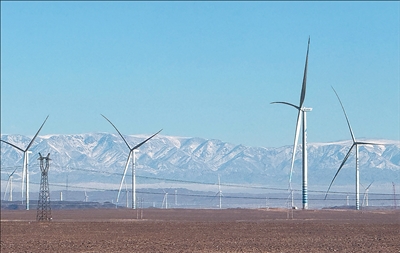
我国首个“沙戈荒”新能源外送基地进入全容量并网发电冲刺阶段 戈壁崛起“能源绿洲”(产经观察·收官之际看工程)
Ren Min Ri Bao· 2025-12-02 22:02
Core Viewpoint - The establishment of the "Shagohuang" renewable energy base in Hami, Xinjiang, aims to leverage the region's abundant wind and solar resources to facilitate the "Jiangdian into Yu" project, with over 70% of the energy capacity coming from renewable sources [1][3]. Group 1: Resource Utilization - The Hami region has a vast land area of 142,100 square kilometers, with 94,600 square kilometers of desert, providing ample space for large-scale renewable energy development [2]. - Hami experiences nearly 200 days of wind speeds exceeding level 8 annually and has an annual sunshine duration of 3,100 to 3,300 hours, making it one of the sunniest areas in the country [2]. Group 2: Project Specifications - The Xinjiang Tianshan North Gobi Energy Base covers approximately 1,651 square kilometers and has a total installed capacity of 14.2 million kilowatts [3]. - The project employs a "wind-solar-fire-heat-storage integrated" model, allowing for the complementary operation of various energy sources and storage technologies [3]. Group 3: Environmental Impact - Upon completion, the project is expected to generate an additional 14.2 billion kilowatt-hours of green electricity annually, saving 4.27 million tons of standard coal and reducing carbon dioxide emissions by 11.72 million tons [3]. Group 4: Energy Stability - The base features the largest "Shagohuang" grid-type energy storage system in the country, which is crucial for ensuring the safe and stable operation of the power system [4]. - The grid-type energy storage system enhances the ability to manage fluctuations in renewable energy generation, addressing challenges posed by extreme weather and the intermittent nature of renewable sources [5][6]. Group 5: Economic Efficiency - The project focuses on optimizing technology to improve the efficiency of electricity generation and transmission, thereby reducing losses and providing low-cost electricity [8]. - The integrated control room for coal and renewable energy projects allows for real-time adjustments to optimize the mix of energy sources based on demand, potentially increasing renewable energy absorption capacity by 3% [9][10]. Group 6: Water Resource Management - The project has implemented a combined cooling tower system, reducing water consumption to 0.13 cubic meters per megawatt-hour, achieving over 60% water savings [13]. - Continuous technological upgrades have led to improved coal consumption rates and higher steam pressures, contributing to the stability of green power supply for the "Jiangdian into Yu" initiative [14].
我国首个“沙戈荒”新能源外送基地首批机组投产发电,配套储能1.2GW/4.8GWh
中关村储能产业技术联盟· 2025-06-16 10:57
Core Viewpoint - The Xinjiang Tianshan North Gobi Energy Base, developed by China Huadian and China Resources Group, has successfully completed the trial operation of its first two 1 million kilowatt coal power units, marking the production of China's first "desert-gobi" renewable energy export base [1][9]. Group 1: Project Overview - The Xinjiang Tianshan North Gobi Energy Base is located in the Hami Santanghu Gobi area and is a key project under the "14th Five-Year Plan" for the "Xinjiang Electricity into Chongqing" ultra-high voltage transmission project [1][4]. - The total investment for the base is 54.7 billion yuan, with a total power generation capacity of 14.2 million kilowatts, including 4 million kilowatts of coal power, 7 million kilowatts of wind power, 3 million kilowatts of solar power, and 200,000 kilowatts of thermal power [5][7]. Group 2: Strategic Importance - The construction of the "desert-gobi" base is aimed at enhancing renewable energy supply capacity, reducing construction costs, restoring ecological environments, and promoting local economic development [2][3]. - Xinjiang is recognized as a strategic energy resource base, with significant coal reserves of 5.708 billion tons, accounting for 31.7% of the region and 12.5% of the national total [3]. Group 3: Energy Supply and Demand - The energy base is expected to deliver over 36 billion kilowatt-hours of electricity annually to Chongqing, which will account for nearly one-quarter of the city's electricity supply by 2025 [4][9]. - The project aligns with the national strategy to meet the increasing electricity demand in Chongqing, which is projected to reach 162 billion kilowatt-hours by 2025 [4]. Group 4: Technological Innovations - The project has overcome significant technical challenges, including the construction of the world's largest hyperbolic steel structure cooling tower and the first asynchronous motor bidirectional control pump group [6]. - The energy base features a high proportion of renewable energy, with 71.8% of its installed capacity coming from renewable sources, exceeding the "14th Five-Year" renewable energy planning target of 50% [7]. Group 5: Environmental and Economic Impact - The project is expected to reduce coal consumption by approximately 6 million tons and carbon dioxide emissions by about 16 million tons annually [7]. - The construction has created 23,000 job opportunities and incorporates ecological restoration measures to enhance the overall benefits of the clean energy base [8].


人民日报丨“疆电入渝”首批电源项目投产
国家能源局· 2025-06-16 03:11
Core Viewpoint - The first two 1 million kilowatt coal power units at the Gobi Energy Base in northern Xinjiang have successfully completed a 168-hour full-load trial run and are now in operation, contributing to the "Jiangdian into Chongqing" project, which aims to stabilize power supply during peak summer demand in Chongqing [1] Group 1: Project Overview - The Gobi Energy Base has a total investment of 54.7 billion yuan and an overall power generation capacity of 14.2 million kilowatts, including 4 million kilowatts of coal power, 7 million kilowatts of wind power, 3 million kilowatts of solar power, and 200,000 kilowatts of solar thermal power [1] - The project includes the construction of 1.2 million kilowatts/4.8 million kilowatt-hours of electrochemical energy storage facilities, with renewable energy accounting for over 70% of the total installed capacity [1] Group 2: Environmental and Operational Efficiency - The newly commissioned coal power units have advanced parameters in terms of coal consumption, peak regulation performance, and plant electricity rate compared to similar domestic units [1] - The project has implemented high-efficiency dust removal, desulfurization, and denitrification facilities, achieving ultra-low emissions of pollutants at the chimney outlet, which are better than the emissions standards for gas-fired units [1]

“疆电入渝”首批电源项目投产 缓解“迎峰度夏”用电紧张局面
news flash· 2025-06-13 07:48
Core Insights - The first batch of power projects under the "Xinjiang Electricity into Chongqing" initiative has been put into operation, specifically the Xinjiang Tianshan North Gobi Energy Base, which includes two 1 million kilowatt clean and efficient coal power units [1] - This project aims to alleviate the electricity supply tension in Chongqing during the peak summer demand period [1] - The total installed capacity of the energy base is 14.2 million kilowatts, with over 70% of the installed capacity coming from clean energy sources such as wind, solar, and thermal energy [1] - The project is part of China's "14th Five-Year Plan" key construction initiatives and is developed by China Huadian and China Resources Group, utilizing an integrated approach of "wind, solar, thermal, and storage" for high proportion renewable energy delivery [1]