风险管理型外交

Search documents
韩国四大财团掌门人都来了!
Di Yi Cai Jing· 2026-01-05 06:07
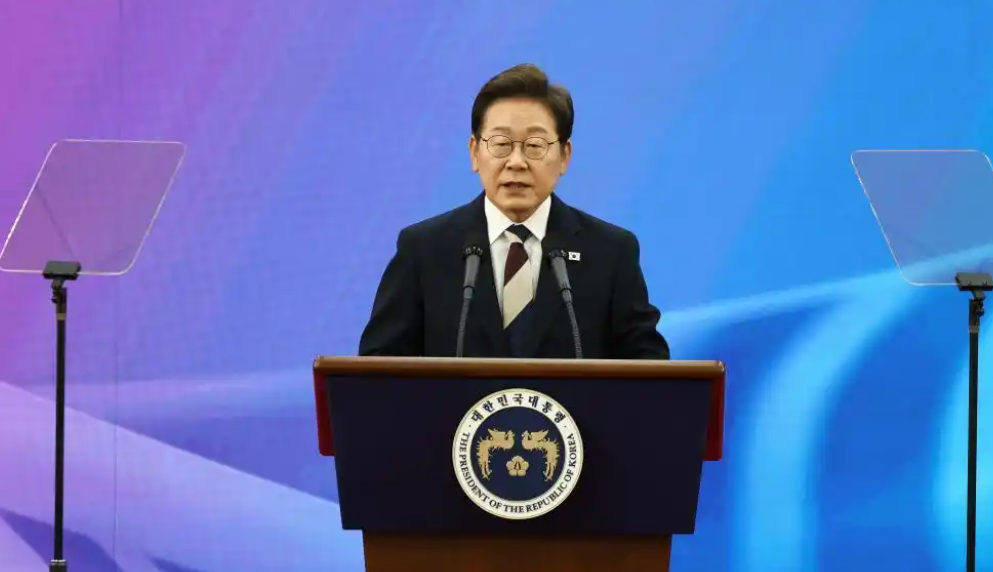
Core Viewpoint - The visit of South Korean President Lee Jae-myung to China marks a significant diplomatic effort to establish a more predictable framework for Sino-Korean relations amid ongoing U.S.-China strategic competition [7]. Group 1: Economic Delegation and Trade Dynamics - Accompanying President Lee is a large economic delegation of over 200 members, led by the Korea Chamber of Commerce and Industry, including leaders from major corporations like Samsung, SK Group, Hyundai, and LG [1]. - The bilateral trade structure between China and South Korea has undergone a significant transformation, with South Korea's trade surplus with China being disrupted, indicating a structural turning point in their economic relationship [5]. - In 2024, the bilateral trade volume is projected to reach $272.91 billion, reflecting a 2% increase, but a trade deficit of $6.83 billion is expected for the second consecutive year, down from $18 billion in 2023 [4]. Group 2: Changes in Trade Structure - The traditional trade model, where South Korea provided high-end intermediate goods and China handled manufacturing, is being altered as China reduces its dependency on South Korean imports in sectors like semiconductors and chemical materials [5]. - The shift in China's export structure, focusing more on Southeast Asia and other countries, has weakened South Korea's role as a key supplier of components [5]. - South Korea's export structure is highly concentrated, making it vulnerable to shocks, particularly in sectors like semiconductors and displays, which could lead to a reversal in trade dynamics [5]. Group 3: Future Cooperation and Risks - Future Sino-Korean trade is unlikely to revert to the previous vertical division of labor, instead moving towards a model of "limited competition and functional complementarity," with potential growth areas in renewable energy, biotechnology, and digital services [5]. - The primary risk in Sino-Korean relations is not competition but the potential for irrational decoupling due to misjudgments or policy shifts, highlighting the need for high-level communication to stabilize expectations [8]. - The visit is seen as an opportunity for South Korea to redefine its strategic role, aiming to act as a bridge in technology and rules rather than being passively affected by great power competition [8].
韩国四大财团掌门人都来了!
第一财经· 2026-01-05 06:05
Core Viewpoint - The article discusses the significant changes in the trade relationship between China and South Korea, highlighting a structural shift from a trade surplus for South Korea to a trade deficit, indicating a transformation in their economic dynamics [6][7]. Group 1: Trade Dynamics - In 2019, South Korea had a trade surplus of $289.7 billion with China, but by 2024, this had shifted to a trade deficit of $68.3 billion, marking a significant change in trade patterns [6][7]. - The trade surplus that South Korea enjoyed for years has been disrupted since 2023, reflecting deeper, long-term changes in the trade structure between the two countries [7]. - South Korea's reliance on exports of semiconductors, displays, and chemical products has made its trade vulnerable to cyclical downturns and geopolitical pressures, leading to the recent trade deficits [8]. Group 2: Economic Cooperation and Future Prospects - The visit of South Korean President Yoon Suk-yeol is seen as an opportunity to establish a more predictable framework for China-South Korea relations amidst ongoing U.S.-China strategic competition [8][9]. - Future cooperation areas identified include renewable energy, biotechnology, and aging-related industries, which are expected to provide stable growth opportunities for both countries [9]. - The article emphasizes the importance of high-level communication to prevent irrational decoupling due to misjudgments or policy shifts, which could destabilize investment and supply chain decisions [9][10].

韩国四大财团掌门人都来了!200多家韩企来华寻找经贸新“稳定器”
Di Yi Cai Jing· 2026-01-05 05:54
Core Insights - The visit of South Korean President Yoon Suk-yeol to China marks a significant shift in the trade dynamics between South Korea and China, as Korean companies seek new opportunities and markets amid changing trade structures [1][4] Group 1: Trade Dynamics - The scale of the economic delegation accompanying President Yoon is notable, with over 200 members, including leaders from major corporations like Samsung, SK Group, Hyundai, and LG [1] - In 2019, the bilateral trade volume between South Korea and China was $243.43 billion, with South Korea exporting $136.2 billion and importing $107.23 billion, resulting in a trade surplus of $28.97 billion [3] - By 2024, the bilateral trade volume is projected to reach $272.91 billion, reflecting a 2% increase, but a trade deficit of $6.83 billion is expected for the second consecutive year [3] Group 2: Structural Changes in Trade - The trade surplus that South Korea enjoyed with China has been disrupted, indicating a structural turning point in the economic relationship, moving away from a model where South Korea provided high-end intermediate goods while China handled manufacturing [4] - China's advancements in sectors like semiconductors and chemical materials have reduced its dependency on South Korean imports, altering the previously established trade dynamics [4] - The concentration of South Korea's exports in semiconductors and chemical products poses risks, as any downturn in these sectors could lead to significant trade reversals [4] Group 3: Future Cooperation and Risks - The visit is seen as an effort to establish a more predictable framework for Sino-Korean relations amid ongoing U.S.-China strategic competition, aiming for a new normal of "competitive, cooperative, and predictable" interactions [5][6] - There is a focus on potential cooperation in renewable energy, biotechnology, and other sectors, which could serve as new growth points for the bilateral relationship [6] - Effective communication at high levels is crucial to prevent irrational decoupling due to misjudgments or policy shifts, particularly in sensitive areas like semiconductors and core materials [6]