饮品+餐食

Search documents
奶茶店开始“卖饭”?蜜雪、古茗、阿嬷都盯上这门生意
东京烘焙职业人· 2026-01-14 08:33
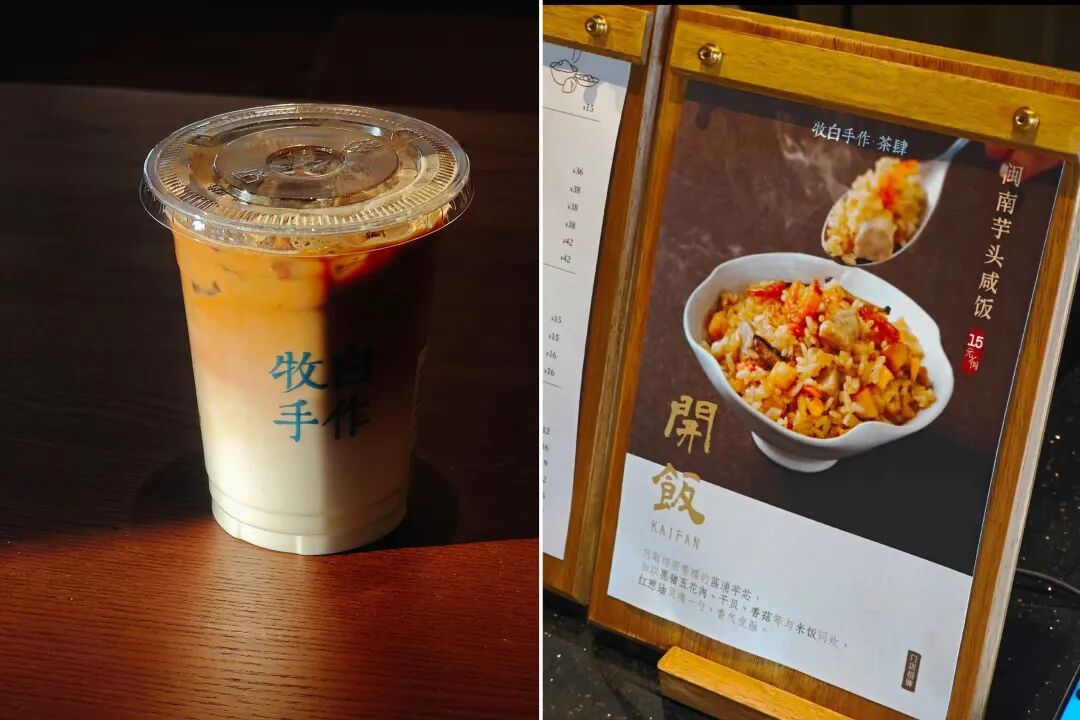
Core Viewpoint - The beverage industry, particularly tea and coffee brands, is increasingly diversifying into food offerings, with a focus on integrating meals into their menus to enhance customer experience and drive sales [5][14][30]. Group 1: New Trends in Beverage Industry - Recent developments show tea shops like Mubaishousuo are introducing main dishes, such as the Min Nan Taro Rice, to attract customers [5][6]. - The trend of beverage shops selling food is gaining traction, with brands like Mixue Ice City and Starbucks experimenting with breakfast options [5][19]. - Social media reactions indicate consumer surprise and curiosity about beverage shops venturing into food sales, highlighting a shift in consumer expectations [7][10]. Group 2: Strategic Shifts in Offerings - Beverage brands are moving from merely offering snacks to providing full meal options, targeting breakfast and lunch markets [16][19]. - Companies like Mubaishousuo and Starbucks are launching new store formats and meal combinations to redefine the dining experience [20][22]. - The introduction of meal options is seen as a strategy to increase customer spending and adapt to daily consumption needs [15][30]. Group 3: Operational Considerations - The integration of food into beverage menus requires significant operational changes, including new equipment and food safety standards [33][35]. - Successful examples of food and beverage integration often involve light processing or strong synergy between products, with food revenue still being a small percentage of total sales [35][36]. - Brands must maintain consistency in their identity and ensure that new food offerings align with their core consumer experience [35].

奶茶店开始“卖饭”?蜜雪、古茗、阿嬷都盯上这门生意
3 6 Ke· 2026-01-10 04:52
Core Insights - The trend of beverage shops selling food items, particularly rice dishes, is gaining traction, with brands like Mubaishou and A-Ma Handcrafted leading the way in this new market segment [1][3][7] Group 1: New Product Offerings - Mubaishou has introduced a new dish, Min Nan Taro Rice, priced at 15 yuan, which has received positive feedback for its flavor and value [3] - A-Ma Handcrafted has also attracted attention by offering rice dishes, although they primarily sell a rice sauce for customers to pair with rice [7][18] - The beverage industry is increasingly integrating food offerings, moving from simple snacks to full meal options, targeting breakfast and lunch markets [8][13] Group 2: Market Strategy - Brands are redefining their business models by creating new store formats that emphasize the combination of beverages and meals, enhancing customer experience [14][16] - Companies like Nayuki are launching new store concepts focused on light meals, aiming to cater to the lunch crowd with affordable options [17] - The strategy of offering food items is seen as a way to increase average transaction value and enhance brand presence in consumers' daily lives [20][21] Group 3: Industry Trends - The beverage sector is witnessing a shift towards food offerings as a response to market competition, with brands looking to expand their product categories and consumer touchpoints [21][24] - Successful integration of food and beverage offerings often relies on light processing or strong synergy between products, with many brands still exploring this model [24] - Despite the growing trend, food sales currently represent a small percentage of total revenue for many beverage brands, indicating that the fusion of drinks and meals is still in its early stages [24]