马拉松赛事规范化发展

Search documents
县城马拉松“大撤退”
虎嗅APP· 2025-10-16 00:09
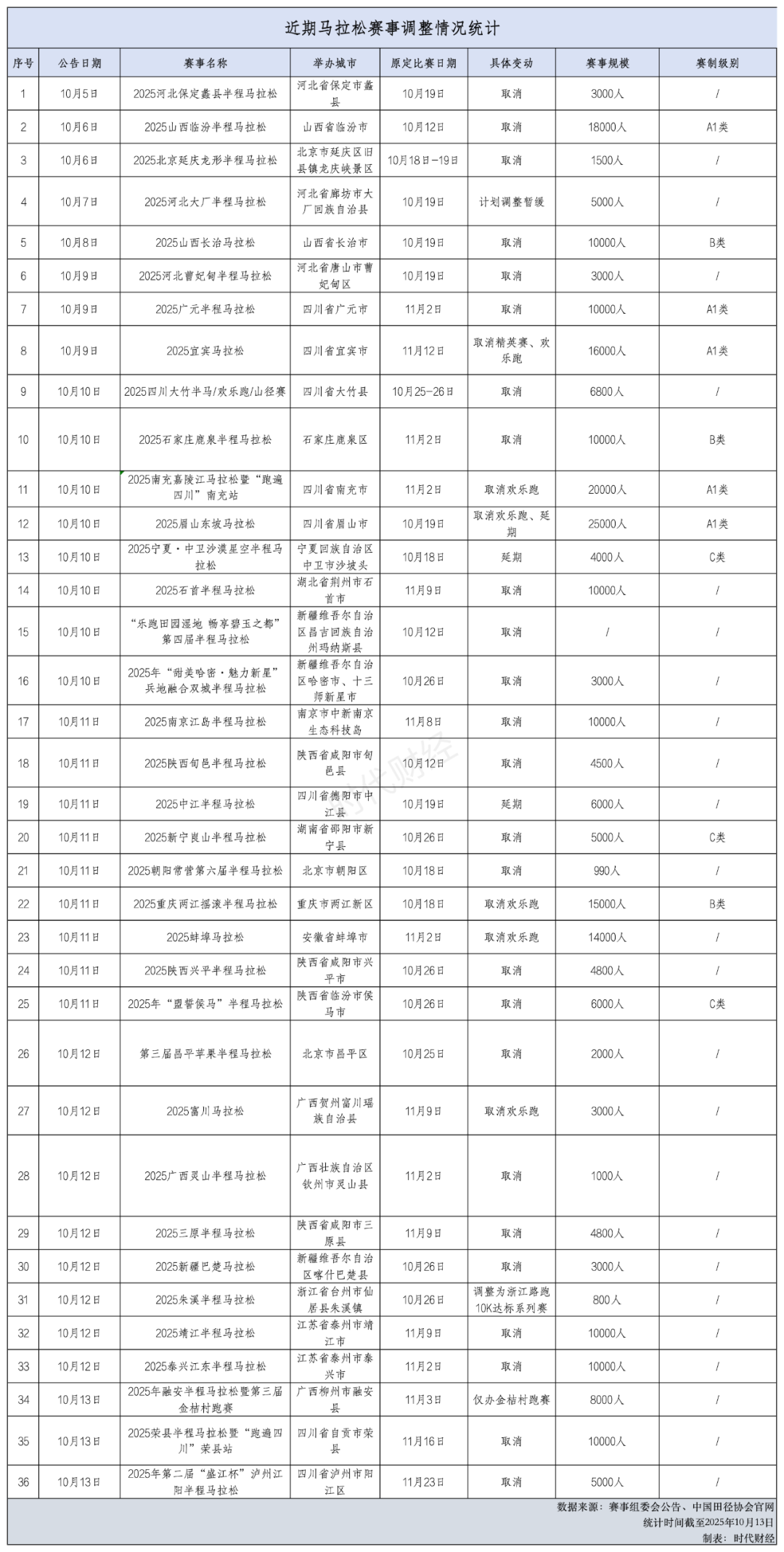
Core Viewpoint - The article discusses the recent wave of cancellations in marathon events across China, particularly during the peak season from October to December, highlighting the impact of new regulations and the financial implications for event organizers [5][6][7]. Group 1: Event Cancellations - Since October 1, at least 36 marathon events have been canceled or adjusted, with over 75% of these cancellations occurring between October 10 and October 13 [7][9]. - The cancellations predominantly affect county-level marathons, including both low-tier and high-specification A1 events [9][13]. - The 2025 Lixian Half Marathon was one of the first to announce its cancellation on October 5, with many others following suit shortly after [9][10]. Group 2: Financial Implications - Organizing a marathon incurs significant costs, including prize money, operational expenses, and security, which can be particularly burdensome for smaller events [17]. - Many canceled events had already reached a preparation stage of 70% to 90%, leading to substantial financial losses for organizers [18]. - Compensation plans are being implemented by some event organizers to refund registration fees and assist with travel cancellations [18]. Group 3: Quality of Events - The article notes a proliferation of low-quality marathons, often organized with minimal budgets, which can compromise safety and service standards [21][22]. - There is a growing concern that the influx of low-budget events has led to operational inefficiencies and a decline in overall event quality [21][23]. - The need for a more standardized and regulated approach to marathon organization is emphasized, as many events lack the necessary infrastructure and planning [26]. Group 4: Impact on Runners - The cancellation of events has raised concerns among runners about the future of marathon participation, with fears that it may lead to decreased enthusiasm for the sport [24]. - Runners express frustration over the difficulty of securing spots in popular races, which may drive them to alternative activities like cycling or trail running [24][25]. - The article suggests that the current situation may prompt a return to the fundamental enjoyment of running, rather than focusing solely on competitive events [25][26].


县城马拉松“大撤退”
Hu Xiu· 2025-10-15 07:04
Core Viewpoint - The recent wave of marathon cancellations across China is attributed to new regulations and has significantly impacted both participants and event organizers, raising concerns about the future of the marathon industry in the country [5][12][27]. Group 1: Event Cancellations - Since October 1, at least 36 marathon events have been canceled or adjusted, primarily affecting county-level races and some high-profile A1 category events [4][6]. - The majority of cancellations occurred between October 10 and October 13, with over 75% of the affected events falling within this timeframe [6]. - Notable cancellations include the 2025 Hebei Baoding Lixian Half Marathon, which was scheduled for October 19, and the 2025 Jiangsu Jingjiang Half Marathon, originally set for November 9 [7][32]. Group 2: Industry Response - Industry insiders suggest that the widespread cancellations are linked to new regulations from the Chinese Athletics Association, although specific details remain unclear [5][10]. - Many event organizers were caught off guard by the sudden cancellations, with some reporting that they received notifications just days before their events [12][13]. - The financial implications of these cancellations are significant, as many events had already incurred substantial costs in preparation, with estimates indicating that some were 70% to 90% ready [15][17]. Group 3: Participant Sentiment - The cancellations have led to concerns among runners about the future of marathon participation, with some expressing frustration over the difficulty of securing spots in remaining events [26][27]. - There is a growing sentiment that the frequent cancellations may drive participants to alternative sports, such as cycling or trail running, as they seek consistent opportunities for competition [26][27]. - Runners and industry professionals alike emphasize the need for the marathon industry to develop more standardized practices to ensure sustainability and quality in events [27][28].