
骚扰电话治理

Search documents
炒作三大运营商“迫于美国FCC压力紧急整改”的谣言,既无知又可耻
Tai Mei Ti A P P· 2025-12-24 10:22
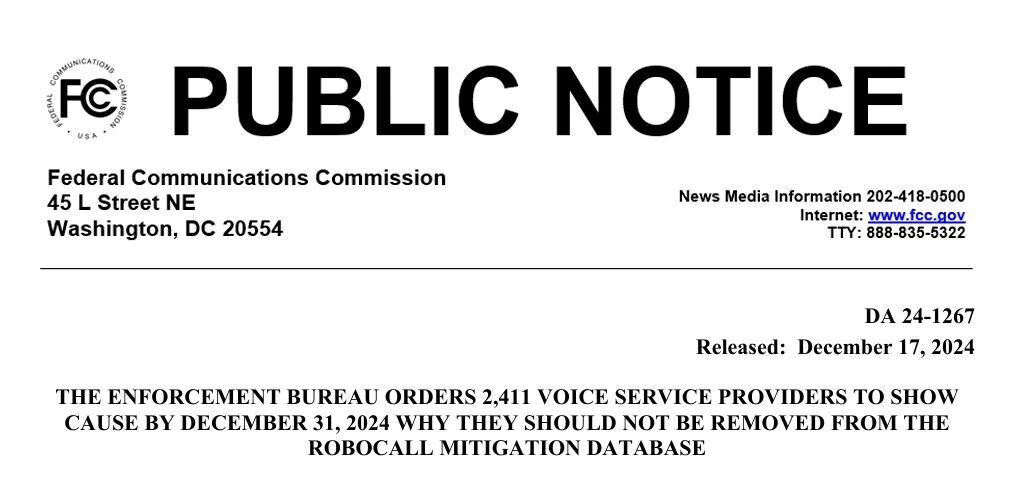
Core Viewpoint - The article discusses the misinformation surrounding the compliance order issued by the FCC to the three major telecom operators in Hong Kong, emphasizing that claims of urgent rectification under FCC pressure are unfounded and misleading [1][2][4]. Group 1: FCC Compliance Order Background - The FCC established the RMD mechanism in 2020 to enhance transparency and effective automatic call mitigation [3]. - On March 16, 2023, the FCC revised Rule 64.6305 to strengthen information requirements for RMD certification and expanded obligations for both new and existing submitters [3]. - Additional amendments were made on May 18, 2023, requiring service providers to respond to trace requests within 24 hours [3]. Group 2: Response of Telecom Operators - The three major telecom operators received two notifications from the FCC's Wireless Competition Bureau (WCB) in 2024, requiring them to comply with updated RMD requirements [4]. - Despite these notifications, the operators did not respond until the FCC issued a final compliance order on December 8, 2025, indicating a consistent disregard for the FCC's requests [4][5]. - The operators' lack of response suggests they were not actively working on compliance as claimed by various media outlets [4][5]. Group 3: Misinformation from Media - Various self-proclaimed industry insiders have spread false narratives about the operators' urgent compliance efforts, which are characterized as misleading and harmful [2][4]. - Claims of the operators forming special response teams and rapidly preparing compliance materials are dismissed as fabrications [2][4]. - The article stresses the need to expose and refute these misleading reports to clarify the actual situation [2][4]. Group 4: Implications of FCC's Final Order - The FCC's final order requires the operators to respond within 14 days, but it is unlikely that they can complete the necessary rectifications in such a short timeframe [6][8]. - The order also includes a stipulation that even if the operators correct their RMD certifications, they must provide convincing evidence that their presence does not threaten national security [6]. - The article concludes that the operators are likely taking measures to ensure normal international communication operations, despite not complying with the FCC's demands [9].


莫让营销变骚扰
Jing Ji Ri Bao· 2025-07-09 08:00
Core Viewpoint - A recent case in Shanghai highlights the legal consequences of harassment from bank marketing practices, emphasizing the need for consumer protection and regulatory oversight [1][2]. Group 1: Legal Framework and Consumer Rights - The Civil Code of China prohibits organizations or individuals from disturbing others' private lives through unsolicited calls, messages, or other means without consent [1]. - The case serves as a warning to banks and similar enterprises, encouraging citizens to protect their rights through legal channels [1]. Group 2: Regulatory and Technological Measures - Regulatory bodies are urged to strengthen oversight of marketing practices, ensuring compliance and imposing penalties on companies that misuse user data or frequently disturb consumers [1][2]. - Telecom operators are encouraged to enhance smart interception technologies and maintain a blacklist of harassment numbers to reduce the spread of unwanted communications [2]. Group 3: Corporate Responsibility and Marketing Ethics - Companies relying on aggressive phone and SMS marketing may achieve short-term customer acquisition but risk damaging their brand image and consumer trust [2]. - Businesses are advised to adopt a customer-centric approach, focusing on understanding user needs and innovating services while respecting consumer preferences and rights [2].
壹快评|亮剑骚扰电话,相关部门该学学浦东法院
Di Yi Cai Jing· 2025-07-01 10:32
Core Viewpoint - The recent court ruling in Shanghai against a bank for harassment calls highlights the urgent need for effective management and enforcement against such illegal activities, emphasizing that relevant departments must take responsibility to protect citizens' rights [1][3][4]. Legal Framework - The Civil Code explicitly prohibits organizations or individuals from invading others' privacy through unsolicited communications without consent, and it protects personal information from illegal collection and use [1]. - The Criminal Law outlines penalties for selling or providing personal information, with severe consequences for serious violations, including imprisonment [2]. - The Public Security Administration Punishment Law also stipulates penalties for illegally obtaining personal information and disturbing social order [2]. Management and Enforcement Issues - Despite clear legal provisions, the prevalence of harassment calls suggests failures in management and enforcement, raising concerns about negligence and dereliction of duty among responsible departments [2][3]. - The court's decision serves as a wake-up call for relevant authorities to acknowledge their responsibilities and take action against harassment calls [3][4]. Call to Action - There is a pressing need for coordinated efforts among various departments to address the issue of harassment calls, including establishing clear goals and timelines for resolution [3]. - The court ruling is seen as a catalyst for change, urging authorities to proactively manage and eliminate harassment calls rather than relying on citizens to seek judicial remedies [4].